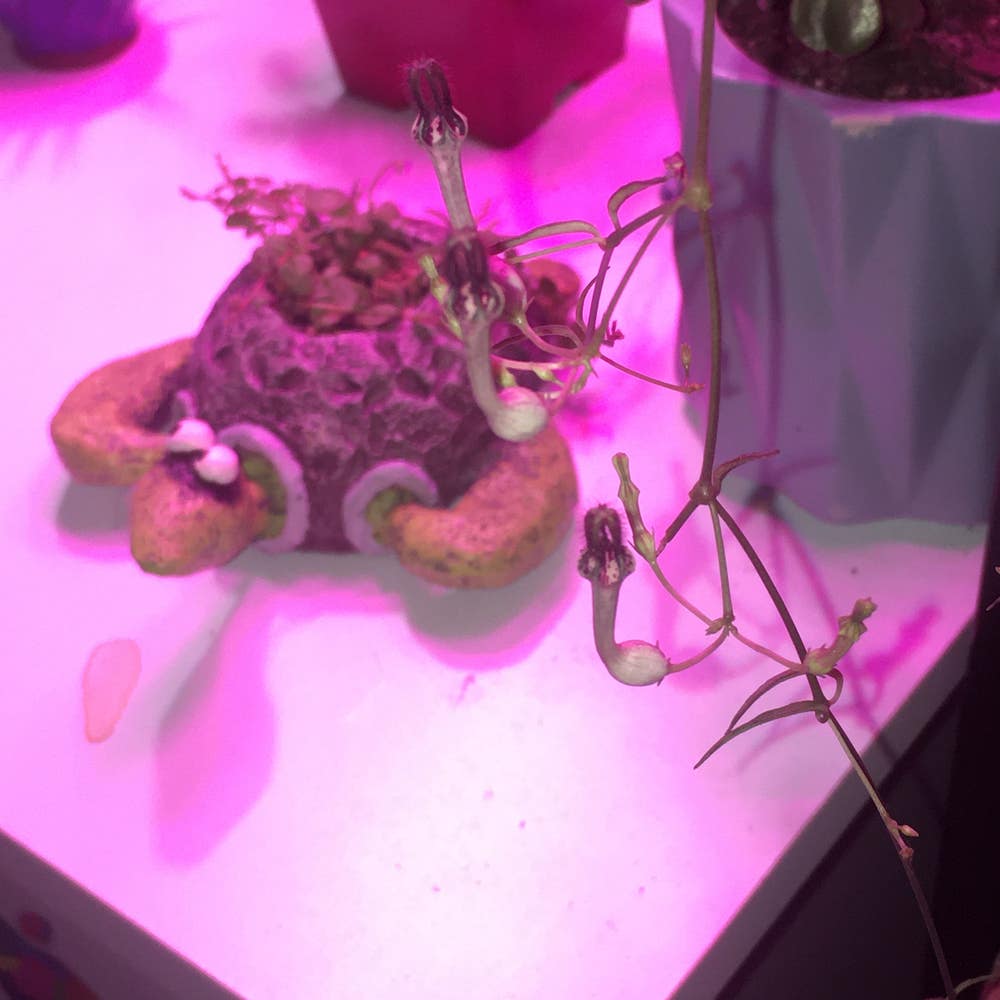
Why Are My String Of Needles Leaves Falling Over?
Ceropegia linearis
By the Greg Editorial Team
Dec 16, 2023•7 min read
This article was created with the help of AI so we can cover more plants for you. May contain errors. See one? Report it here.
Stop your String of Needles from slumping 🌿 with top tips for robust, upright growth and plant vitality.
- Overwatering and light issues cause leaves to droop; adjust care routine.
- Prune and maintain regularly to promote health and prevent leaf drop.
- Support with stakes or ties and manage pests to maintain upright growth.
Common Causes of String of Needles Leaves Falling Over
💧 Identifying Environmental Stressors
Overwatering is the arch-nemesis of String of Needles, often leaving the plant with yellowing leaves and a moldy soil party nobody wanted an invite to. To combat this, ensure the soil is dry an inch down before giving it another drink.
Insufficient light can make your plant's leaves drop like flies. These plants crave bright, indirect sunlight to strut their stuff. If they're stuck in the dark, expect a leaf exodus.
🌡 Poor Plant Health and Its Impact
Temperature swings are like bad plot twists for your String of Needles—unexpected and unwelcome. Keep the environment stable to avoid drama in the foliage department.
Root rot is a silent killer, sneaking up when excess moisture and poor drainage conspire against your plant. It's the equivalent of cutting off the plant's lifeline, leading to a cascade of falling leaves.
Pest invasions—think spider mites and mealybugs—can turn your plant into a leaf-dropping battlefield. Regular check-ups are crucial for catching these critters red-handed.
🌿 Nutrient Deficiencies and Plant Stability
A nitrogen shortage can turn your String of Needles into a yellow-leaf dropping mess. Ensuring balanced nutrition is key to keeping the leaves perky and attached.
Pot size matters. If your plant's home is too snug, it's like wearing a pair of tight shoes all day—something's got to give, and it's usually the leaves.
🌱 Environmental Bliss Tips
Remember, your String of Needles isn't trying to give you a hard time; it's having a hard time. Adjust your care, and those leaves will stick around like the best of friends.
Pruning and Maintenance for String of Needles
✂️ Pruning Techniques
Pruning your String of Needles isn't just about snipping away like a mad barber. It's a strategic move to keep your plant looking sharp and standing tall. Start by removing any yellow or dying leaves to prevent energy waste. Use sharp shears to make clean cuts close to the stem. This encourages the plant to focus its energy on the healthy foliage, promoting upright growth.
🛠️ Maintenance Musts
Regular maintenance is the unsung hero in the fight against droopy leaves. Watering should be a careful affair—let the soil dry out before giving it another drink. Remember, this plant has a love-hate relationship with moisture. Too much, and you're on a one-way trip to Soggy Town. Light is another key player. Bright, indirect sunlight is your best bet for keeping those leaves perky. And don't forget about airflow—good circulation keeps the dreaded powdery mildew at bay.
🌱 Propagation for Fullness
Got a plant that's looking more sparse than a desert? Propagation can help. Snip a few cuttings in spring or summer and replant them to create a fuller, bushier appearance. It's like giving your plant a new lease on life, and who doesn't want that?
🏜️ The Right Soil
Soil choice can make or break your String of Needles. A cactus and succulent mix is your golden ticket. It provides the right drainage and aeration, keeping your plant's roots happy and healthy. Remember, happy roots equal happy shoots.
🌿 Fertilizing for Vigor
Fertilize monthly during the growing season with a balanced mix. Think of it as a vitamin boost that keeps your plant thriving. Overdo it, though, and you'll have more problems than an overcaffeinated squirrel.
🚿 Cleaning Up
A quick spray-down can work wonders. It's like a mini shower for your plant, washing away dust and potential pests. Plus, it's oddly satisfying to do.
🌡️ Temperature and Humidity
These plants are not fans of the cold. Keep them in temperatures above 10°C (50°F), or they might just give you the cold shoulder. And while they can handle low humidity, they'll appreciate a bit of moisture in the air—just don't turn their home into a sauna.
Support and Training for String of Needles
🌱 Physical Support Strategies
Staking isn't just for vampires. For String of Needles plants that can't seem to hold themselves up, a stake can be a spine to lean on. Choose a stake that's tall enough to support the full height of the plant and gently tie the stems to it. This is a bit like plant physiotherapy – it won't cure the droopiness overnight, but it gives your green buddy the support it needs to get stronger.
🌿 Training for Upright Growth
Training your String of Needles to stand tall isn't unlike coaching a slouching teenager. Directional pruning can encourage the plant to grow more upright. Snip off the wayward tendrils during the growing season, and you'll signal the plant to focus its energy on the topmost growth. Remember, it's a plant, not a haircut, so don't go too scissor-happy.
🎀 The Ties That Bind
Let's talk ties. Not the neck kind, but the soft, plant-friendly kind. Use them to attach your String of Needles to the stake, but don't strangle the poor thing. Think supportive hug, not a chokehold. And as the plant grows, loosen the ties to accommodate its new size – growth spurts aren't just for teenagers.
🎨 Creative Support Structures
If stakes aren't your style, get creative. A trellis or a small lattice can turn your String of Needles into a living piece of art. It's like giving your plant a jungle gym to climb on, and who wouldn't want that? Plus, it'll add a touch of green sophistication to your space.
☀️ The Importance of Light
Remember that bit about needing sunlight? It's not just for photosynthesis. Proper lighting can actually help your plant grow more upright. Place it near a window where it can bask in the sun's glory, but not so close that it gets a sunburn. Think of it as a plant suntan – a little goes a long way.
🔄 Consistency is Key
Finally, be consistent. Plants, like pets and people, thrive on routine. Regular maintenance checks will help you spot any early signs of drooping so you can correct course. It's the plant equivalent of a check-up – preventative care to keep your String of Needles standing tall.
Pest and Disease Management
🐜 Addressing Pest Infestations
Pests are the uninvited guests at the String of Needles party, and they can turn your plant's leaves into a droopy mess. Spider mites, aphids, and mealybugs are the usual suspects. To catch these critters in the act, flip the leaves and inspect for tiny, moving dots or the cotton-like residue mealybugs leave behind. If you spot these pests, it's time for action. Insecticidal soap or neem oil can be your first line of defense. Apply with precision and persistence, because these pests can be as stubborn as a stain on your favorite shirt.
🦠 Combating Diseases
When it comes to diseases, leaf spot and root rot are the notorious villains causing your String of Needles to lose its posture. Overwatering is often the root of the problem—literally. It invites fungal diseases to the root zone, where they thrive in the excess moisture. To prevent this, water from below and let the soil dry out slightly between waterings. If you're already in the thick of it, remove affected leaves and treat with a fungicide if necessary. Remember, prevention is better than cure, so keep the soil well-drained and the leaves dry to avoid fungal fiestas.
🚨 Preventive Measures
Consistency is key. Regularly monitor your plant for signs of stress, such as browning tips or limp leaves. A stable environment wards off pests and diseases like a scarecrow in a field. Avoid the drama of dramatic temperature fluctuations and keep the soil's moisture level balanced—think of it as the Goldilocks zone for your String of Needles. And don't forget to fertilize, but with a light hand; too much and you're just feeding the problems.
Remember, your String of Needles doesn't have to go through a leaf-dropping phase. With vigilant pest control and disease prevention, you can keep your plant standing tall and proud, like a sentinel in your garden.
⚠️ Safety First
This content is for general information and may contain errors, omissions, or outdated details. It is not medical, veterinary advice, or an endorsement of therapeutic claims.
Always consult a qualified healthcare professional before using any plant as food, medicine, or supplement.
Never eat any plant (or feed one to pets) without confirming its identity with at least two trusted sources.
If you suspect poisoning, call Poison Control (800) 222-1222, the Pet Poison Helpline (800) 213-6680, or your local emergency service immediately.
Spotted an error? Please report it here.
Ensure your String of Needles stands tall against challenges like overwatering and pests with Greg's custom care plan 🛡️, tailored to keep your plant thriving.