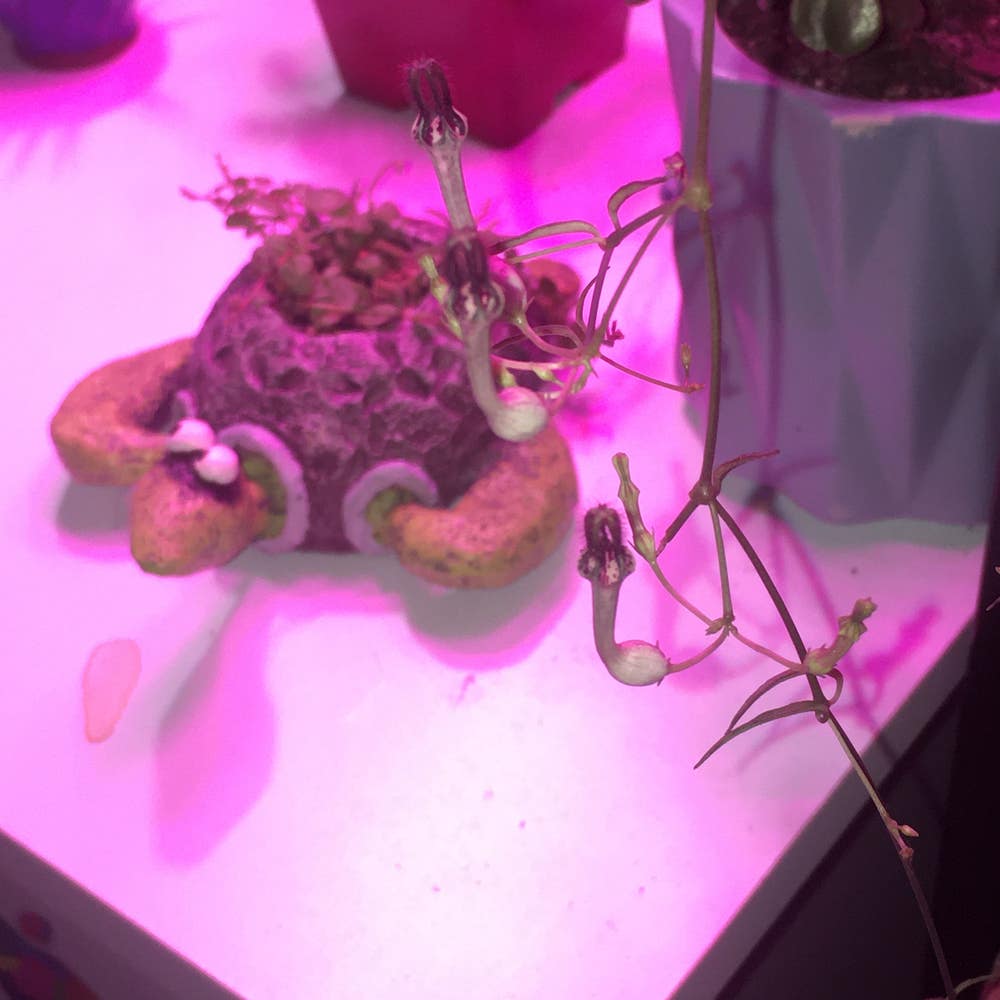
💧 How Much Humidity Does My String of Needles Need?
Ceropegia linearis
By the Greg Editorial Team
Jun 18, 2024•3 min read
This article was created with the help of AI so we can cover more plants for you. May contain errors. See one? Report it here.
Discover the secret to a lush String of Needles 🌿 by mastering its ideal humidity range—your green thumb awaits!
- 40-60% RH ideal for String of Needles' health.
- 🌡️ Hygrometers measure humidity; adjust for seasons.
- Humidifiers up, dehumidifiers down, to manage humidity levels.
Ideal Humidity Levels for String of Needles
💧 Understanding Relative Humidity for String of Needles
Relative humidity (RH) is crucial for plant health, acting much like a plant's lung capacity. For the String of Needles, an RH of 40-60% is typically ideal, striking a balance that supports its well-being without encouraging the growth of mold or pests.
🌵 Recognizing Signs of Incorrect Humidity
Low humidity often leaves its mark with browning, crispy leaves and a general wilted demeanor. It's the plant's SOS signal, indicating an urgent need for a humidity boost. On the flip side, high humidity can turn your plant's roots into a fungal fiesta, with root rot and unwanted microbial growth as uninvited guests. Keep an eye out for these signs to ensure your String of Needles isn't throwing a humidity hissy fit.

Monitoring and Adjusting Humidity for String of Needles
🌡️ Measuring Indoor Humidity
Hygrometers are your go-to tools for keeping an eye on indoor humidity. These nifty gadgets give you the lowdown on moisture levels, ensuring your String of Needles isn't gasping for air or drowning in a muggy mess.
Place the hygrometer near your plant, but dodge direct sunlight or drafts—these are the mortal enemies of accurate readings. Check the humidity at different times throughout the day to get a full picture of what your plant is dealing with.
🌦️ Interpreting Outdoor Humidity
Don't just rely on your gut feeling; weather reports are there for a reason. They can clue you in on outdoor humidity, which indirectly affects your indoor jungle. If it's muggy outside, chances are your indoor plants are throwing a tropical party.
🍂 Seasonal Humidity Considerations
With seasons changing more often than your social media moods, your String of Needles' humidity needs will shift. Winter heating can turn your pad into the Sahara, so consider dialing up the humidity with a humidifier.
Come summer, if your home starts to feel like a steam room, it's time to dehumidify. Remember, your String of Needles isn't a fan of sauna conditions. Keep the air moving with fans or a cracked window to prevent your green buddy from getting the humidity blues.

Managing Humidity for String of Needles
💦 Increasing Humidity
Humidifiers are the go-to gadgets for upping the moisture ante. They let you dial in on the desired humidity with the precision of a climate scientist.
Grouping plants is like hosting a small party where everyone brings a dish; each plant contributes to the communal humidity potluck through transpiration.
Creating a pebble tray is a low-tech but effective method. Just ensure the pot sits high and dry above the water line to avoid soggy soil syndrome.
🌬️ Decreasing Humidity
Dehumidifiers are the unsung heroes in the battle against muggy air. They suck the excess moisture out like a vacuum, leaving a comfortable dryness in their wake.
Boosting air circulation can be as simple as cracking a window or running a fan. It's like giving your plant a breath of fresh air, literally.
When it comes to watering practices, less is more in the land of high humidity. Overwatering is the root of all evil, leading to a swampy mess no plant wants to wade through.

⚠️ Safety First
This content is for general information and may contain errors, omissions, or outdated details. It is not medical, veterinary advice, or an endorsement of therapeutic claims.
Always consult a qualified healthcare professional before using any plant as food, medicine, or supplement.
Never eat any plant (or feed one to pets) without confirming its identity with at least two trusted sources.
If you suspect poisoning, call Poison Control (800) 222-1222, the Pet Poison Helpline (800) 213-6680, or your local emergency service immediately.
Spotted an error? Please report it here.
Keep your String of Needles in the ideal humidity 🌡️ zone with Greg's environmental tracking and personalized care reminders.