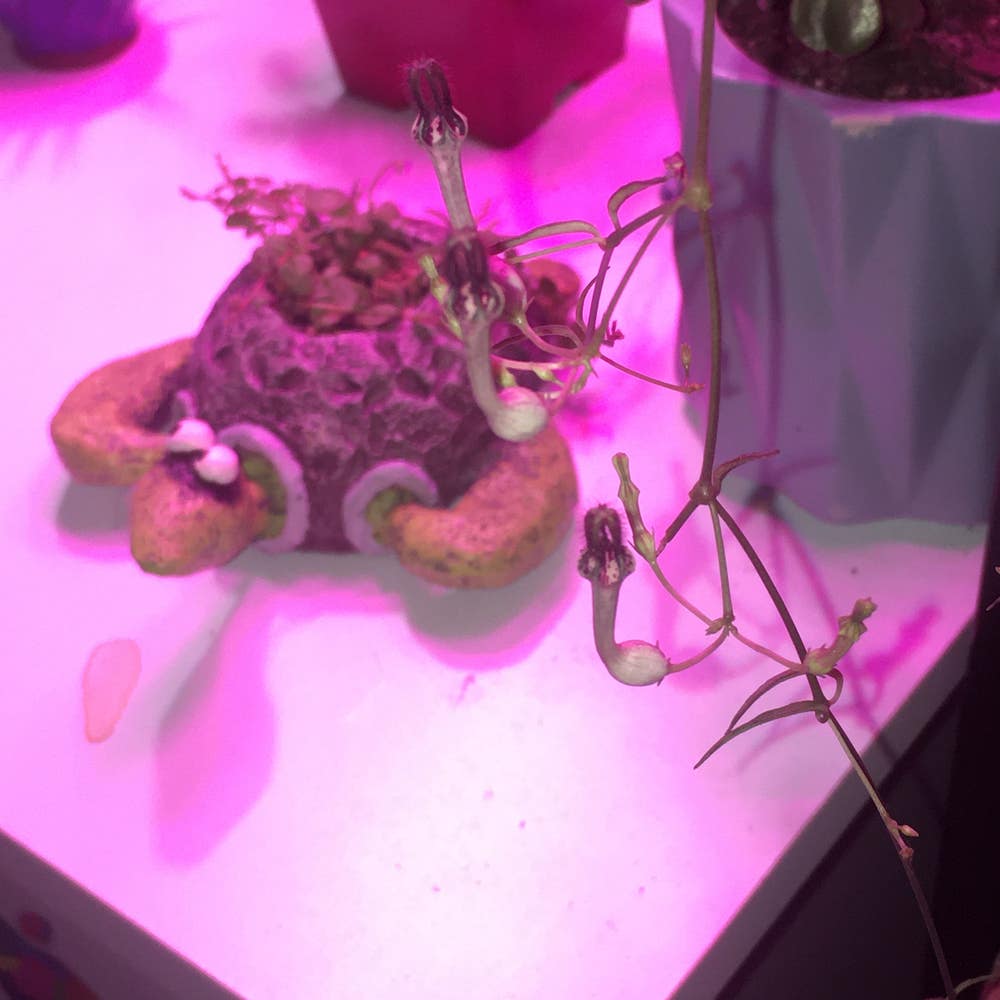
Why Is My String Of Needles Dropping Leaves?
Ceropegia linearis
By the Greg Editorial Team
Jun 18, 2024•4 min read
This article was created with the help of AI so we can cover more plants for you. May contain errors. See one? Report it here.
Prevent leaf loss in your String of Needles 🌿 with these essential care adjustments and tips.
- Overwatering and underwatering both lead to leaf drop; balance is key.
- Bright, indirect light and stable temperatures are essential for health.
- Regular maintenance and well-draining soil prevent leaf dropping.
Identifying Leaf Dropping Causes
💦 Overwatering
Overwatering is like giving your plant an unwanted bath. It drowns the roots, leading to root rot and a cascade of falling leaves. Before watering, check the soil; it should be dry about an inch down.
🏜️ Underwatering
Conversely, underwatering turns your plant into a desert wanderer, parched and shedding leaves in a desperate bid for moisture. Strike a balance; the soil should be moist, not a soggy mess.
☀️ Poor Light Conditions
Light is the lifeblood of your plant. Too much, and it's like a sunburn at high noon; too little, and it's a sad, leaf-dropping shadow of itself. Your plant craves that sweet spot of bright, indirect sunlight.
🌡️ Temperature Stress
Finally, temperature swings are the drama of the plant world. Too hot or too cold, and your plant starts dropping leaves faster than a tree in autumn. Aim for a stable, cozy temperature to keep the foliage intact.

Adjusting Care Practices
💧 Watering Adjustments
Watering your String of Needles plant is like Goldilocks' quest for the perfect porridge—not too much, not too little, but just right. Overwatering can drown your plant's roots, leading to leaf drop and potential root rot. Conversely, underwatering can leave your plant thirstier than a marathon runner without a water station. To strike the right balance, allow the top inch of soil to dry out before watering again. If the leaves start looking more wrinkled than a linen shirt, it's time to hydrate.
☀️ Light Optimization
Light is to plants what a smartphone is to us—absolutely essential. Your String of Needles craves bright, indirect light. Too much direct sunlight can scorch the leaves, making them drop like flies. If your plant is stretching out like it's trying to win a limbo contest, it's a sign it needs more light. Place it in a spot where it can bask in the glow without getting a sunburn. Rotate the plant regularly to ensure even light distribution, just like you'd evenly toast a marshmallow over a campfire.
🌡️ Temperature Management
Think of your String of Needles as a guest at a party—it doesn't want to freeze in a corner or sweat on the dance floor. It prefers a stable temperature, ideally between 65-75°F (18-24°C). Sudden temperature swings are as shocking to your plant as a plot twist in a thriller movie. Keep it away from drafty windows and hot radiators to prevent temperature-induced leaf drop. Remember, a comfortable plant is a happy plant.

Preventative Measures and Remedies
🌱 Soil and Potting Considerations
Well-draining soil is non-negotiable for the String of Needles. To prevent the dreaded root rot, mix in perlite or peat moss for that airy feel. Think of it as giving your plant's roots a breathable space to call home. If you're dealing with compacted soil, it's time for a fluff-up. Repotting with fresh soil not only gives your plant a new lease on life but also wards off pathogens looking for a wet playground.
🛠 Regular Maintenance
Regular check-ups are key. Like a plant doctor, inspect for early signs of distress—browning tips or limp leaves. Pruning isn't just for aesthetics; it's a vital trim to keep things healthy. Use sterile tools to cut away any dead or diseased tissue, and let the soil dry out before you water again. This isn't just maintenance; it's a rescue mission for your plant's well-being.
🌞 Environmental Considerations
Your String of Needles craves stability. Fluctuating temperatures and light conditions can send it into a leaf-dropping frenzy. Keep it in a spot where it can bask in consistent, indirect sunlight and where the temperature doesn't swing like a pendulum. And remember, air flow is your friend—good circulation keeps those fungal fiends at bay.

⚠️ Safety First
This content is for general information and may contain errors, omissions, or outdated details. It is not medical, veterinary advice, or an endorsement of therapeutic claims.
Always consult a qualified healthcare professional before using any plant as food, medicine, or supplement.
Never eat any plant (or feed one to pets) without confirming its identity with at least two trusted sources.
If you suspect poisoning, call Poison Control (800) 222-1222, the Pet Poison Helpline (800) 213-6680, or your local emergency service immediately.
Spotted an error? Please report it here.
Ensure your String of Needles stays leafy and robust 🌿 with Greg's personalized care plans that prevent overwatering and provide the perfect light, making plant parenthood a breeze.