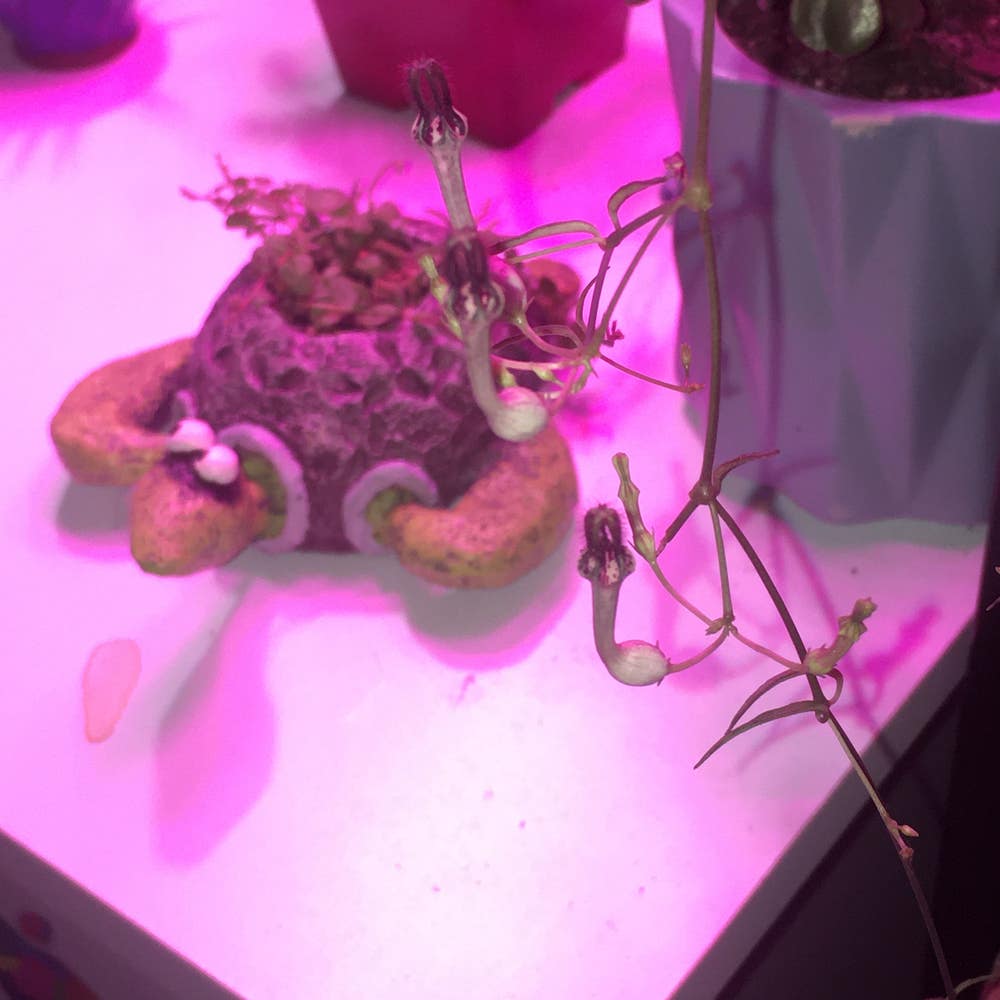
Why Are There Black Spots On My String Of Needles Leaves?
Ceropegia linearis
By the Greg Editorial Team
Jun 18, 2024•4 min read
This article was created with the help of AI so we can cover more plants for you. May contain errors. See one? Report it here.
Eradicate pesky black spots on your String of Needles 🌿 and safeguard your plant's health with expert tips!
- Fungal and bacterial infections cause black spots, thriving in moisture.
- Prune affected areas; adjust watering to prevent and manage black spots.
- Enhance air circulation, control humidity, and quarantine new or affected plants.
Understanding the Causes of Black Spots
🍄 Fungal Infections
Fungi love a good party, and your String of Needles is their favorite nightclub. Leaf spot diseases are the uninvited guests leaving behind those unsightly black spots on the leaves. They thrive in the moist, humid conditions that you might be too generous in providing. Overwatering and a personal sauna for your plant (read: high humidity) are practically sending fungi an engraved invitation. To crash this fungal fiesta, you'll need to reassess your watering habits and maybe break up the humidity huddle.
🦠 Bacterial Infections
Bacterial infections are like that one friend who only needs a tiny opening to crash at your place and then never leaves. They sneak in through wounds or cuts on your plant's leaves and set up shop. If the black spots on your String of Needles feel a bit slimy, that's bacteria for you. They're less about the dry, crusty aesthetic and more about the gooey, "I've overstayed my welcome" vibe. Keeping your hands clean and your pruning shears sterilized is your best bet to keep these party poopers at bay.
🦟 Pests and Pathogens
Now, let's talk about the real vampires of the plant world: pests like spider mites. These tiny Draculas suck the life out of your plant, leaving behind a polka-dot pattern of black spots as evidence of their feast. And just when you think it's only the pests, there's more. Pathogens can tag along, turning your plant's leaves into their personal buffet. Regular inspections and a good insecticide can send these critters packing. Remember, spotting spider mites or their fecal souvenirs early can save your plant from turning into a leafy ghost town.
Alleviating Black Spots
✂️ Pruning and Removal
Pruning isn't just about aesthetics; it's a lifesaver for your String of Needles. Snip off those black-spotted leaves and stems with the precision of a bonsai master. Remember, cleanliness is next to godliness, so sterilize those shears to prevent spreading any funk.
💧 Adjusting Watering Practices
Overwatering is the root of all evil when it comes to plant care. Adjust your watering habits like you're tuning a guitar—too tight and the strings snap, too loose and the music's off. Aim for soil that's moist, not a swamp.
🌬 Improving Air Circulation
Stale air is the enemy of healthy leaves. Boost circulation around your plant like it's a rock star needing cool air at a packed concert. A fan can work wonders, and so can spacing out your green buddies. Give them room to breathe!
🌱 Soil and Pot Considerations
Your plant's home matters. Choose a pot with drainage holes as if your plant's life depends on it—because it does. Go for soil that drains faster than a colander, and you'll see your plant thrive, not just survive.
Promoting Overall Plant Health
💡 Proper Light Exposure
Maximize your String of Needles' vigor by placing it within 3 feet of a window. This sweet spot ensures it gets enough light without the risk of leaf drop. Remember, sunlight is the plant's main energy source, not fertilizer.
🍽️ Nutrient Balance
Yearly repotting refreshes the soil and nutrients, making additional fertilization often unnecessary. If you do fertilize, opt for a balanced solution during the growing season, and then take a break in winter.
🌡️ Temperature Control
Keep the temperature steady. String of Needles isn't a fan of the chills or a sauna; it prefers a consistent, comfortable range to avoid stress, which can make it more prone to infections.
Preventing Black Spots
💧 Proper Watering Techniques
Watering your String of Needles plant is a balancing act. Too much moisture is an open invitation for black spots. Stick to a schedule that aligns with your plant's needs, adjusting for seasonal changes in humidity and temperature. Bottom watering can be a game-changer; just remember to empty the tray after the plant has had its fill to avoid soggy soil conditions.
🌡 Humidity Control
Indoor jungles are great until they're not. High humidity might be a tropical dream for your plants, but it's also a fungal fantasy. Keep indoor humidity levels in check to discourage unwanted microbial parties. Sometimes, less is more – don't turn your living room into a rainforest.
👀 Regular Inspections
Eyes on the prize, plant parents. Regularly inspect your String of Needles for any signs of trouble. Catching pests or funky-looking spots early can mean the difference between a minor hiccup and a full-blown plant pandemic. Be vigilant and your green buddies will thank you.
🚫 Quarantine and Isolation
New plant on the block? Don't mix it with the crowd just yet. Quarantine new additions to your plant family to prevent any undercover agents of disease from spreading. And if you spot trouble, isolate the affected plant faster than you'd unfriend a spoiler-happy acquaintance after a series finale.
⚠️ Safety First
This content is for general information and may contain errors, omissions, or outdated details. It is not medical, veterinary advice, or an endorsement of therapeutic claims.
Always consult a qualified healthcare professional before using any plant as food, medicine, or supplement.
Never eat any plant (or feed one to pets) without confirming its identity with at least two trusted sources.
If you suspect poisoning, call Poison Control (800) 222-1222, the Pet Poison Helpline (800) 213-6680, or your local emergency service immediately.
Spotted an error? Please report it here.
Banish those pesky black spots and keep your String of Needles thriving 🌱 with Greg's tailored watering schedules and pest monitoring alerts, ensuring a healthy plant environment.