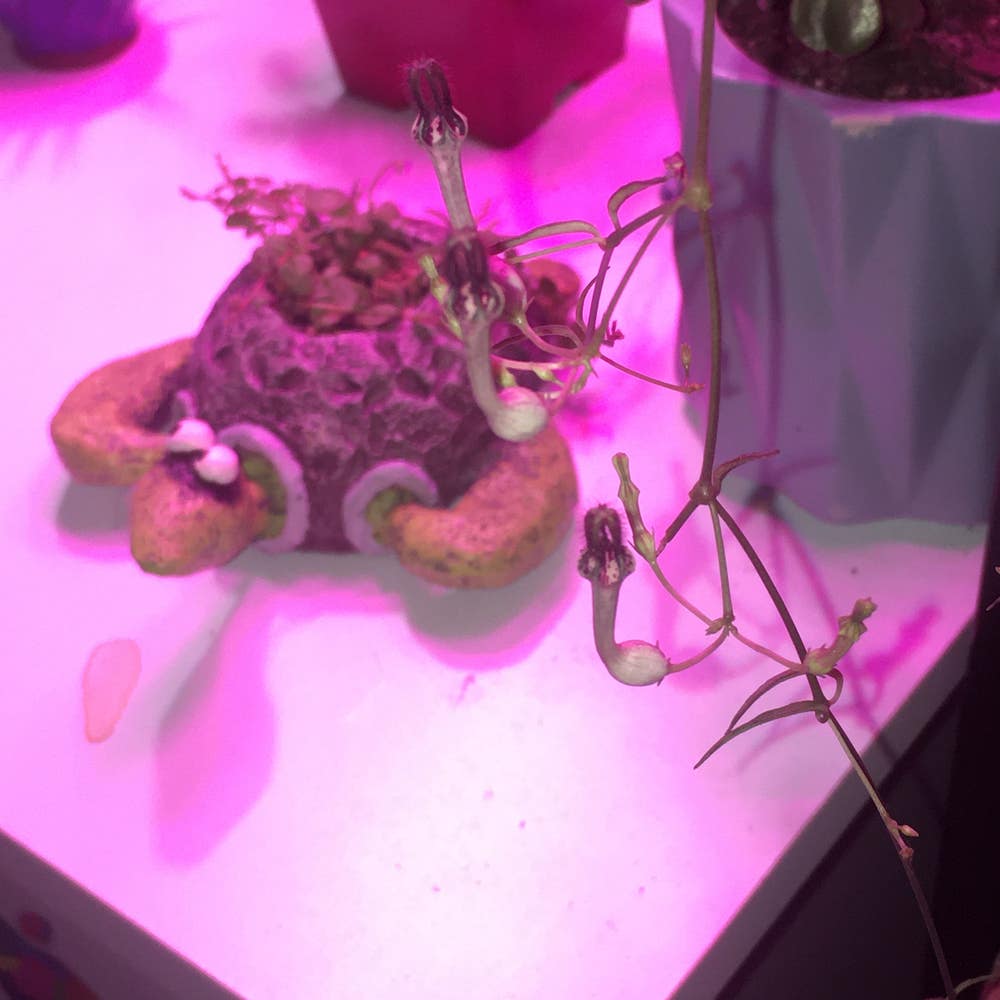
💧 Why Are My String of Needles Leaves Mushy?
Ceropegia linearis
By the Greg Editorial Team
Dec 19, 2023•3 min read
This article was created with the help of AI so we can cover more plants for you. May contain errors. See one? Report it here.
Rescue your String of Needles from mushy peril with these lifesaving plant care tips! 🌿🚑
- Overwatering leads to mushiness: Let soil dry before watering again.
- Poor drainage? Add perlite or sand for healthier String of Needles.
- Prune and repot for recovery if you detect mushy stems or leaves.
Diagnosing Mushy Leaves in String of Needles
💦 Overwatering as a Primary Culprit
Yellowing leaves, moldy soil, and a rotten base scream overwatering. To combat this, let the soil dry thoroughly before the next watering. Remember, these plants are more camel than fish; they store water in their leaves.
🚰 Poor Drainage and Its Impact
Poor drainage turns your plant's home into a swamp. Modify the soil by mixing in perlite or coarse sand. Think of it as giving your plant's roots a breathable athletic wear instead of a wetsuit.
🩹 Detecting and Dealing with Root Rot
Mushy stems are a red flag for root rot. If you spot this, it's surgery time: remove the plant, cut off the rotted parts, and repot in fresh, well-draining soil. It's like an emergency transplant, and you're the surgeon.
Immediate Actions to Alleviate Mushiness
🌞 Adjusting the Plant's Environment
Light and temperature are crucial for your String of Needles. If leaves are mushy, they might be begging for a change of scenery. Move the plant to a spot with bright, indirect light and ensure the temperature is consistently warm—avoid drafts and sudden temperature swings.
✂️ Pruning Affected Leaves
When you spot a mushy leaf, it's time for a trim. Sterilize your scissors with rubbing alcohol to prevent spreading any pathogens. Snip the mushy leaves at their base, and keep those tools clean between cuts. This isn't just about aesthetics; it's a rescue mission.
🚑 Emergency Repotting Techniques
If mushiness persists, consider an emergency repot. Gently remove your plant from its pot, and inspect the roots. Brown and squishy? Bad news. Trim the rot away and let the healthy roots breathe. Repot with fresh, well-draining soil and a pot that's not a swimming pool for the roots. Give it some space to recover—think of it as a plant hospital with you as the chief surgeon.
Long-Term Prevention Strategies
💧 Watering Schedule Optimization
Creating a tailored watering schedule is key to preventing mushy leaves.
- Check the soil before watering; it should be dry an inch down.
- Water consistently, not erratically. Think routine, not random.
🌱 Soil and Pot Considerations
Choosing the right soil mix and pot type is crucial for plant health.
- Use a well-draining soil mix; your plant's not a fan of wet feet.
- Ensure pots have drainage holes. No holes? Drill some or ditch the pot.
👀 Monitoring and Maintenance Tips
Routine checks and maintenance are your early warning system against mushiness.
- Regularly inspect leaves for early signs of distress.
- Adjust care with the seasons; less water in winter, more vigilance in summer.
- Rotate the pot occasionally for even growth and no lopsided surprises.
⚠️ Safety First
This content is for general information and may contain errors, omissions, or outdated details. It is not medical, veterinary advice, or an endorsement of therapeutic claims.
Always consult a qualified healthcare professional before using any plant as food, medicine, or supplement.
Never eat any plant (or feed one to pets) without confirming its identity with at least two trusted sources.
If you suspect poisoning, call Poison Control (800) 222-1222, the Pet Poison Helpline (800) 213-6680, or your local emergency service immediately.
Spotted an error? Please report it here.
Avoid the dreaded mushy leaves 🍂 by using Greg to dial in the ideal watering schedule for your String of Needles, ensuring a healthy and happy plant.