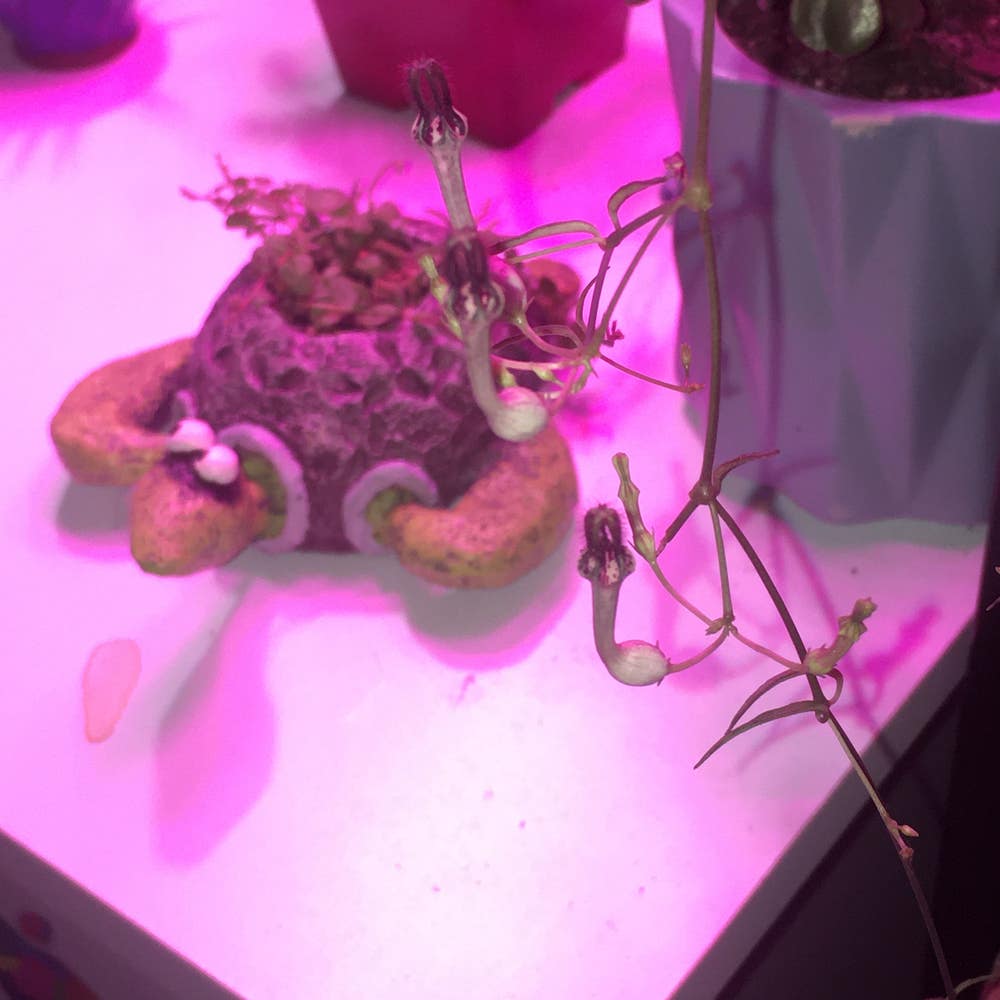
Fertilizing My String Of Needles
Ceropegia linearis
By the Greg Editorial Team
Dec 16, 2023•6 min read
This article was created with the help of AI so we can cover more plants for you. May contain errors. See one? Report it here.
Nurture a stunning bloom on your String of Needles with tailored fertilizing tips. 🌸🌿
- Phosphorus boosts blooming: Use fertilizers with higher phosphorus content.
- Fertilize with care: Over-fertilization can hinder growth and blooming.
- General care complements fertilizing: Proper light, water, and pruning are essential.
Understanding String of Needles Blooming Requirements
To coax the String of Needles into blooming, it's not just about dumping water and hoping for the best. Sunlight is your secret weapon, and just the right amount can make those blooms pop. But hold your horses, because these plants are like that low-maintenance friend who thrives on neglect; they want their soil on the dry side.
🌸 Specific Conditions for Blooming
Well-draining soil is a must-have for these needle-like beauties. Think of it as the comfy bed that lets them rest easy and bloom better. Add in some perlite or vermiculite to your regular potting mix, and you're golden. And remember, these guys are dormant in winter, so chill on the watering.
🍽️ Nutrients and Fertilization
When it comes to food, less is more. If you're repotting annually, fresh soil might just do the trick without extra fertilizer. But if you're feeling generous, a balanced N-P-K ratio is your go-to. Just don't overdo it; these plants are like that guest who nibbles at the buffet rather than going all in.
🌱 Role of Fertilization
Fertilization isn't the plant's main energy source; that's the sun's job. But think of fertilizer as the plant's multivitamin that fills in the nutritional gaps. It's about supporting growth, not forcing it. So, if you're going to fertilize, do it with a light touch and only when the plant is actively growing.
Selecting Fertilizers to Support Blooming
When it comes to fertilizers, the String of Needles is as picky as a cat on a vegan diet. It craves a balanced nutrient profile, with a spotlight on phosphorus to encourage those showy blooms.
💡 The Phosphorus Factor
Phosphorus is the secret sauce for flowering. A fertilizer with a higher middle number, like 10-30-20, should be your go-to. It's like picking a dessert that's more chocolate than flour—blooms love it.
🍃 Organic vs. Synthetic
Organic fertilizers are the slow food movement of plant care—gentler and with a side of soil health. Synthetic options are the fast food equivalent—quick, potent, and a tad riskier if you overindulge your green friends.
🌱 The Micronutrient Mix
Don't forget the micronutrients. These are the unsung heroes that support robust stem and flower growth. Look for a mix that includes calcium, iron, and the gang, ensuring your plant doesn't slouch under the weight of its own beauty.
📊 Real Talk on Ratios
A balanced NPK ratio like 10-10-10 is the comfy sweatpants of fertilizers—reliable and fuss-free. But when you want your String of Needles to strut its stuff, aim for a formula with a bit more phosphorus.
🌿 The Organic Materials Review Institute (OMRI) Stamp
For the organic aficionados, seek out the OMRI stamp. It's like a plant nutritionist's seal of approval, ensuring you're not just throwing your green at greenwashed products.
Remember, whether you go organic or synthetic, the goal is to avoid turning your String of Needles into a nitrogen-hyped, leggy mess. Keep it tight, full, and ready to bloom.
Fertilizing for Blooming
Timing is everything when it comes to fertilizing your String of Needles for blooming. Kick things off in early spring, as new growth emerges, and maintain a steady schedule every 5-7 weeks. This rhythm helps the plant gear up for a spectacular bloom show.
🌼 Frequency of Fertilization
Don't overdo it; more isn't always better. Stick to the 5-7 week interval. Overzealous spoon-feeding can lead to nutrient overload, which is like giving your plant a food coma. Not pretty.
🌱 Application Techniques
Go granular or slow-release with your fertilizer choice. It's like a time-release capsule for plants, providing a steady diet without the risk of overindulgence. Apply it around the base of the plant, avoiding direct contact with the foliage to prevent burns.
Water well after applying fertilizer. This helps to distribute the nutrients, ensuring they reach the roots where they're most needed. Think of it as chasing down a vitamin with a glass of water – it just works better.
Remember, the goal is to support blooming, not to create the Amazon rainforest in your living room. Keep an eye on your plant and adjust your approach as needed. After all, gardening is part art, part science, and all about the love of growing.
Signs of Over-Fertilization and Blooming Impact
🌱 Identifying Over-Fertilization Symptoms
Yellowing leaves, browning at the tips, and a general lack of vigor can signal that your String of Needles has had a bit too much to drink from the fertilizer bottle. If you notice a crusty buildup on the soil surface or roots that look more like they've been through a barbecue than a growth spurt, it's time to rethink your feeding strategy. These signs can be deceptive, though; they're like the plant world's version of a cold—common to many ailments. So, keep your detective hat on and rule out other culprits like pests or disease.
🚫 Preventing Fertilizer Overload
To avoid the drama of an over-fertilized plant, moderation is key. Think of fertilizer like hot sauce—a little can enhance the flavor, but too much and you'll be downing a gallon of milk to cope. Stick to a balanced fertilizer with a gentle hand, especially during the blooming season. Remember, your String of Needles is more of a light snacker than a feast-goer. During dormancy in winter, it's like the plant is hibernating; don't wake it with a feast. Ease up on the watering and fertilizing until it's back to its active self.
🌿 Quick Tips for Fertilizer Management
- Use a balanced, low-dose fertilizer to avoid nutrient overload.
- Apply during the growing season; let the plant rest in winter.
- Observe your plant closely—changes can be subtle but telling.
- If you suspect over-fertilization, flush the soil with water to dilute the excess nutrients.
- Consider the type of fertilizer: slow-release options are less likely to cause harm.
- Always follow the less-is-more philosophy with fertilizers to keep your String of Needles blooming without the burnout.
General Care Practices for Blooming
Aside from fertilization, proper light and water are pivotal for the String of Needles to bloom.
💡 Light Requirements
Bright, indirect light is ideal. Too much sun can scorch leaves, while too little can stunt blooming.
🚰 Watering Practices
Water when the top inch of soil is dry. Overwatering can lead to root rot, an enemy of blooming.
🌡️ Temperature and Humidity
Mimic their native habitat—warm temperatures and moderate humidity foster the best blooms.
🍯 Pot and Soil
Use a pot with drainage and a well-draining soil mix. This ensures roots are healthy, promoting better blooms.
👀 Patience and Observation
Blooms may take time. Watch for budding and adjust care to support the flowering process.
🛑 Avoid Disturbances
Once buds form, keep the plant stable. Shifting environments can cause bud drop.
🌿 Complementary Care
Prune dead or yellowing leaves. This directs energy to new growth and potential blooms.
Remember, the String of Needles is not a diva; it blooms with consistent, mindful care.
⚠️ Safety First
This content is for general information and may contain errors, omissions, or outdated details. It is not medical, veterinary advice, or an endorsement of therapeutic claims.
Always consult a qualified healthcare professional before using any plant as food, medicine, or supplement.
Never eat any plant (or feed one to pets) without confirming its identity with at least two trusted sources.
If you suspect poisoning, call Poison Control (800) 222-1222, the Pet Poison Helpline (800) 213-6680, or your local emergency service immediately.
Spotted an error? Please report it here.
Nurture your String of Needles' blooms 🌸 with precision by using Greg to remind you when to apply that perfect 10-30-20 fertilizer, avoiding over-fertilization and ensuring peak blooming.