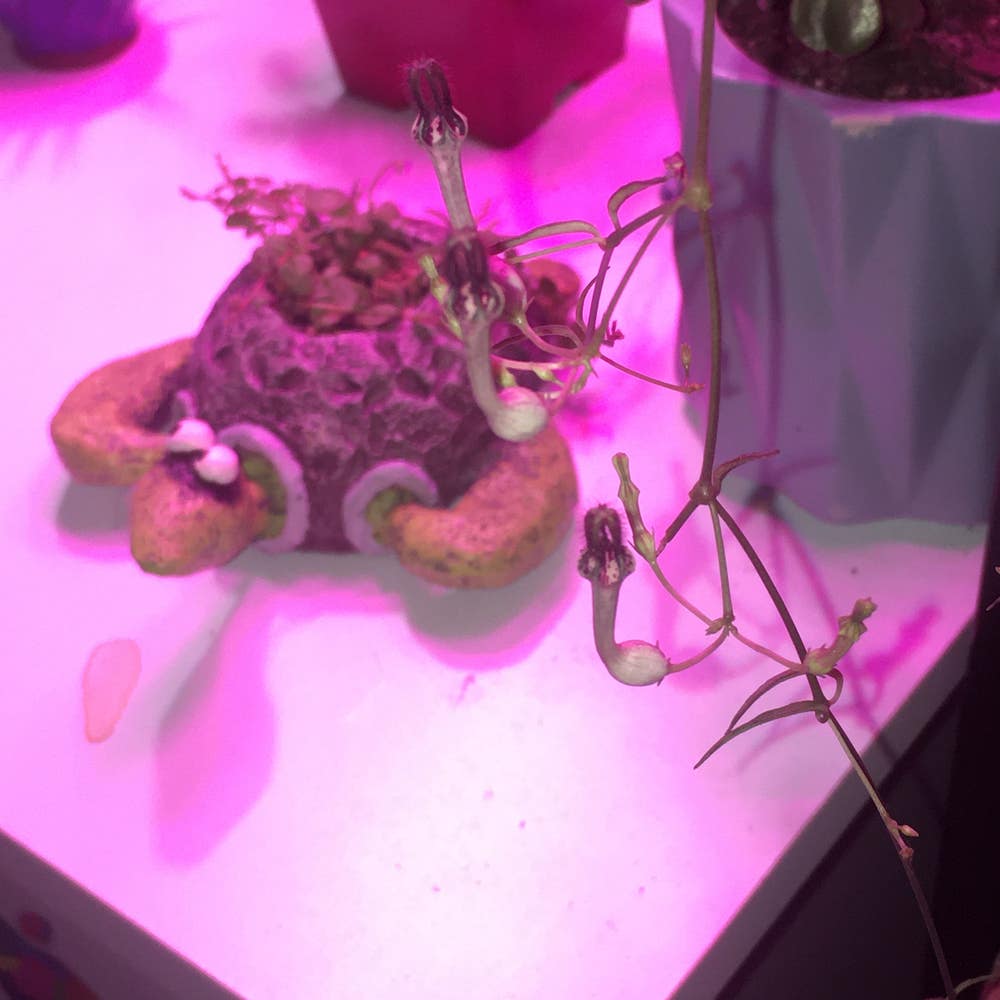
My String Of Needles's Light Requirements
Ceropegia linearis
By the Greg Editorial Team
Jun 18, 2024•9 min read
This article was created with the help of AI so we can cover more plants for you. May contain errors. See one? Report it here.
Master the light, master the bloom 🌼—unlock your String of Needles' flowering prowess with precision lighting!
- Bright, indirect light is key for String of Needles' growth and flowering.
- 🌸 Uninterrupted night periods set the stage for flowering.
- Adjust light for responses to ensure optimal flowering and health.
Understanding String of Needles' Light Requirements
🌞 Specific Light Conditions for Growth
Bright, indirect light is the sweet spot for String of Needles. It's like the plant's version of a morning coffee—absolutely essential. Too little light, and you'll see it sulk by dropping leaves. To prevent this, place your plant within 3 feet of a window. It's not just about survival; it's about thriving.
💡 The Importance of Proper Lighting
The right light environment is more than a luxury; it's a necessity for your String of Needles' well-being. Think of it as the plant's personal trainer, keeping it fit and healthy. Without it, you're not just risking a few dropped leaves—you're compromising the plant's entire lifestyle.

Impact of Light on Flowering
💡 The Role of Light in Flowering
Light, the maestro of the plant world, dictates the flowering symphony of the String of Needles. This succulent, with its penchant for bright, indirect light, relies on the right light conditions to initiate and sustain its bloom cycle. Too little light, and the plant's flowering potential is as good as a withered bud, while too much can scorch its aspirations just as quickly.
💫 Light Quality, Duration, and Intensity
The quality of light influences the plant's ability to photosynthesize effectively, which is crucial for flower production. Duration of light exposure plays a pivotal role too; the String of Needles, much like a finicky artist, may require longer or shorter daylight hours to trigger its flowering process. The intensity of light ensures the plant has enough energy to support the development of flowers without expending it all on survival.
🌅 Light Exposure and Flowering Cues
Indoor gardeners, take note: the proximity of your String of Needles to a light source can make or break its flowering show. Southern exposures are your best bet for the most intense light, but beware of the scorching midday sun. Eastern and western exposures offer a gentler touch, while northern ones might leave your plant in the floral friend zone. Remember, it's not just about the light but also about the darkness; uninterrupted night periods are crucial for setting the stage for flowering in many plants.
🏙 Adapting to Indoor Environments
In the cozy confines of your home, your String of Needles might need a little extra help to hit its flowering notes. If natural light is playing hard to get, consider grow lights as a backup band to keep the rhythm going. Just ensure they mimic the natural light spectrum to avoid throwing the plant off-key.
👀 Observing Plant Responses
Keep an eye on your String of Needles' growth pattern and leaf color. If it's stretching out like it's trying to escape or donning a pale green wardrobe, it's screaming for more light. Conversely, if the leaves are getting a sunburn, it's time to dial down the exposure. Adjust your plant's position with the subtlety of a stagehand to keep its performance on track for a standing ovation come flowering time.

Managing Light for Optimal Flowering
💡 The Right Light Recipe
Consistency is your plant's best friend when it comes to flowering. To kickstart the blooming bonanza, aim for 12 hours of light and 12 hours of darkness. This mimics the natural day-night cycle that many plants crave for triggering their flower power.
💡 Grow Lights: Your Indoor Sun
No sun? No problem. Full-spectrum grow lights can be the sun substitute your String of Needles needs. Red wavelengths are particularly good for encouraging those shy buds to bloom. Just remember, it's not a tanning bed—keep the lights close, but not too close.
💡 Timing is Everything
Grab a timer and make your life easier. Set it to switch your grow lights on and off, so you don't have to play the role of the sun. Consistent light cycles are like a reliable alarm clock for your plant's flowering schedule.
💡 Observing and Tweaking
Keep an eye out for your plant's response. If it's stretching towards the light like a sunbather on the beach, it might need more. If it's starting to look like a crispy piece of lettuce, dial it back. Adjust your light levels and watch your plant thank you with vibrant blooms.
Potential Issues with Inadequate Light
🌱 Signs of Insufficient Light
Leggy growth and large gaps between leaves signal your String of Needles is stretching for more light. If the vibrant variegation of your plant fades to a dull green, it's begging for brighter conditions. Yellowing leaves that drop prematurely are also a distress call for more sunshine.
🌞 Combatting Light Deficiency
Move your plant closer to a window, preferably one that faces south or west, to soak up those rays. If natural light is scarce, consider artificial grow lights—they're like a sun substitute for your sun-starved green buddy. Pruning can also help; it encourages the plant to focus on new, healthy growth under better lighting conditions.
Real Talk: Light Deficiency
Let's get real—your plant's not trying to give you a hard time. It's just that without enough light, it's like trying to run a marathon on an empty stomach. So, keep an eye out for those tell-tale signs and take action. Remember, it's all about finding that sweet spot where your String of Needles can bask in just the right amount of light to thrive.
Dealing with Excessive Light
Excessive light can be a silent killer for your String of Needles plant. Too much of a good thing, and you'll see your plant's leaves turning into a crispy, sunburnt mess.
🚫 Recognizing the Risks
Scorching is the most blatant sign that your plant is getting more light than it can handle. Leaves may pale, brown, or outright die, which is a clear SOS from your green buddy. It's not just about the burns, either. Too much light messes with the plant's internal clock, potentially stunting growth and throwing off its flowering groove.
🛡️ Shielding Strategies
To protect your plant from light overdose, start by relocating it to a spot with gentler light. Think bright, but indirect – no harsh sunbeams allowed. If you're indoors, sheer curtains can be your best friend, diffusing that intense sunlight into a soft glow. For outdoor plants, consider shade cloth or moving them to a spot that gets a mix of sun and shade throughout the day.
💡 Light Management Tips
- Rotate your plant regularly to ensure even light distribution and prevent lopsided growth.
- Use a light meter to measure intensity; keep it within the comfort zone for String of Needles.
- If artificial lighting is your game, keep those bulbs at a safe distance. No plant wants a close encounter of the third kind with a grow light.
Remember, your String of Needles doesn't need a tan. Keep it cool, keep it shaded, and you'll keep it happy.
Adapting Light Conditions for Flowering
Transitioning your String of Needles to the optimal light for flowering is like updating your phone's software; it needs to be done carefully to prevent glitches. Here's how to acclimate your plant without causing a system crash.
🌼 Gradual Introduction to Brighter Light
Incremental changes are key. Start by moving your plant closer to a brighter spot for a few hours each day. This slow shift helps prevent the botanical equivalent of screen freeze, otherwise known as leaf drop or yellowing.
🌍 Environmental Considerations
When you change the light, remember you're also potentially altering the climate. Keep an eye out for drafty windows or a spike in temperature, which could throw your plant off balance.
🌟 Using Light to Trick Your Plant
To get those blooms popping, sometimes you need to play a little light trickery. Mimic the natural light cycle by providing darkness for 12-14 hours followed by 10-12 hours of light. This can kickstart the flowering process, like a cheat code for nature.
🛠 Tools of the Trade
Consider investing in a Pro Light System or a timer to help regulate light exposure. These gadgets can be a game-changer, ensuring your plant gets just the right amount of light without you having to watch the clock.
👀 Monitoring and Tweaking
Keep a close eye on your plant's response to the new light conditions. If it's not thriving, don't be afraid to tweak the settings. Plant care is not a set-it-and-forget-it deal; it's more like a constantly evolving playlist that needs fine-tuning.
Remember, the goal is to achieve the 'Goldilocks zone' of lighting – not too much, not too little, but just right for your String of Needles to flourish and flower beautifully.
Monitoring and Adjusting Light for Flowering
👀 Observing Plant Responses
Watch your String of Needles like a hawk. If it's stretching towards the light or the leaves are losing their lush, you've got a hint. Adjust the light source accordingly—closer for more oomph, further away if it's getting a bit too sun-kissed.
🌈 Light Level Consistency
Consistency is key. Use a timer to maintain a steady light cycle that mimics the great outdoors. This isn't just about on and off; it's about gradual transitions that don't leave your plant in shock.
🎨 Adjusting Light Quality
Red light's your friend for flowering, but don't go overboard. Think of it as setting the mood—too much and you're at a rave, too little and you're dining by candlelight. Balance is the sweet spot.
💡 Light Intensity and Duration
Keep a finger on the pulse of light intensity. Too much and you're in scorch city, too little and you've got a wallflower. Remember, your String of Needles isn't just surviving, it's aiming to thrive and flower.
🌅 Transitioning to Flowering Light Conditions
When it's showtime for blooms, ease into the new light conditions. Sudden changes are the enemy of flowering. Think of it as acclimating to a new altitude—slow and steady wins the race.
📱 Using Technology to Your Advantage
Leverage tech like grow lights and apps to keep tabs on your plant's light diet. They're not just gadgets; they're your allies in the quest for the perfect bloom.
🌍 Real-World Observations
Get hands-on. Sometimes the best way to learn is to experiment. Shift your plant around, try different bulbs, and observe. Just like finding the perfect spot on the couch, it takes a bit of wiggling to get it just right.
⚠️ Safety First
This content is for general information and may contain errors, omissions, or outdated details. It is not medical, veterinary advice, or an endorsement of therapeutic claims.
Always consult a qualified healthcare professional before using any plant as food, medicine, or supplement.
Never eat any plant (or feed one to pets) without confirming its identity with at least two trusted sources.
If you suspect poisoning, call Poison Control (800) 222-1222, the Pet Poison Helpline (800) 213-6680, or your local emergency service immediately.
Spotted an error? Please report it here.
Let your String of Needles bask in just the right glow for flourishing 🌱 with Greg's savvy light assessments, guiding you to the sweet spot between growth and bloom.