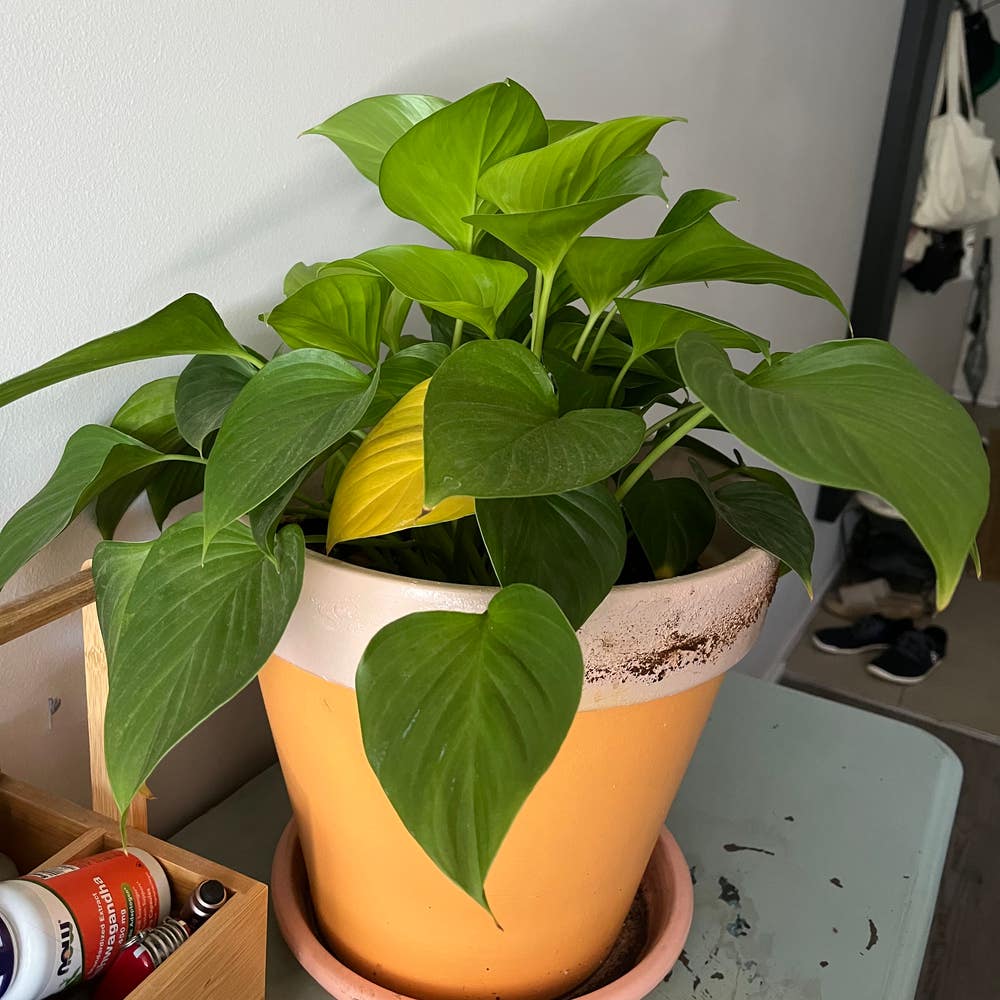
What Should I Do When Red Arrow Leaf Leaves Turn Yellow? 💛
Homalomena pendula
By the Greg Editorial Team
Jun 15, 2024•5 min read
This article was created with the help of AI so we can cover more plants for you. May contain errors. See one? Report it here.
Say goodbye to yellow leaves 🍂 and hello to lush Red Arrow Leaf plants with these essential care tips!
- Balance light and water to prevent yellow leaves; indirect light and moist soil.
- Steady warm environment is crucial; avoid temperature and humidity swings.
- Nutrient-rich care with balanced fertilizer to combat deficiencies and yellowing.
Pinpointing the Culprits Behind Yellow Leaves
🌞 Too Much Sun or Not Enough?
Red Arrow Leaf plants are like Goldilocks; they need their light just right. Too much sun and they'll throw a yellow tantrum. Not enough, and they sulk into a pale, chlorotic state. The trick is to find that sweet spot of bright, indirect light where your plant can bask without getting a sunburn.
🔥 Feeling the Heat or Chilled to the Bone?
Temperature swings are a no-go. Keep your plant away from the icy draft of an open window or the Sahara-like blast of a heater. Aim for a steady, warm environment, with humidity on the mellow side. If your leaves are throwing yellow flags, it's time to tweak the thermostat or set up a humidifier.
💧 Thirsty Roots or Drowning in Excess?
Watering is a ritual, not a reflex. The soil should feel like a wrung-out sponge—moist but not waterlogged. In the heat, your plant drinks like a fish; in the cool, it sips like a nun. Adjust your watering to the rhythm of the seasons, and always check the soil before giving it another go. Remember, yellow leaves might be crying out "I'm too wet!" or whispering "I'm parched." Listen closely.
The Rescue Plan for Yellow Leaves
💡 Let There Be (The Right Amount of) Light!
Adjusting light conditions is crucial for your Red Arrow Leaf's comeback. If your plant's leaves are throwing shade by turning yellow, it's time to evaluate their sunbathing habits. Bright, indirect light is the sweet spot; direct sunlight can be as harsh as a midday desert, while too little light is like living under a rock. Use sheer curtains to protect your plant from intense rays, or reposition it to avoid the sun's peak hours.
🌡️ Climate Control for Your Red Arrow Leaf
Stabilizing temperature and humidity is like setting the mood for a perfect date—it needs to be just right. Your plant doesn't appreciate the drama of sudden temperature changes any more than you do. Aim for a consistent tropical vibe, avoiding the extremes of a sauna or an igloo. If your indoor air is drier than a stand-up comedian's wit, consider a humidifier to keep the air as moist as a morning dew.
🚰 Watering Ways to Wave Goodbye to Yellow
When it comes to watering, think of your plant as a Goldilocks guest—too much or too little, and you'll hear about it. The goal is to keep the soil as moist as a wrung-out sponge, not a swamp or a parched desert. Seasonal adjustments are key; water less in winter when your plant's thirst is as low as a cactus's, and more in summer when it's as thirsty as a marathon runner. Remember to let the topsoil dry out slightly between waterings to avoid root rot, which can spread faster than a viral dance move.
Feeding Your Plant Back to Health
💡 Spotting Signs of Starvation
When your Red Arrow Leaf's leaves start to yellow, it's not just a fashion statement—it's a distress signal. Nutrient deficiencies are often the culprits, and they don't RSVP before crashing the party. Nitrogen deficiency is the usual suspect, turning older leaves a sad shade of yellow. Iron should be on your radar if new leaves look pale, except for their dark veins—classic interveinal chlorosis. And if the edges of older leaves are yellowing but their veins remain a stubborn green, magnesium might be the nutrient playing hard to get.
🍽️ The Fertilizer Fix
Choosing the right fertilizer is like picking the perfect snack for your plant—it's got to have all the good stuff without the fluff. A balanced fertilizer is your best bet. But remember, moderation is the mantra; overfeeding can lead to nutrient burn, turning your leaf rescue mission into a tragedy. Always read the instructions and water your plant before and after feeding to avoid a root burn disaster. If you've been a little too generous with the plant food, flush the soil to give your plant a fresh start. Keep an eye out for improvements and tweak your feeding schedule accordingly—your plant will thank you by flaunting its vibrant green leaves.
Keeping Yellow at Bay
💧 Consistency is Key
In the realm of plant care, consistency reigns supreme. Establishing a routine is like setting an alarm clock for your Red Arrow Leaf plant; it craves regularity. Watering should be as predictable as your morning coffee, and light exposure as reliable as your daily commute.
🌿 The Ongoing Nutrient Game Plan
Nutrients are the secret sauce to leaf vitality. A balanced diet, delivered through a well-planned fertilization schedule, can prevent yellow leaves before they become a sad reality. Think of fertilizer as a multivitamin for your plant—necessary, but not in excess.
🌱 Fertilizing Finesse
Use a slow-release fertilizer to provide a steady buffet of nutrients. Overfeeding is the fast track to nutrient burn, so follow the instructions like they're a recipe for your favorite dish.
🏺 Soil and Potting Mastery
Choose a well-draining potting mix and refresh it periodically to prevent the dreaded root rot or nutrient depletion. It's like changing the oil in your car; maintenance is non-negotiable.
🍂 Seasonal Adjustments
Remember, your plant's appetite changes with the seasons. Less water in winter, and adjust fertilization to match your plant's growth cycle. It's like swapping out your wardrobe when the weather shifts—your plant's needs are just as seasonal.
👀 Regular Monitoring and Adjustments
Keep a watchful eye on your plant like it's a simmering pot on the stove. Notice a change in leaf color? It might be time to tweak your care routine. Adjust your care with the precision of a barista crafting the perfect latte.
🐜 Pest Patrol: Regular Inspections and Preventive Treatments
Be the Sherlock Holmes of plant care with regular inspections. Pests are sneaky, but catch them early, and it's game over for the critters. Think of it as a routine security check for your leafy friends. And remember, a clean plant is a strong plant—wipe those leaves down.
⚠️ Safety First
This content is for general information and may contain errors, omissions, or outdated details. It is not medical, veterinary advice, or an endorsement of therapeutic claims.
Always consult a qualified healthcare professional before using any plant as food, medicine, or supplement.
Never eat any plant (or feed one to pets) without confirming its identity with at least two trusted sources.
If you suspect poisoning, call Poison Control (800) 222-1222, the Pet Poison Helpline (800) 213-6680, or your local emergency service immediately.
Spotted an error? Please report it here.
Avoid the yellow-leaf blues in your Red Arrow Leaf by using Greg's 🌿 tailored reminders to perfect your plant's light, water, and feeding schedule.