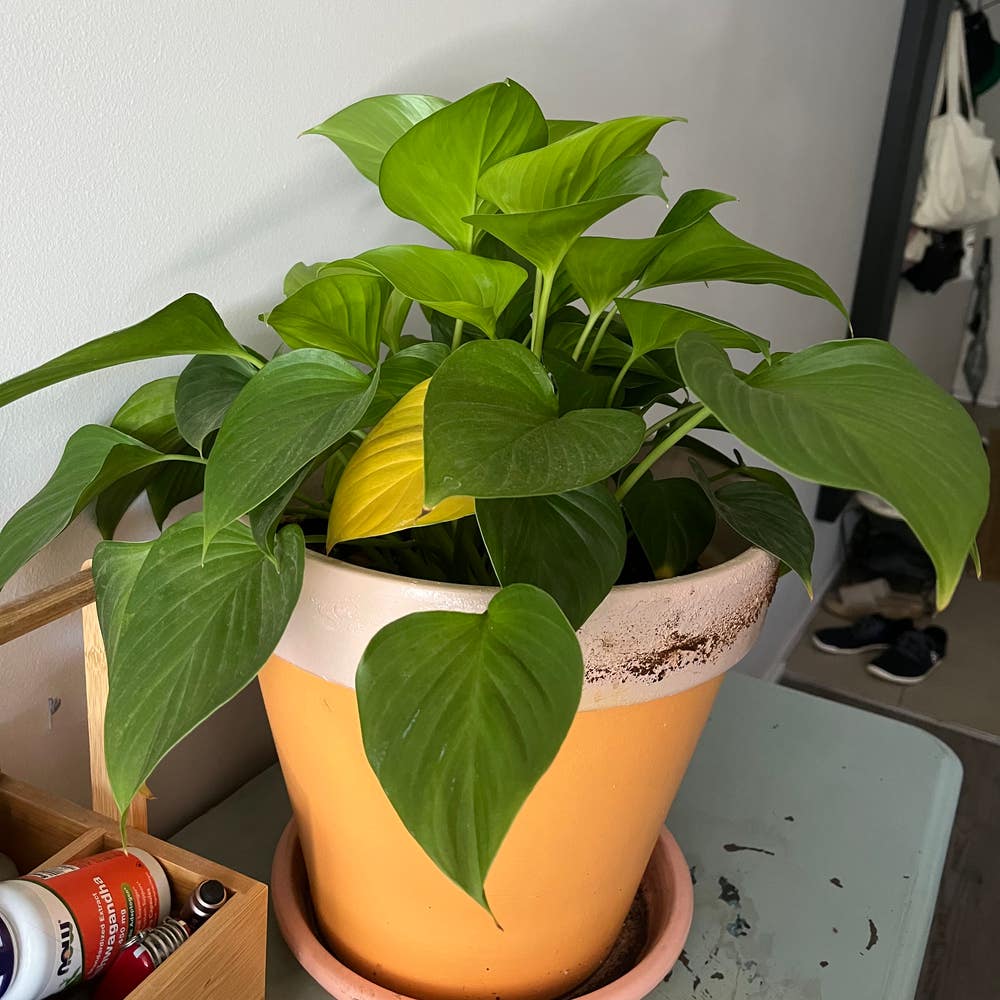
Your Red Arrow Leaf's Light Needs
Homalomena pendula
By the Greg Editorial Team
Jun 15, 2024•3 min read
This article was created with the help of AI so we can cover more plants for you. May contain errors. See one? Report it here.
Nurture a thriving Red Arrow Leaf 🌿 with the perfect light recipe for growth and blooms! 🌞
- 🌞 Morning sun, afternoon shade prevents leaf scorch for Red Arrow Leafs.
- 🏡 East-facing windows ideal indoors; rotate plant for even growth.
- 💡 LED grow lights enhance blooms, mimic natural light with timers.
Basking in the Right Rays: Outdoor Light Perfection
⛅️ Finding the Sweet Spot
Outdoor light can be a double-edged sword for the Red Arrow Leaf. Morning sun is your plant's ally, offering a gentle boost without the harshness of midday. Aim for a spot that basks in early rays but slips into shade as the sun climbs higher.
🛡️ Shady Business
Afternoon shade isn't just nice to have; it's a shield against leaf scorch. Ideal locations mimic a forest canopy—think dappled light, perhaps under a tree or beside a building that casts a timely shadow. Your Red Arrow Leaf will thank you with vibrant, unscorched leaves.
Indoor Light: Making Your Red Arrow Leaf Thrive
🌅 Window Wonders
East-facing windows are your Red Arrow Leaf's best friend, offering a gentle buffet of morning light without the harshness of the afternoon sun. South-facing windows can work too, but keep your plant a few feet back to avoid the midday intensity. Rotate your plant regularly to prevent it from reaching out like a sun-starved zombie.
💡 When Natural Light Isn't Enough
If your Red Arrow Leaf's leaves are looking more dull than dazzling, it's signaling an SOS for more light. Stretching or elongated leaves? That's your plant doing its best impression of a contortionist in search of sunlight. Time to bring in the big guns: grow lights. LEDs are your go-to, mimicking the sun without the UV risks. Keep an eye out for bleached or crispy leaves, a telltale sign of too much artificial sun.
Does Your Red Arrow Leaf Want to Flower? Here's the Light Lowdown
💡 Light: The Secret Ingredient for Blooms
Bright, indirect light is the sweet spot for your Red Arrow Leaf's flowering ambitions. It's like the plant's version of a green room before the big show; without it, there's no performance. Direct sunlight is the villain here, causing leaf scorch, while insufficient light keeps your plant in a perpetual vegetative state, dreaming of the spotlight it never gets.
💡 Maximizing Bloom Potential
To coax your Red Arrow Leaf into the blooming phase, consistent lighting is key. Think of it as setting the stage for an encore performance every day. If your plant's leaves are stretching out like they're trying to escape, it's a clear sign they're not getting enough of those precious lumens. Rotate the plant regularly to prevent a lopsided growth horror story. Remember, the goal is to mimic their natural habitat—bright, but as indirect as a cryptic social media post.
Grow Lights: The Indoor Sun for Your Red Arrow Leaf
💡 Choosing the Right Grow Light
LED grow lights are the champions for your Red Arrow Leaf, delivering a full spectrum of light akin to the sun's embrace. They're energy-efficient, too, sparing both your wallet and the planet. On the flip side, fluorescent bulbs are the budget-friendly understudies, less dazzling but still capable of supporting your plant's photosynthetic cravings.
💡 Setting the Scene
Position your grow light about 12-24 inches above your Red Arrow Leaf to mimic a cozy sunbath without the burn. Duration matters; aim for 5+ hours of light daily to keep your plant from stretching out like it's searching for a long-lost sunbeam. Use timers to simulate natural sunrise and sunset, giving your plant the rhythmic light cycle it secretly desires.
⚠️ Safety First
This content is for general information and may contain errors, omissions, or outdated details. It is not medical, veterinary advice, or an endorsement of therapeutic claims.
Always consult a qualified healthcare professional before using any plant as food, medicine, or supplement.
Never eat any plant (or feed one to pets) without confirming its identity with at least two trusted sources.
If you suspect poisoning, call Poison Control (800) 222-1222, the Pet Poison Helpline (800) 213-6680, or your local emergency service immediately.
Spotted an error? Please report it here.
Ensure your Red Arrow Leaf thrives 🌿 with Greg's tailored reminders for perfect light exposure and rotation, making plant care a breeze.