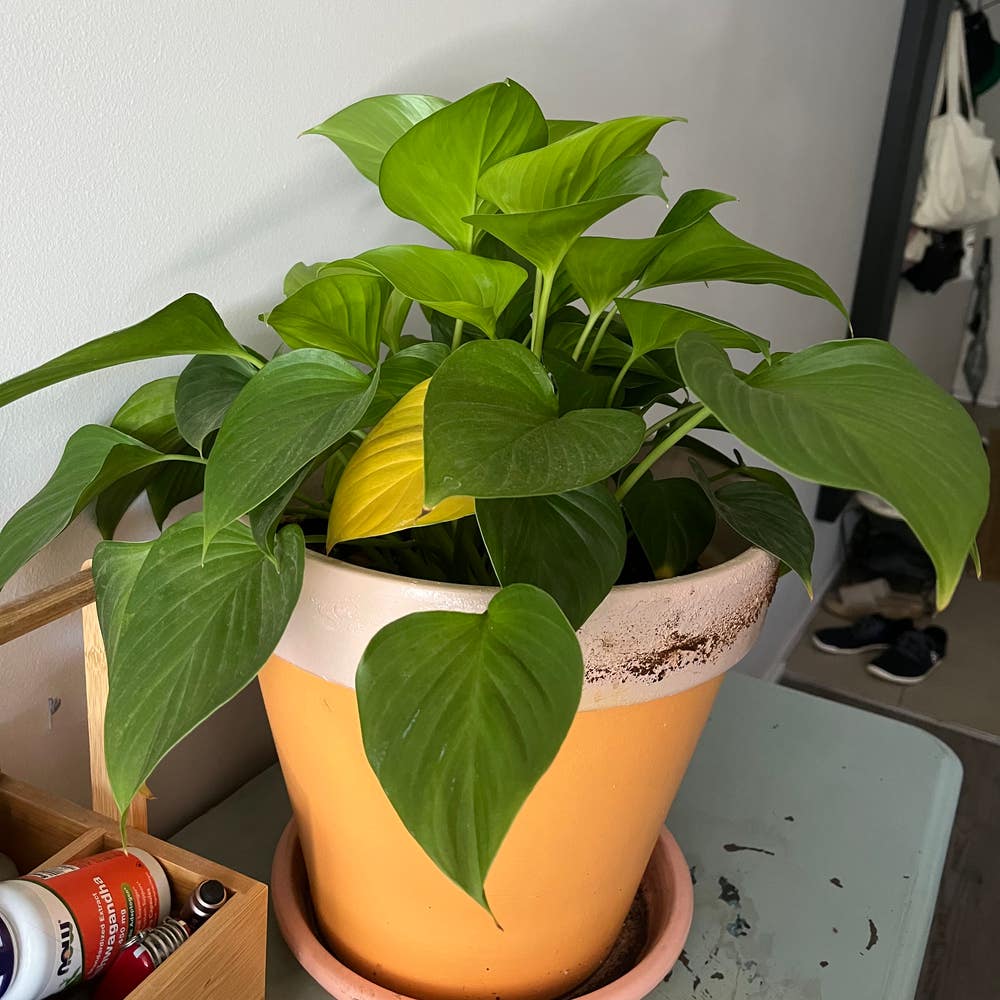
Why Is My Red Arrow Leaf Not Doing Well?
Homalomena pendula
By the Greg Editorial Team
Jun 15, 2024•5 min read
This article was created with the help of AI so we can cover more plants for you. May contain errors. See one? Report it here.
Rescue your wilting Red Arrow Leaf 🍂 and unlock the secrets to its lasting vibrance and health!
- Yellow or crispy leaves? Check your watering—Red Arrow Leaf is picky.
- Sunburn and shivers: Find the sweet spot of light and temperature.
- Pests and root rot: Quarantine, prune, and repot for plant health.
When Water Works Against You
💧 Over-watering and Under-watering
Telltale Signs: Spotting the symptoms in Red Arrow Leaf
Yellow leaves are the plant's protest against too much water. If your Red Arrow Leaf's leaves have brown, mushy spots, it's practically screaming overwatering. Conversely, leaves that resemble a piece of toast, with crispy edges and a droopy stance, are crying out for hydration.
Balancing Act: Finding the watering sweet spot for this plant
The Red Arrow Leaf craves a Goldilocks watering routine – not too much, not too little. The soil should feel like a well-wrung sponge; moist but not drenched. Remember, your plant's thirst changes with the seasons, so adjust your watering frequency accordingly.
Recovery Roadmap: Steps to rescue your waterlogged or thirsty Red Arrow Leaf
For the overwatered Red Arrow Leaf, it's time to dial it back. Let the soil dry out before the next watering session. If the roots are mushy, you might need to repot with fresh soil to prevent root rot. For the underwatered plant, start with a thorough soak and establish a consistent watering schedule. Keep the soil consistently moist, but not wet, to bring your plant back to its perky self.
Light and Temperature Tangles
🌞 Too Much Sun, Too Little Warmth
Sunburn and Shivers: Identifying light and temperature stress in Red Arrow Leaf
Brown, crispy patches on your Red Arrow Leaf's foliage are the plant's version of waving a white flag at the sun. It's too much. Meanwhile, leaves that droop or discolor in a chilly room are silently begging for a sweater. Temperature swings are the frenemy here, stunting growth and causing discomfort.
Just Right: Creating the ideal light and temperature conditions
Your Red Arrow Leaf craves that Goldilocks zone of light and warmth—not too hot, not too cold, just right. Aim for bright, indirect sunlight and maintain a consistent temperature that mimics the plant's natural habitat. Think steady, think stable, think snug.
Quick Fixes: Adjusting your plant's environment for optimal health
If your plant's leaves look like they've been in a tanning bed too long, it's time to relocate to a shadier spot or filter the light with sheer curtains. On the flip side, a plant stretching toward the light is a clear sign it needs a sunnier position. And for those temperature tantrums? Keep it away from drafts and direct heat sources. It's all about creating a cozy nook for your leafy friend.
The Unseen Invaders: Pests
🐜 Spider Mites, Aphids, and More
🚨 Invasion Indicators: Recognizing pest presence on your Red Arrow Leaf
Spider mites are tiny terrors that spin fine webs on your Red Arrow Leaf, especially under the leaves. If you see webbing, it's time to spring into action. Aphids are more sociable; they hang out in clusters, sucking the life out of new growth and leaving a sticky mess behind. Mealybugs? They're the ones with the white cottony camouflage, making themselves at home on your plant.
⚔️ Fight Back: Effective pest control strategies for this specific plant
To show these pests the door, start with a quarantine for your affected Red Arrow Leaf to prevent a household infestation. Prune away the infested areas with precision and discard them responsibly. A blast of water can dislodge the less clingy critters. For the stubborn ones, insecticidal soap or neem oil can be a plant saver. Apply with a warrior's spirit, but follow the label to the letter to avoid collateral damage.
🛡️ Prevention is Key: Keeping pests away from your Red Arrow Leaf
Prevention beats cure any day. Keep your Red Arrow Leaf in tip-top shape with proper watering and lighting to avoid stress signals that pests love. Introduce natural predators like ladybugs if you're feeling eco-friendly. Regular check-ups are non-negotiable—think of them as routine doctor visits for your leafy friend. And airflow, don't forget airflow; it's like good hygiene for plants, keeping the atmosphere too breezy for pests to settle.
Fungal Foes and Root Rot
🍄 Mold, Mildew, and Mushy Roots
Symptoms of Soggy Soil: Detecting mold, fungus, and root rot in Red Arrow Leaf
If your Red Arrow Leaf's roots have turned into mushy offenders, you're likely dealing with root rot. White or yellow mold on the soil's surface is a dead giveaway that your plant's environment is more water park than desert. A foul odor? That's the plant's version of a distress flare. And if the leaves are yellowing and wilting despite the soil being damp, your plant is basically waving a white flag.
Clean Up: Eradicating mold and fungus from your plant's life
First off, isolate the plant like it's got the plague; you don't want this fungal fiasco spreading. If the soil is sporting a fuzzy coat, it's not getting ready for winter—it's mold. Time to evict the unwanted guest. Shine some light, improve airflow, and consider a soil swap if the mold's being stubborn. Remember, cleanliness is next to plant godliness.
Root Rehabilitation: Saving your Red Arrow Leaf from root rot
Root rot is like the horror movie villain that just won't die. To kick it to the curb, start by trimming away the mushy roots—think of it as a bad haircut that's necessary for new growth. Repot your plant in fresh, well-draining soil and reassess your watering habits. Make sure your pot has drainage holes; you're not trying to build an indoor swamp. And don't forget to sanitize your tools—spread love, not spores.
⚠️ Safety First
This content is for general information and may contain errors, omissions, or outdated details. It is not medical, veterinary advice, or an endorsement of therapeutic claims.
Always consult a qualified healthcare professional before using any plant as food, medicine, or supplement.
Never eat any plant (or feed one to pets) without confirming its identity with at least two trusted sources.
If you suspect poisoning, call Poison Control (800) 222-1222, the Pet Poison Helpline (800) 213-6680, or your local emergency service immediately.
Spotted an error? Please report it here.
Revive your Red Arrow Leaf by nailing the perfect watering schedule with Greg's 🌿 custom reminders, ensuring it never thirsts too much or too little for optimal health.