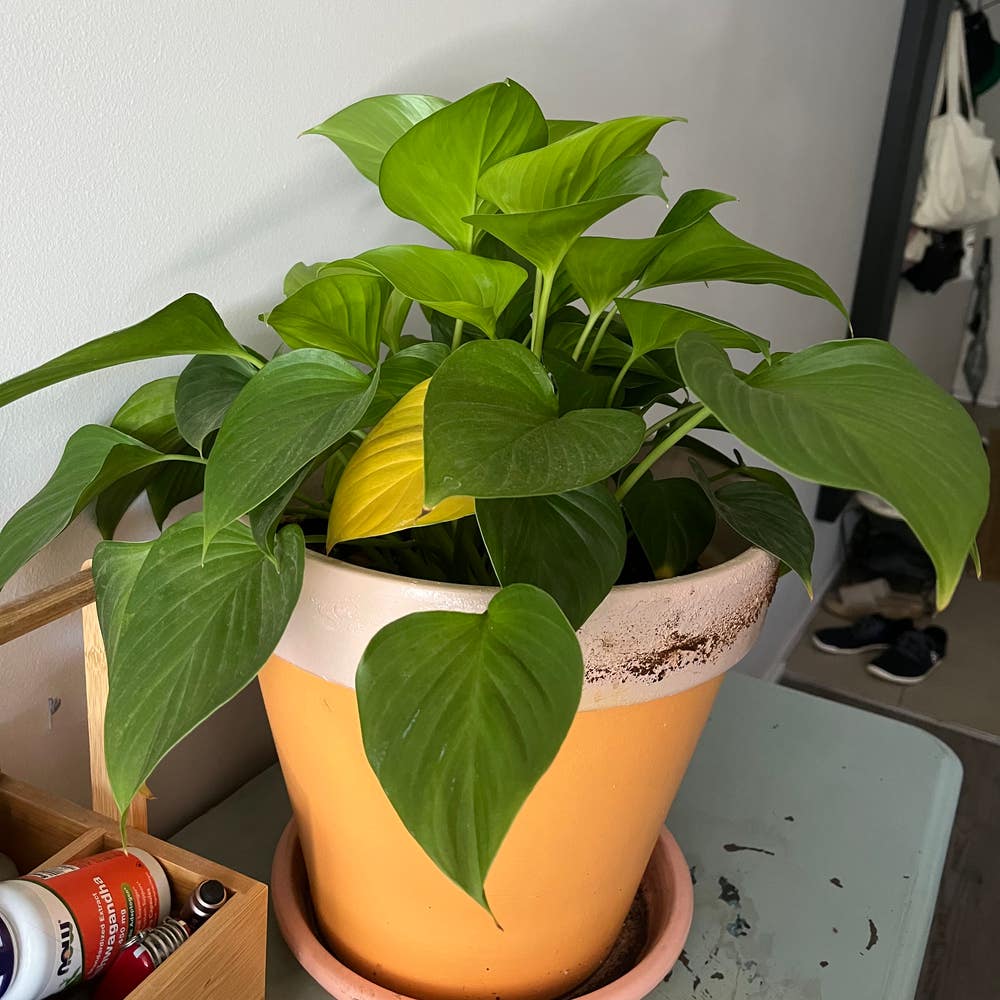
🔽 Why Are My Red Arrow Leaf Leaves Dropping?
Homalomena pendula
By the Greg Editorial Team
Jun 15, 2024•4 min read
This article was created with the help of AI so we can cover more plants for you. May contain errors. See one? Report it here.
Save your Red Arrow Leaf from despair 🍂 with life-saving care tips that ensure lush, happy growth! 🌿
- Overwatering and underwatering can both cause leaf drop; adjust watering accordingly.
- Stable environment is key; avoid temperature fluctuations and drafts.
- Nutrient balance and pest control are crucial for preventing leaf issues.
When Too Much Love Drowns Your Plant: Overwatering Woes
💦 Spotting the Signs of Overwatering
Yellowing leaves and soggy soil are the plant equivalent of a distress flare. If your Red Arrow Leaf is shedding leaves like a tree in autumn, it's time to reassess your watering habits. Root rot is the silent killer here, lurking beneath the surface in overly moist conditions.
💧 Rescuing Your Plant from a Watery Grave
To save your drowning plant, adjust your watering schedule. Before you give it a drink, do the touch test: the soil should feel like a wrung-out sponge, not a soaked one. If the top inch is dry, it's safe to water. Remember, it's a sip they need, not a swim.
Thirsty for Attention: The Underwatering Problem
🚰 The Telltale Signs of Thirst
When your Red Arrow Leaf plant's leaves droop like a Monday morning mood, it's time to perk up your watering game. Dry soil is a clear distress signal; it should never double as a dustpan.
🚰 How Underwatering Stresses Your Plant
Underwatering turns your plant into a drama queen, showcasing wrinkled leaves and stunted growth. It's not just being theatrical; it's genuinely stressed.
🚰 Quenching Your Plant's Thirst Properly
💧 Establishing a Consistent Watering Routine
Watering isn't a hit-or-miss affair. If the soil feels like a dry debate, it's time to hydrate. Set a schedule, but stay flexible—your plant's needs can change with the seasons.
💧 Using Self-Watering Systems or Reminders
Tech can be a gardener's best friend. Consider a self-watering system to take the guesswork out of hydration. Or set reminders because, let's face it, life gets busy and plants don't text.
Creating a Cozy Home: Environmental Stress Factors
🌡️ Identifying Stress Triggers
Temperature and drafts are like the silent assassins of the plant world, often overlooked until it's too late. Your Red Arrow Leaf plant might start dropping leaves if it's shivering in cold drafts or sweating in a heatwave. A sudden chill or a blast of hot air can shock your plant more than a plot twist in a thriller.
🏠 Crafting the Perfect Environment
Consistency is your plant's best friend when it comes to temperature and humidity. Aim for a stable environment, steering clear of those drafty windows and away from the Sahara-like heat of radiators. If your home's humidity swings more than a pendulum, consider a humidifier or a pebble tray to even things out. Remember, your plant's comfort zone is a priority, not an afterthought.
Feeding Frenzy: Nutrient Deficiency and Excess
🕵️ Spotting Nutrient-Related Issues
Yellowing, browning, or curling leaves on your Red Arrow Leaf might be screaming for nutrients. Deficiency can leave your plant looking like it's been on a crash diet, while excess nutrients can cause the botanical equivalent of a food coma. Soil pH plays a crucial role in nutrient uptake; if it's off, your plant might as well be eating with chopsticks for the first time—awkward and inefficient.
🌱 Fine-Tuning Your Fertilization Game
Choosing the right fertilizer is like picking the perfect outfit—it should complement, not overwhelm. A balanced, water-soluble fertilizer is your best bet, applied every 4-6 weeks during the growing season. But remember, moderation is key; over-fertilization is the dietary sin of gluttony in the plant world. Keep an eye on your plant's response after feeding and adjust accordingly—think of it as a dialogue, not a monologue.
The Bug Battle: Pest Infestations
🐜 Unwanted Guests and Their Telltale Damage
Pests can be sneaky invaders, often leaving a trail of destruction before you even realize they're there. Chewing insects create holes and ragged edges in leaves, while sap-suckers like aphids and scale insects cause yellowing, wilting, and stunted growth. If you see webbing, clusters of tiny bugs, or a plant that's looking less than stellar, it's time for action.
🛡️ Fortifying Your Plant's Defenses
Prevention is your best strategy against pests. Regular leaf inspections are like a security check for your plant's health. If you find invaders, isolate the affected plant immediately to prevent a full-scale assault on your greenery. Introducing beneficial insects such as ladybugs can help keep aphid populations in check. For a more direct approach, a blast of water or the application of horticultural oils can evict those freeloaders. And remember, cleanliness isn't just about aesthetics; it's a solid line of defense—keep your tools and new plants clean to avoid introducing pests in the first place.
⚠️ Safety First
This content is for general information and may contain errors, omissions, or outdated details. It is not medical, veterinary advice, or an endorsement of therapeutic claims.
Always consult a qualified healthcare professional before using any plant as food, medicine, or supplement.
Never eat any plant (or feed one to pets) without confirming its identity with at least two trusted sources.
If you suspect poisoning, call Poison Control (800) 222-1222, the Pet Poison Helpline (800) 213-6680, or your local emergency service immediately.
Spotted an error? Please report it here.
Prevent your Red Arrow Leaf from dropping leaves by setting up Greg's custom watering reminders 🌱 to ensure just-right moisture and a thriving plant.