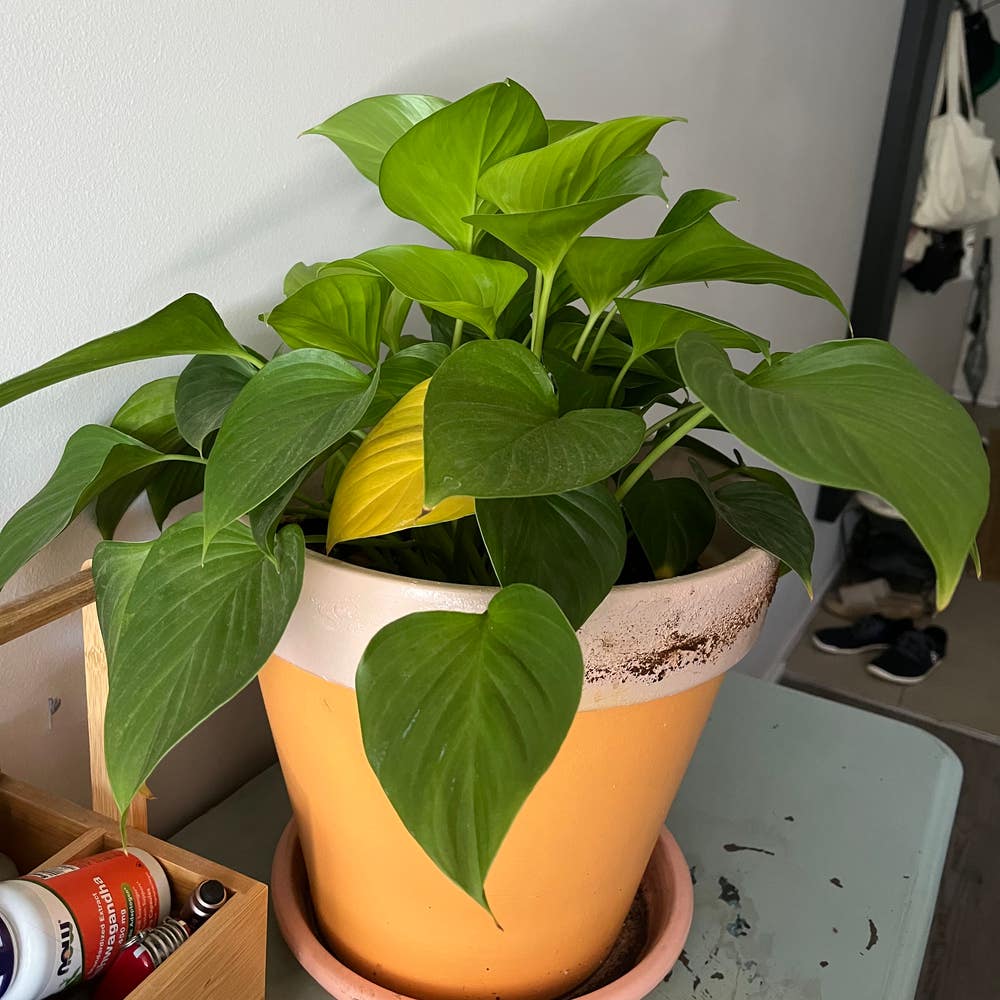
Propagating Your Red Arrow Leaf: Step-by-Step Guide
Homalomena pendula
By the Greg Editorial Team
Jun 15, 2024•5 min read
This article was created with the help of AI so we can cover more plants for you. May contain errors. See one? Report it here.
Grow a lush indoor jungle 🌿 by mastering Red Arrow Leaf propagation with our step-by-step guide!
- Choose stem cuttings or division for successful Red Arrow Leaf propagation.
- Maintain 65°F-80°F and high humidity for the perfect propagation environment.
- Monitor growth milestones and adjust care to troubleshoot issues.
Choosing Your Propagation Adventure: Stem Cuttings or Division?
🌱 Stem Cuttings
Selecting stellar stems is your first step. Look for robust, mature vines—these are your gold-medal athletes. Ensure they're healthy, with no signs of distress, and have a few leaf nodes. These nodes are the starting blocks for new roots.
Prepping your cuttings is like setting up a sterile operating room. Clean your tools, make a precise cut below a node at a 45-degree angle to maximize rooting area, and consider using a rooting hormone. It's like giving your cuttings a performance boost.
➗ Division
Timing is crucial for division. Spring or fall, when your plant is in its prime, is ideal. Look for vigorous growth and a plant free from the shackles of stress.
The division process is straightforward yet requires a gentle touch. Separate the plant, ensuring each new section has its own roots and shoots. It's like giving each piece its own identity. After the split, treat both parent and offspring with care—think of it as post-op recovery. Keep the soil moist and the humidity high to help them settle into their new homes.
Creating the Perfect Propagation Environment
💧 Humidity and Temperature
Setting up your propagation station begins with dialing in the humidity and temperature. High humidity is crucial, aiming for that 70-80% sweet spot to emulate the tropical vibes your Red Arrow Leaf cuttings desire. But don't let it turn into a steam room; airflow is key to ward off mold and keep conditions prime.
To maintain this delicate balance, consider using a plastic cover to create a greenhouse effect. Just remember to lift the lid occasionally for that all-important ventilation. Temperature-wise, keep it cozy between 65°F and 80°F. Too cold and your cuttings will sulk; too hot and they'll wilt.
☀️ Light and Location
Next, let's talk light. Your baby plants need a bright spot, but direct sunlight is a no-go—it's the equivalent of putting them in the plant ICU with sunburn. Indirect light is your best bet, providing the warmth and energy they need without the harshness.
Location is more than just a real estate mantra; it's critical for propagation success. Choose a flat surface away from drafts, pets, and anything else that might disrupt your plant's zen. And if you're using grow lights, they're like the indoor sun—just make sure they're not too intense or too weak. It's about finding that Goldilocks zone where everything is just right.
Rooting Your Future Red Arrow Leafs
💧 Soil and Watering
Creating the ideal soil mix for your Red Arrow Leaf cuttings or divisions is crucial. A blend of potting soil, coarse sand, and perlite offers the perfect balance of moisture retention and drainage. This mix ensures that your plant's roots have the necessary air and moisture without the risk of waterlogging.
When watering, think of it as a tightrope walk—too much, and you'll invite root rot, too little, and your cuttings will dry out. Aim for soil that's consistently moist, but allow the top layer to dry slightly between waterings. This approach encourages healthy root growth without suffocating your plant babies in a swampy environment.
🌱 Potting Up
Once roots have formed, it's time to transition your cuttings or divisions to their forever pots. Choose a pot with adequate drainage holes to prevent water from pooling at the bottom. The pot size should be just right—not too big to drown the roots in soil, nor too small to cramp their style.
Gently place your rooted cuttings in the pot, using the same well-draining soil mix. Keep the soil moist but not wet as the roots acclimate to their new home. This stage is like a trial period for a new job—supportive but with room to grow and prove themselves.
Keeping an Eye Out: Monitoring Growth and Solving Problems
🌱 Growth Milestones
Monitoring the progress of your Red Arrow Leafs is like being a plant detective. Root development is your first clue that the propagation is on track. Within a few weeks, you should see white, firm roots, a sign that your plant is establishing itself. For divisions, the emergence of new leaves is like a high-five from Mother Nature. Keep a close eye on these growth milestones, as they are the silent nods of approval from your leafy friends.
🛠 Troubleshooting Common Issues
Propagation isn't always smooth sailing. If you encounter stagnant growth or yellowing leaves, it's time to reassess your care routine. High salts in the soil can choke out your plant's potential, so consider a soil check-up. Adjust light, temperature, and humidity as needed—these are the DJs of the root growth rave. Remember, every brown leaf or wilted stem is a lesson, not a loss. Keep your detective's notebook handy, document your observations, and adjust your care routine as needed. Stay vigilant, and with a bit of grit, you'll navigate through these hurdles to propagation success.
⚠️ Safety First
This content is for general information and may contain errors, omissions, or outdated details. It is not medical, veterinary advice, or an endorsement of therapeutic claims.
Always consult a qualified healthcare professional before using any plant as food, medicine, or supplement.
Never eat any plant (or feed one to pets) without confirming its identity with at least two trusted sources.
If you suspect poisoning, call Poison Control (800) 222-1222, the Pet Poison Helpline (800) 213-6680, or your local emergency service immediately.
Spotted an error? Please report it here.
Turn your Red Arrow Leaf propagation into a success story 🌿 with Greg's tailored watering schedules and environmental tips from this step-by-step guide.