Why Are My Pilea 'Moon Valley' Leaves Curling?
Pilea mollis 'Moon Valley'
By the Greg Editorial Team
Jun 18, 2024•3 min read
This article was created with the help of AI so we can cover more plants for you. May contain errors. See one? Report it here.
Solve the mystery of curling Pilea leaves and revive your plant's lush look 🌿!
- 🌡️ Light and temperature sensitivity can cause Pilea leaves to curl.
- 💧 Proper watering and drainage are key to preventing curling.
- 🌱 Nutrient balance and pest control maintain flat, healthy leaves.
Spotting the Culprits Behind Curly Leaves
💡 Light and Temperature Troubles
Pilea 'Moon Valley' is a drama queen when it comes to light and temperature. Too much light scorches leaves, causing them to curl as a defense mechanism. Too little light, and you'll see leaves reaching out, curling towards the light like sunbathers trying to catch every ray. Temperature swings are no less dramatic; they can cause leaves to curl and crisp up, especially when combined with improper lighting.
🚰 Water Woes: Too Much or Too Little
Overwatering and underwatering can send your Pilea on a rollercoaster of stress, resulting in curly leaves. Yellowing leaves and a soggy, overwatered look are tell-tale signs of too much H2O. On the flip side, leaves that are dry, brittle, and curling upwards are silently screaming for hydration. Water quality matters too; hard water or chemicals can contribute to the curling conundrum.
🍽️ Nutrient Know-How
Nutrients are the unsung heroes of leaf health. A deficiency, particularly in nitrogen, can cause leaves to curl as they struggle to photosynthesize. Other nutrient imbalances can lead to brown splotches and curling, often a sign of the plant's inability to uptake what it needs due to issues like incorrect pH levels. Regular feeding with a balanced fertilizer during the growing season can help keep those leaves flat and fabulous.

Battling Back: Fixing the Curl
💡 Fine-Tuning the Environment
Adjusting light and temperature is crucial. Too much light can scorch leaves, causing them to curl as a defense. Conversely, too little light can weaken your Pilea 'Moon Valley', leading to curling from inadequate energy production. Aim for bright, indirect light. Keep temperatures consistent, ideally between 60-75°F (15-24°C), to prevent stress-induced curling.
🚰 Watering Wisdom
Overwatering and underwatering both spell trouble. Your Pilea's leaves will curl to conserve moisture or from root rot. Let the top inch of soil dry out before watering again. Drainage is key; ensure pots have drainage holes to avoid soggy soil. A regular check of soil moisture can prevent water woes.
🍽️ Feeding Your Pilea Right
Nutrient deficiencies can lead to curling leaves. Use a balanced, water-soluble fertilizer with an even NPK ratio, typically once a month during the growing season. Over-fertilization is harmful, so follow the less-is-more philosophy. If you've overdone it, flush the soil with water to remove excess nutrients.

Keeping Pests and Diseases at Bay
🐛 Common Critters that Crinkle Leaves
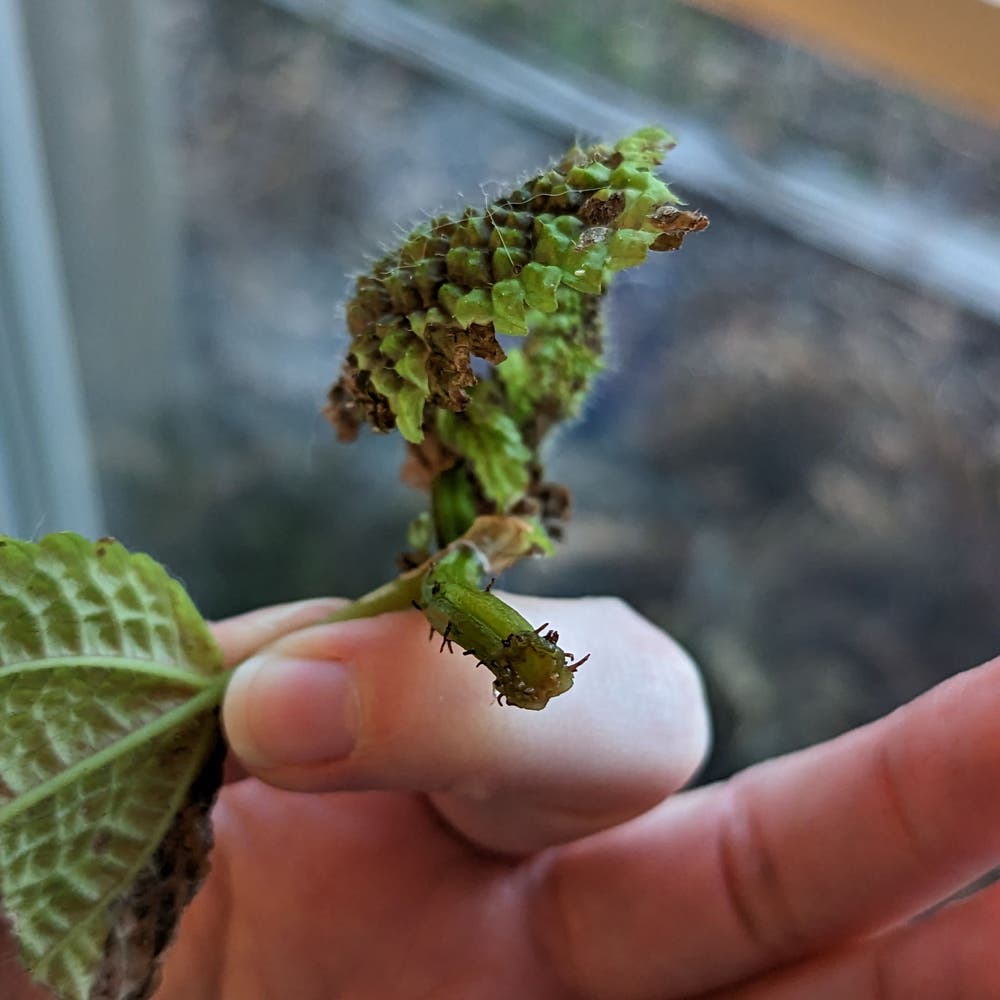
Pests are relentless in their quest to curl your Pilea 'Moon Valley' leaves. Aphids and spider mites suck the life out of foliage, leaving behind a crinkled mess. Thrips are another common villain, often going unnoticed until the damage is done. Regular leaf inspections are your best defense—flip those leaves and evict any freeloaders with a blast of water or insecticidal soap.
🍄 Fungal Foes and How to Fight Them
Fungi are the stealth bombers of the plant world, with powdery mildew being a notorious offender. It leaves a ghostly residue on leaves that's hard to miss. If your Pilea starts looking like it's prepping for Halloween in spring, it's time to act. Keep the leaves dry, improve air circulation, and when necessary, apply a fungicide—just don't go rogue, follow the instructions. Remember, fungi are party animals for moisture; don't let your plant become the next rave spot.

⚠️ Safety First
This content is for general information and may contain errors, omissions, or outdated details. It is not medical, veterinary advice, or an endorsement of therapeutic claims.
Always consult a qualified healthcare professional before using any plant as food, medicine, or supplement.
Never eat any plant (or feed one to pets) without confirming its identity with at least two trusted sources.
If you suspect poisoning, call Poison Control (800) 222-1222, the Pet Poison Helpline (800) 213-6680, or your local emergency service immediately.
Spotted an error? Please report it here.
Prevent your Pilea 'Moon Valley' leaves from curling by letting Greg optimize your plant care 🌱 with custom reminders and environment tracking for lush, healthy growth.