Why Are There Brown Spots on My Pilea 'Moon Valley'?
Pilea mollis 'Moon Valley'
By the Greg Editorial Team
Jun 18, 2024•4 min read
This article was created with the help of AI so we can cover more plants for you. May contain errors. See one? Report it here.
Banish brown spots on your Pilea 'Moon Valley' 🌿 and restore its lush, green glory with these expert tips!
- Brown spots signal care issues like water, light, pests, or disease.
- Adjust watering to plant's needs, use well-draining soil.
- Bright, indirect light and 40-60% humidity keep Pilea healthy.
Spotting the Trouble: Identifying Brown Spots
🎨 Types of Brown Spots
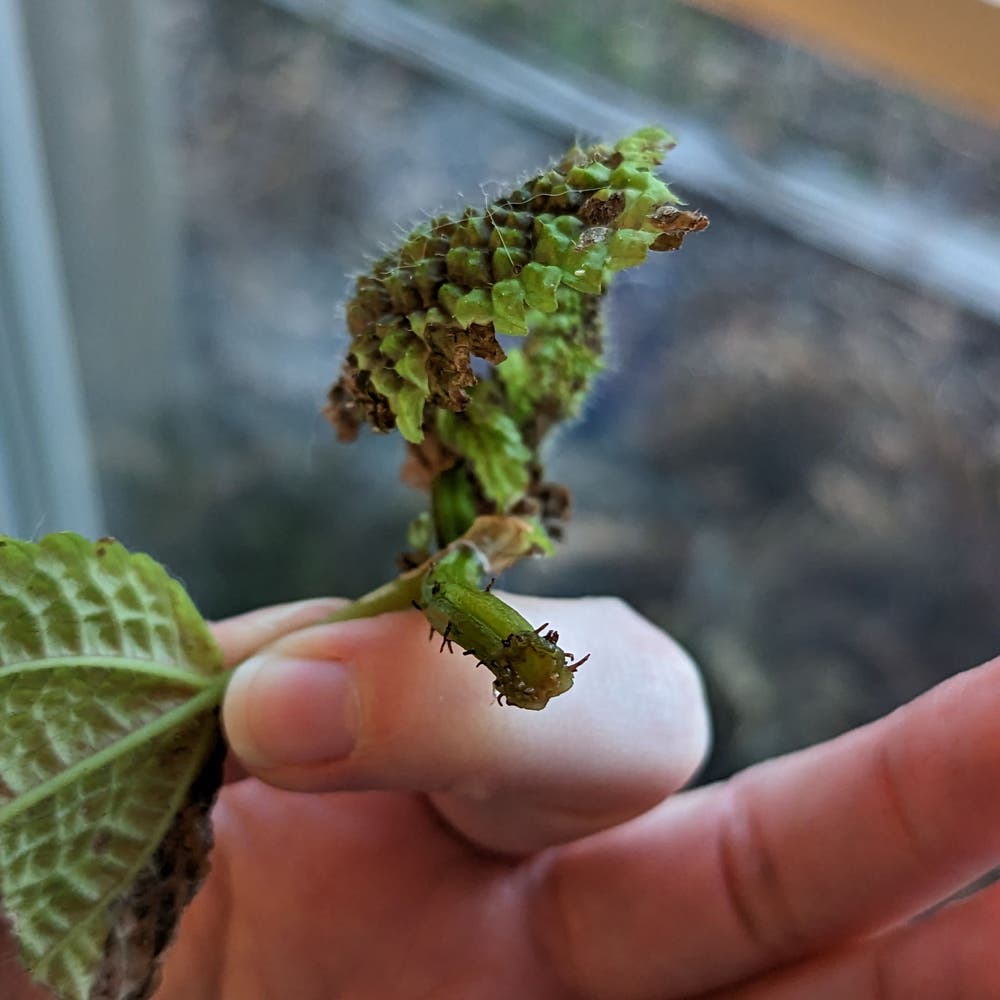
Brown spots on Pilea 'Moon Valley' can be as varied as the reasons behind them. Uniform spots often point to environmental issues, while irregular patterns suggest pests or disease. A spot's texture is a tell: water-soaked spots are typically soft, while dry, crispy ones indicate dehydration.
🚫 Common Mistakes Leading to Brown Spots
Overwatering is a classic faux pas, leaving the soil soggy and roots gasping for air. On the flip side, underwatering turns your Pilea into a dry, brown-spotted mess. Lighting missteps are equally problematic; too much sun can scorch leaves, while too little can weaken the plant.

Water Woes: Balancing Hydration for Pilea 'Moon Valley'
💧 Fine-Tuning Your Watering Schedule
Watering your Pilea 'Moon Valley' isn't a set-it-and-forget-it deal. Adjust the frequency to your plant's thirst levels, not the calendar. If the top inch of soil feels dry, it's time to water. In the growing season, expect to water more often; dial it back when growth slows.
🌱 The Role of Potting Mix
The right soil mix is your Pilea's best friend. Opt for a well-draining concoction to avoid soggy roots. A mix that holds moisture without becoming waterlogged will help prevent root rot. Remember, a pot with proper drainage holes is non-negotiable.

Light and Humidity: Creating the Ideal Environment
💡 Getting the Light Just Right
Bright, indirect sunlight is the sweet spot for your Pilea 'Moon Valley'. Too much direct sun can lead to leaf burn, while too little can cause weak, pale growth. Place your plant near a window with sheer curtains or a bit further back from a sunny spot to achieve that Goldilocks level of light.
🌬️ Humidity Hacks
Your Pilea craves moderate humidity, typically between 40% to 60%, which is often the average indoor range. If your air is Sahara-like, group plants together to create a mini oasis or use a humidifier. Misting is a quick fix but think of it as a band-aid rather than a cure. A pebble tray with water beneath the plant pot can also help, just make sure the pot isn't sitting in water. Keep it real, not a rainforest, and your Pilea will thank you.

First Aid for Foliage: Treating Brown Spots
🌱 Pruning the Problem
When brown spots invade your Pilea 'Moon Valley', it's time to channel your inner gardener ninja. Prune the damaged leaves, but do it with the precision of a brain surgeon. Sterilize your tools before you start—think of it as hygiene for plant health. Cut right where the leaf meets the stem, and remember, moderation is key. Never remove more than 20% of the foliage at once; you're not trying to give your plant a buzz cut.
🌿 Healing and Recovery
After the pruning ceremony, your Pilea needs a recovery plan. Water consistently, but don't drown it in your love—balance is everything. Protect it from extreme conditions; think of it as creating a microclimate bubble for your green buddy. Cheer on new growth—it's the plant's way of giving you a high-five. And go easy on the fertilizer; a light touch is all it needs. Keep a vigilant eye on your plant's progress; you're on a mission to restore its leafy glory.
Keeping Spots at Bay: Prevention Strategies
🕵️ Routine Checks and Balances
Regular inspections are the cornerstone of plant health. Think of them as your Pilea's personal wellness coach, keeping it in top form. Spot any changes in leaf texture or color? That's your cue to tweak your care routine. Keep those pruners clean and sharp; dirty tools are like a dinner bell for pathogens.
🌡️ Environmental Control
Consistency in your plant's environment is like a steady drumbeat—it keeps everything in rhythm. Temperature swings are the enemy; they stress your Pilea out more than a long queue at the coffee shop. Aim for a stable climate. Light is another balancing act. Too much and you're on the fast track to leaf burn, too little and your Pilea might as well be in hibernation. Find that sweet spot of bright, indirect light.
Remember, your Pilea 'Moon Valley' isn't just another pretty face. It's a living, breathing entity that thrives on attention and care. Keep the air moving, the humidity just right, and those brown spots will be a thing of the past.
⚠️ Safety First
This content is for general information and may contain errors, omissions, or outdated details. It is not medical, veterinary advice, or an endorsement of therapeutic claims.
Always consult a qualified healthcare professional before using any plant as food, medicine, or supplement.
Never eat any plant (or feed one to pets) without confirming its identity with at least two trusted sources.
If you suspect poisoning, call Poison Control (800) 222-1222, the Pet Poison Helpline (800) 213-6680, or your local emergency service immediately.
Spotted an error? Please report it here.
Banish those pesky brown spots and thrive 🌿 with Greg's custom watering plans and environmental tips tailored to your Pilea 'Moon Valley's' needs.