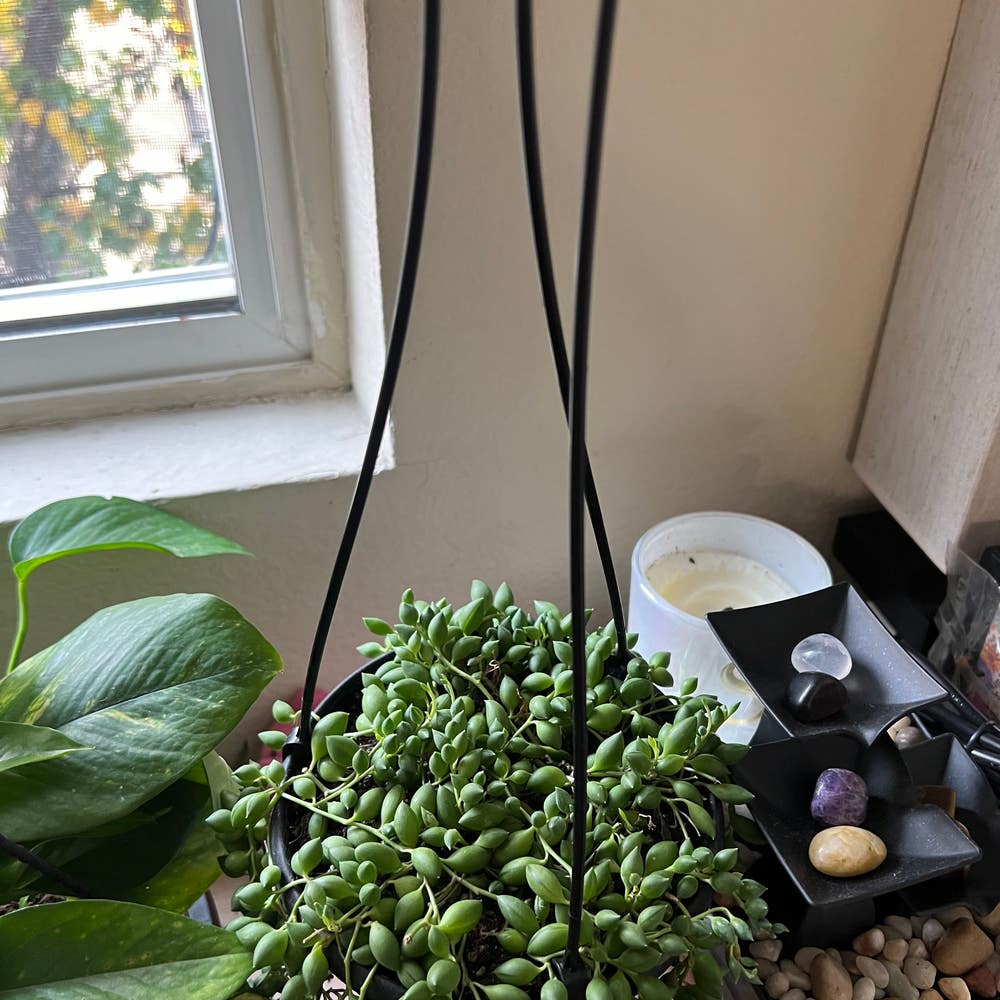
How to Prune Curio rowleyanus 'String of Raindrops' 💧
Curio rowleyanus 'String of Raindrops'
By the Greg Editorial Team
Jun 18, 2024•4 min read
This article was created with the help of AI so we can cover more plants for you. May contain errors. See one? Report it here.
Nurture a lush 'String of Raindrops' 🌧️ with our expert pruning tips for health and beauty! 🌿
- Prune in early spring for growth; look for leggy stems as a cue.
- Use sharp, clean tools to prune; clean with alcohol to prevent disease.
- Post-prune care: water, fertilize after a month, and provide bright, indirect light.
Best Time to Snip: When to Prune Your 'String of Raindrops'
🌱 Seasonal Timing
Pruning your Curio rowleyanus 'String of Raindrops' is like timing a perfect cup of tea; it's all about the right moment. The early spring, as the plant shakes off its winter slumber, is prime time. This is when the plant is on the cusp of a growth spurt, making it the ideal period to encourage a fresh, vigorous start.
🚨 Plant Health Signals
Look for the plant's subtle SOS signals. Leggy growth is a cry for more light, and those sad, brown-tipped stems are energy vampires. Snip them back to a node to redirect resources to the thriving parts. If you spot overgrowth or signs of disease, don't hesitate; it's time to bring out the shears. Remember, your 'String of Raindrops' will be more forgiving of a timely trim than a delayed one.

Gear Up: Choosing Your Pruning Tools
🔪 Selecting the Right Tools
The right tools are non-negotiable when it comes to pruning your 'String of Raindrops'. You'll need sharp scissors or pruning shears that can make precise cuts without damaging the delicate tendrils. Quality over quantity here; a single well-chosen tool trumps a shed full of mediocrity.
🧼 Keeping Tools Clean
Cleanliness is next to godliness, especially in the garden. Disinfect your tools with rubbing alcohol before and after each use to prevent the botanical equivalent of a zombie apocalypse. Think of it as hygiene for horticulture; it's simple, but it saves lives—plant lives, to be exact.

A Cut Above: Pruning Techniques for 'String of Raindrops'
🌱 Step-by-Step Pruning Guide
Pruning your Curio rowleyanus, or 'String of Raindrops', isn't rocket science, but it does require a steady hand and a bit of know-how. Grab your sharp scissors or pruning shears and let's dive in.
- Inspect your plant for dead or dying trails; these are your first cuts.
- Snip any overgrown stems to maintain the desired length, keeping the cut above a leaf node for regrowth.
- Aerial roots can be trimmed or tucked back into the soil to encourage rooting.
- Clean your tools with rubbing alcohol between cuts to prevent disease spread.
🌿 Shaping for Beauty
Shaping is all about the eye of the beholder. Aim for a balanced look by pruning longer trails to match the shorter ones.
- Rotate your plant periodically to ensure even growth and avoid lopsidedness.
- Thin out dense areas to let light reach the inner parts of the plant, promoting fuller growth.
🚫 Avoiding Common Mistakes
Pruning is an art form, and like any art, it's easy to mess up. Here are some pitfalls to avoid:
- Overzealous cuts: Don't get snip-happy. Less is often more when it comes to pruning.
- Ignoring plant signals: If the 'String of Raindrops' is thriving, don't go looking for trouble. Prune only as needed.
- Leaving stubs: These can rot and invite disease. Cut close to the stem, but not too close to damage the node.
- Forgetting to water: After pruning, give your plant a drink to help it recover from the shock.

Post-Pruning Care: Helping Your Plant Thrive
💧 Watering and Feeding
After you've pruned your 'String of Raindrops', watering becomes a critical step. The goal is to maintain evenly moist soil without turning it into a swamp. Wait for the top inch of soil to dry out before the next watering session. Overzealous hydration is a common misstep; moderation is key.
Feeding your plant is like giving it a vitamin boost. A balanced, water-soluble fertilizer every month during the growing season will do the trick. But post-prune, hold off for about a month to let those cuts heal without stressing the plant with extra nutrients.
🌞 Light and Environment Adjustments
Lighting is like the stage for your 'String of Raindrops' to perform its comeback. Ensure it's placed in bright, indirect light. Direct sunlight is a no-go—it's the equivalent of putting your plant in the spotlight with a magnifying glass.
The environment should be as stable as your favorite dive bar—consistent temperatures and no drafts. Think of it as setting up a backstage area for your plant to chill and recover in peace. Keep an eye out for new growth; it's like getting a nod of approval from your leafy friend. Signs of distress, however, mean it's time to tweak your care routine.
⚠️ Safety First
This content is for general information and may contain errors, omissions, or outdated details. It is not medical, veterinary advice, or an endorsement of therapeutic claims.
Always consult a qualified healthcare professional before using any plant as food, medicine, or supplement.
Never eat any plant (or feed one to pets) without confirming its identity with at least two trusted sources.
If you suspect poisoning, call Poison Control (800) 222-1222, the Pet Poison Helpline (800) 213-6680, or your local emergency service immediately.
Spotted an error? Please report it here.
Achieve a flourishing 🌿 'String of Raindrops' with precise pruning and let Greg keep you on track with tailored post-pruning watering reminders!