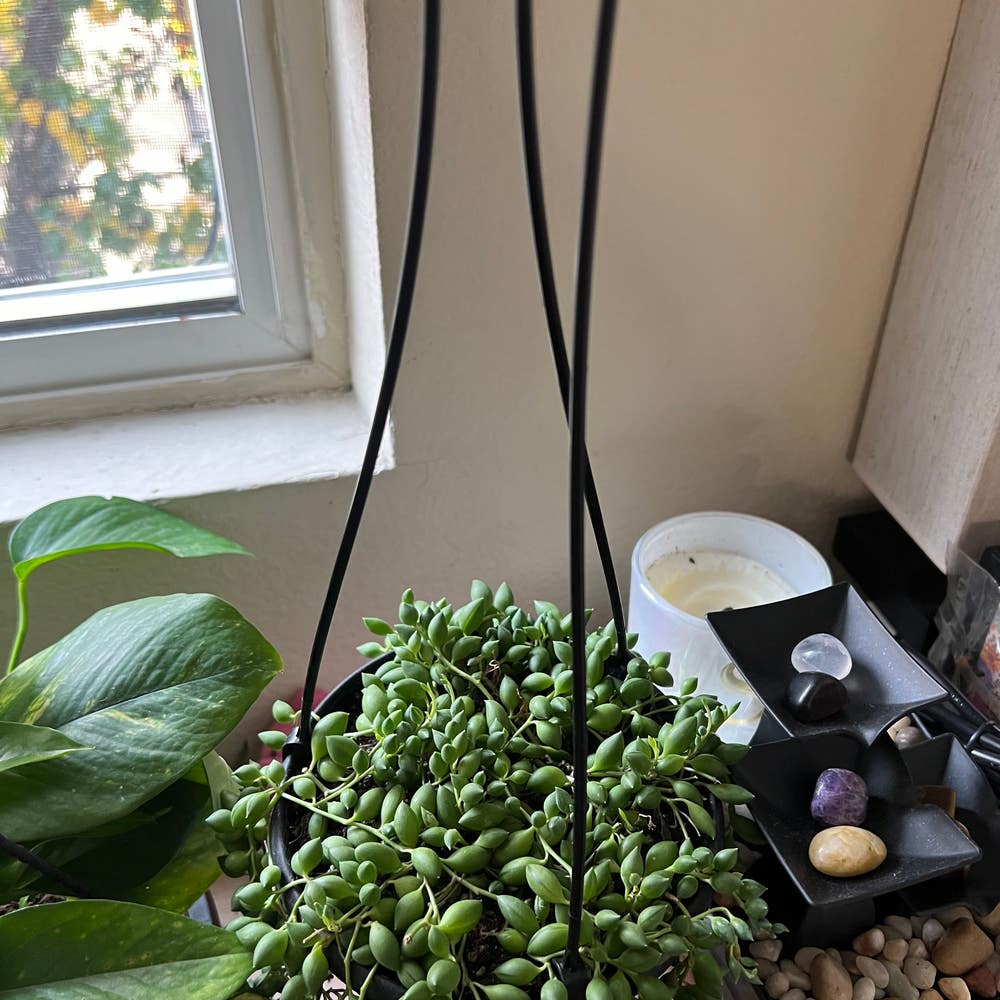
Brown Spots On Curio Rowleyanus 'String Of Raindrops' Leaves 💧
Curio rowleyanus 'String of Raindrops'
By the Greg Editorial Team
Jun 18, 2024•3 min read
This article was created with the help of AI so we can cover more plants for you. May contain errors. See one? Report it here.
Prevent brown blight and keep your 'String of Raindrops' thriving with expert care tips! 🌿🔍
- Overwatering and sunburn lead to brown spots; adjust water and light exposure.
- Fungal infections and pests also cause spots; increase airflow and monitor for bugs.
- Regular care and inspections prevent spots; maintain optimal humidity and temperature.
Spotting Trouble: Identifying and Understanding Brown Spots
🕵️ What Do Brown Spots Look Like?
Brown spots on 'String of Raindrops' can range from light tan to a deep brown. They may start as tiny specks or develop into larger patches. The texture can be dry or water-soaked, hinting at the cause. Check for spots on the tops of leaves, as they're prime real estate for sunburn and fungal issues.
🕵️ Tracing the Culprits
Overwatering is a common villain, leaving roots gasping for air. Sunburn often leaves behind crispy areas on the foliage. Fungal infections can be crafty, with spots sporting a yellow halo or rings. Pests and bacteria are also suspects, each leaving their unique mark. Regular check-ups and adjusting care routines are crucial for prevention.

Turning the Tide: Addressing Common Causes
💧 When Water is the Enemy
Watering should be a ritual, not a reflex. Start with a weekly schedule, adjusting for humidity and temperature. Keep the soil moist, not soggy, to avoid the dreaded root rot. Consider a well-draining soil mix and containers with drainage holes to prevent overzealous watering from becoming a death sentence.
☀️ Too Much Sun, Too Little Fun
Your 'String of Raindrops' can get sunburned, believe it or not. Shade is its sunscreen. Rotate the plant to ensure even light distribution and prevent leaf scorch. Aim for bright, indirect light to maintain that perfect sun-kissed glow without the crispy aftermath.
🐜 Uninvited Guests: Pests
Pests are party crashers. Keep an eye out for discoloration or powdery spots, signs of mold or fungus. Embrace natural remedies or insecticides, but always read the label. Remember, it's a battle of wits, not toxins—prevention is your best defense.
🍄 Fungal Foes and Other Illnesses
Fungus among us? Not if you can help it. Increase airflow, let the sunlight in, and apply fungicide with precision. It's about creating an environment where fungal parties can't thrive. Stay vigilant, and your 'String of Raindrops' will thank you.

Pro Tips for Prevention
🌡️ Crafting the Perfect Environment
Optimal humidity and temperature are the guardians of plant health. Keep humidity levels steady, ideally hovering between 40-60%. It's about creating a vibe that's neither a desert nor a swamp for your 'String of Raindrops'.
Temperature swings are drama you don't need. Aim for a consistent climate, free from the chaos of sudden changes. Think of it as setting the thermostat of a plant's comfort zone.
👁️ Vigilance is Key
Regular check-ups are non-negotiable. Inspect your 'String of Raindrops' like it's a precious jewel under a magnifying glass. Spotting early signs of distress can mean the difference between a minor tweak and a full-blown plant ICU situation.
Cleanliness isn't just for show; it's a health requirement. Wipe leaves with a damp cloth to keep them dust-free and efficient at photosynthesizing. It's like a refreshing facial for your plant.
When it comes to repotting, don't cramp your plant's style. Give it room to stretch its roots. If they're circling like sharks, it's time for a new pot.
And remember, pests are the ninjas of the plant world—silent but deadly. Keep an eye out for these tiny troublemakers and act fast. It's better to be a plant's bodyguard than to nurse it back from an infestation.

⚠️ Safety First
This content is for general information and may contain errors, omissions, or outdated details. It is not medical, veterinary advice, or an endorsement of therapeutic claims.
Always consult a qualified healthcare professional before using any plant as food, medicine, or supplement.
Never eat any plant (or feed one to pets) without confirming its identity with at least two trusted sources.
If you suspect poisoning, call Poison Control (800) 222-1222, the Pet Poison Helpline (800) 213-6680, or your local emergency service immediately.
Spotted an error? Please report it here.
Banish brown spots and let your 'String of Raindrops' flourish with Greg's tailored care reminders, keeping your plant care as spot-on as your green thumb! 🎯