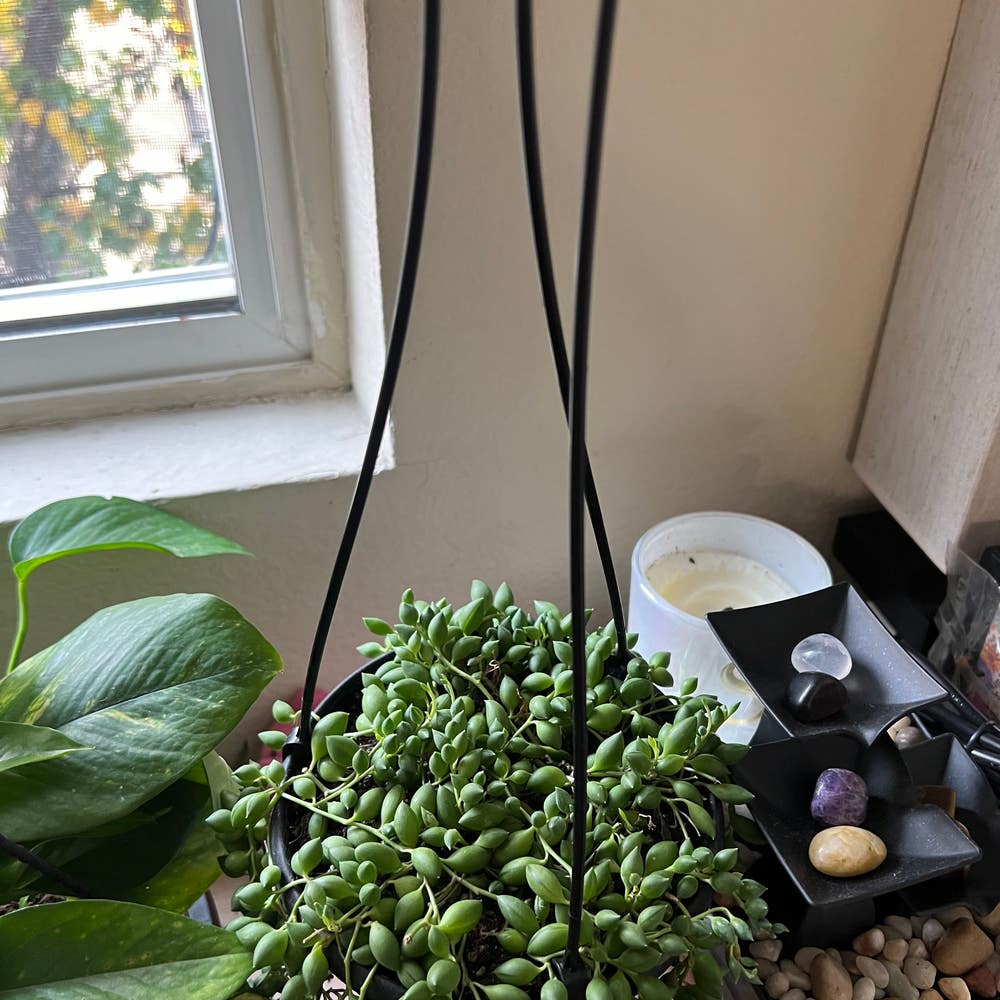
💧 How often to water Curio rowleyanus 'String of Raindrops'
Curio rowleyanus 'String of Raindrops'
By the Greg Editorial Team
Jun 18, 2024•4 min read
This article was created with the help of AI so we can cover more plants for you. May contain errors. See one? Report it here.
Nurture your 'String of Raindrops' 🌧 to perfection by decoding its unique watering needs—no more guesswork!
- 🌱 Droopy leaves mean water me, yellow leaves or squishy stem mean too much!
- 🌞❄️ Seasons change, so does watering: more in summer, less in winter.
- 💧 Deep watering, well-draining setup: key for 'String of Raindrops' health.
When to Water Your 'String of Raindrops'
💧 Spotting the Thirsty Cues
Your 'String of Raindrops' won't hold up a sign saying "Water me!", but droopy leaves are a dead giveaway. On the flip side, yellow leaves or a stem with the consistency of a squishy banana scream overwatering.
🌦 Seasonal Watering Rhythms
Summer turns your plant into a bit of a lush, craving more frequent drinks due to the heat. Winter, however, is a different story; your plant goes into camel mode, needing far less. Adjust your watering to match these seasonal shifts.
🌍 The Role of Climate and Environment
Your 'String of Raindrops' care routine isn't one-size-fits-all. A plant basking in a sunny, warm room will guzzle water faster than one in a cool, shady corner. Humidity is another big player—if your air is drier than a stand-up comedian's wit, your plant will need more frequent watering. Keep an eye on these factors and tweak your schedule as needed.

How to Water Your 'String of Raindrops'
💧 The Right Way to Drench Your Drips
Deep watering is the mantra for Curio rowleyanus, affectionately known as 'String of Raindrops'. To ensure your plant gets the hydration it needs without the risk of root rot, soak the soil thoroughly until water escapes freely from the drainage holes. This mimics a natural rainstorm, encouraging the roots to grow deep and strong. After the deluge, patience is key—let the excess water drain completely before considering the job done.
Avoid the temptation to water on a strict schedule. Instead, keep an eye on the soil's moisture level; it should feel like a wrung-out sponge—moist, but not dripping. If it's drier than your humor on a Monday morning, it's time to water. For those who struggle with regular checks, consider a self-watering pot or set reminders to prevent your 'String of Raindrops' from becoming a 'String of Desiccation'.
🌱 Pot and Soil: The Dynamic Duo
Choosing the right pot and soil mix is crucial for the health of your 'String of Raindrops'. Ensure your pot has drainage holes to avert a soggy disaster. Pair this with a well-draining soil mix, which might include ingredients like perlite, vermiculite, or sand. This combination allows for quick drainage and prevents water from overstaying its welcome around the roots.
Remember, your 'String of Raindrops' doesn't want to swim; it just wants a drink. The goal is to strike a balance between hydration and aeration, ensuring the roots have access to both water and oxygen. This dynamic duo of pot and soil is your best defense against overwatering and the dreaded root rot.

Troubleshooting Water Woes
💦 Overwatering Overload
Overwatering can turn your 'String of Raindrops' into a string of sorrows. If your plant's soil feels more like a swamp than a garden, it's time to take action. First, stop watering immediately. Let the soil dry out to the touch before considering another watering. Check the pot's drainage holes to ensure they're not blocked—poor drainage can be a death sentence for these succulents.
If you spot signs of root rot, like mushy or blackened roots, you'll need to perform some plant surgery. Gently remove the plant, trim the damaged roots, and repot in fresh, well-draining soil. Going forward, resist the urge to water on a set schedule. Instead, water based on the dryness of the soil.
🏜️ Underwatering Urgency
On the flip side, underwatering can leave your 'String of Raindrops' gasping for moisture. If the leaves start to look deflated or wrinkled, it's a cry for help. Rehydrate the soil gradually to avoid shocking the plant. Begin by soaking the pot in a tray of water, allowing the soil to wick up moisture from the bottom. Once the topsoil feels moist, remove the pot from the tray.
After addressing the immediate thirst, reassess your watering routine. Make sure you're providing enough water for the soil to become moist, but not so much that it becomes waterlogged. Remember, your 'String of Raindrops' prefers a drink, not a dunk. Keep a close eye on the plant over the next few weeks to ensure it's recovering and adjust your care accordingly.

⚠️ Safety First
This content is for general information and may contain errors, omissions, or outdated details. It is not medical, veterinary advice, or an endorsement of therapeutic claims.
Always consult a qualified healthcare professional before using any plant as food, medicine, or supplement.
Never eat any plant (or feed one to pets) without confirming its identity with at least two trusted sources.
If you suspect poisoning, call Poison Control (800) 222-1222, the Pet Poison Helpline (800) 213-6680, or your local emergency service immediately.
Spotted an error? Please report it here.
Keep your 'String of Raindrops' thriving 💧 with Greg's personalized watering schedule that adapts to seasons and your home's unique environment.