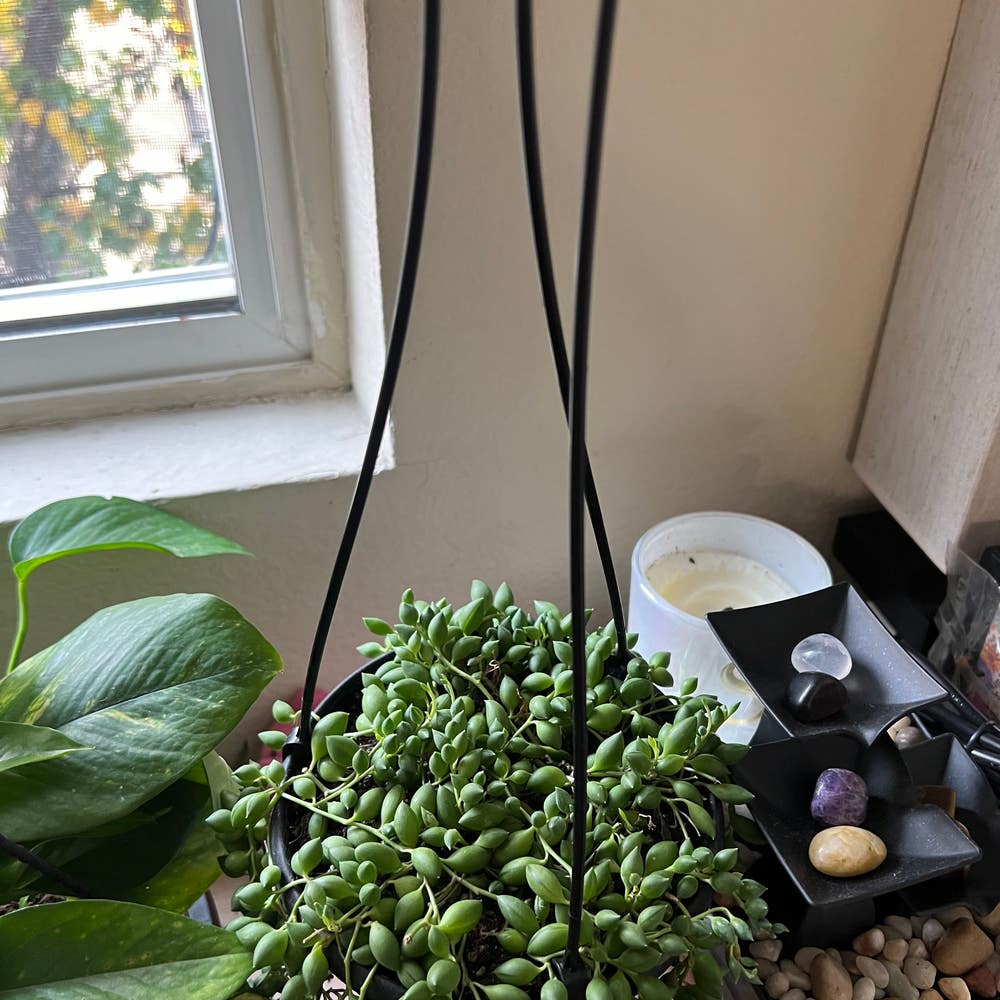
💧 Curio Rowleyanus 'String of Raindrops' Direct Sunlight
Curio rowleyanus 'String of Raindrops'
By the Greg Editorial Team
Jun 18, 2024•2 min read
This article was created with the help of AI so we can cover more plants for you. May contain errors. See one? Report it here.
Shield your 'String of Raindrops' 🌦 from sunburn and bask in a lush, vibrant cascade with savvy sunlight tips!
- Partial shade preferred to protect 'String of Raindrops' from leaf scorch.
- Adjust for seasons: Use sheer curtains in summer, move closer to windows in winter.
- Monitor for heat stress: Wilting and discoloration signal the need for cooler conditions.
When Sun Meets Succulent: Direct Sunlight and Curio Rowleyanus 'String of Raindrops'
🌞 What Exactly is Direct Sunlight?
Direct sunlight is the unfiltered solar energy that shines directly on plants, creating distinct shadows. It's the intense spotlight that can either be a boon or a bane for houseplants. Curio rowleyanus 'String of Raindrops', with its unique foliage, experiences sunlight through specialized "epidermal windows" that help maximize photosynthesis while minimizing damage.
⛅️ Can 'String of Raindrops' Soak Up the Sun?
Partial shade is the sweet spot for the 'String of Raindrops'. Direct sunlight can lead to scorched leaves, a clear sign of too much sun. If your succulent's leaves start to look brown or crispy, it's time to rethink its sunbathing habits.
🧭 The Window Direction Dance
Window orientation is crucial for managing light exposure. North-facing windows may provide too little light, while south-facing ones could offer too much. Adjust your plant's position with the compass of light in mind, and remember that hemispheres matter—what works in the north won't necessarily fly in the south.

Shielding Your 'String of Raindrops' from the Sun's Embrace
🌞 Seasonal Shifts and Sunlight Intensity
As the seasons change, so does the game plan for your Curio rowleyanus 'String of Raindrops'. The summer sun can be relentless, potentially turning those charming raindrop leaves into crispy critters. Conversely, winter's gentle rays might not suffice, leaving your succulent reaching for more.
Adaptation is key. During the summer months, consider employing sheer curtains or blinds to cast a soft, protective filter over your plant. This can prevent the harsh midday sun from causing leaf burn. In winter, you might need to move your 'String of Raindrops' closer to the window to bask in the scarce sunlight.
🌡️ Heat Stress and Your Hanging Garden
Heat stress in your 'String of Raindrops' is like watching your favorite vinyl warp in the sun—it's heartbreaking. Signs to watch for include wilting, discoloration, or dry, brittle leaves. If you spot these, it's time to take action.
To keep your succulent from overheating, ensure it's not in the path of hot air drafts or intense sunlight. Relocation to a cooler spot or providing some shade during the hottest parts of the day can be a lifesaver. Remember, a happy 'String of Raindrops' is one that lives in a stable environment, not one that experiences the extremes of a desert trek by noon and an arctic expedition by night.


⚠️ Safety First
This content is for general information and may contain errors, omissions, or outdated details. It is not medical, veterinary advice, or an endorsement of therapeutic claims.
Always consult a qualified healthcare professional before using any plant as food, medicine, or supplement.
Never eat any plant (or feed one to pets) without confirming its identity with at least two trusted sources.
If you suspect poisoning, call Poison Control (800) 222-1222, the Pet Poison Helpline (800) 213-6680, or your local emergency service immediately.
Spotted an error? Please report it here.
Keep your 'String of Raindrops' happy 😊 by using Greg's PlantVision to ensure just the right amount of sunlight, no matter the season.