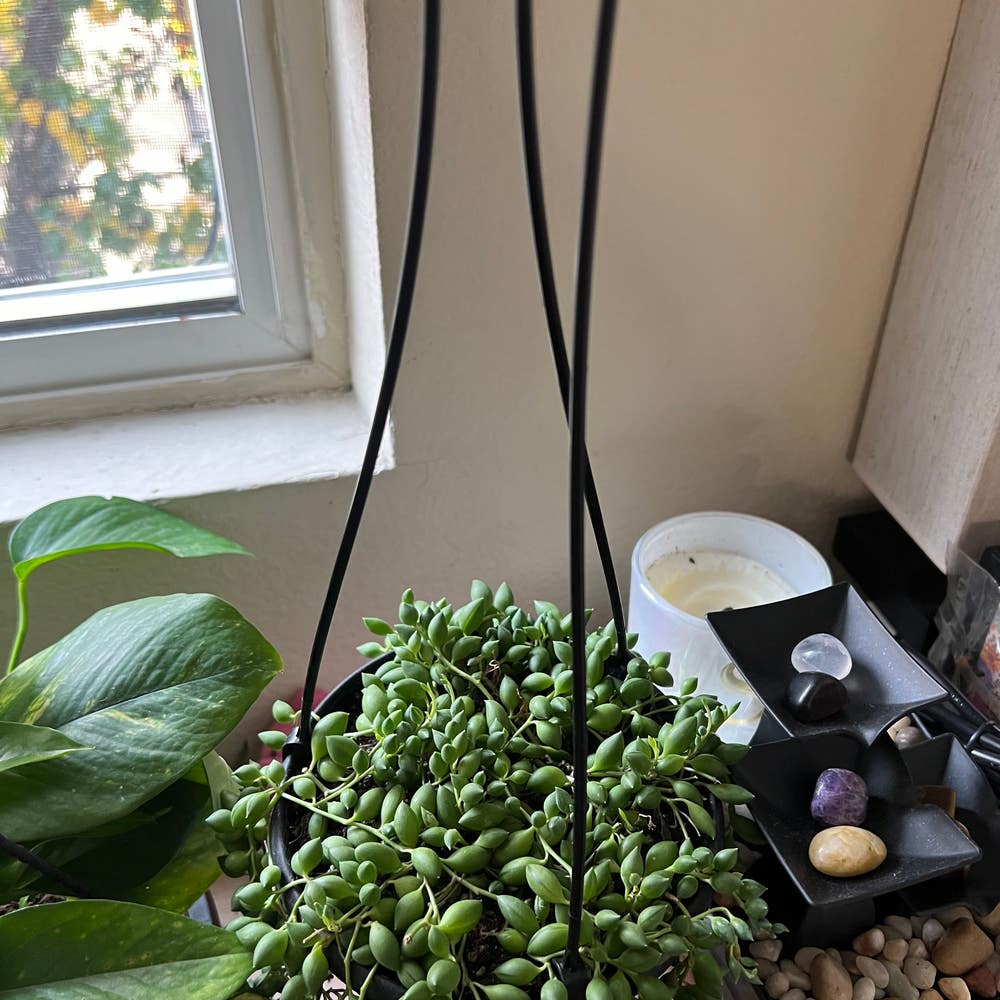
Curio rowleyanus 'String of Raindrops' - Fertilizing 101
Curio rowleyanus 'String of Raindrops'
By the Greg Editorial Team
Jun 18, 2024•3 min read
This article was created with the help of AI so we can cover more plants for you. May contain errors. See one? Report it here.
Nurture vibrant 'String of Raindrops' 🌧️ blooms with top fertilizing tricks—succulent success simplified!
- N-P-K ratios matter, phosphorus is crucial for 'String of Raindrops' blooms.
- 🌱 Liquid fertilizers are best for easy application and absorption.
- Avoid winter fertilizing, dilute properly, and watch for over-fertilization signs.
Choosing the Right Fertilizer for Your 'String of Raindrops'
💧 Understanding the Nutrient Mix
N-P-K ratios are crucial for your 'String of Raindrops' health. A balanced blend supports overall vitality, but phosphorus is key for those coveted blooms.
🌱 Organic vs. Synthetic Fertilizers
Organic fertilizers release nutrients slowly, fostering steady growth. Synthetic options are fast-acting, but can lead to nutrient burn if not used judiciously.
🌊 Liquid Gold: Water-Soluble Fertilizers
Liquid fertilizers are the go-to for succulents. They're easy to apply, and plants absorb them quickly, making them ideal for the 'String of Raindrops'.

Timing is Everything: When to Fertilize
🌱 Growing Season Galore
Identifying your active growing phase is crucial for 'String of Raindrops'. This succulent springs to life in the warmer months, typically from spring through fall. During this period, it's all systems go for growth and blooming, making it the ideal time to fertilize.
❄️ Winter Whispers
Conversely, winter is when your plant hits the snooze button. Dormancy is a no-go for fertilizing; it's like offering an espresso to someone deep in slumber. Your 'String of Raindrops' is conserving energy, not actively growing, so hold off on the nutrients until it wakes up come spring.

The Art of Fertilizing 'String of Raindrops'
💧 Dilution Solutions
Mixing your fertilizer with water isn't a suggestion; it's a rule. Half-strength is the mantra here. Overpowering your 'String of Raindrops' with undiluted fertilizer is a surefire way to cause root burn.
🕰️ Frequency and Quantity
Monthly feedings during the growing season will keep your succulent satisfied without overindulging it. Remember, your plant's roots are delicate, not a garbage disposal for excess nutrients.
💦 Application Techniques
Apply the diluted fertilizer to moist soil to prevent root shock. Think of it as giving your plant a nutrient-infused spa treatment. Ensure even distribution by watering the soil directly, not the leaves—no one wants a soggy succulent.

Recognizing and Rescuing from Over-Fertilization
🚨 Spotting the Signs
Your 'String of Raindrops' might be suffering from a nutrient overdose if you notice a white, salty crust on the soil surface or if the leaves start to look more like autumn foliage than a vibrant green cascade. Yellowed or brown leaf tips are the plant's way of waving a red flag. If the roots resemble something from a horror movie—bloated and mushy—then it's time to admit you've been heavy-handed with the feed.
🏥 First Aid for Fertilizer Fiascos
If your plant is looking more toxic than tonic, stop fertilizing pronto. It needs a break, not a breakdown. Begin the recovery process by flushing the soil: drench it with water and let it drain freely, repeating several times to wash away the excess salts. This isn't a suggestion—it's a must. If there's a visible crust of fertilizer, carefully remove it without turning the pot into a miniature excavation site. And remember, after this plant ER visit, give your green buddy at least a month of rest before you even think about fertilizing again.
⚠️ Safety First
This content is for general information and may contain errors, omissions, or outdated details. It is not medical, veterinary advice, or an endorsement of therapeutic claims.
Always consult a qualified healthcare professional before using any plant as food, medicine, or supplement.
Never eat any plant (or feed one to pets) without confirming its identity with at least two trusted sources.
If you suspect poisoning, call Poison Control (800) 222-1222, the Pet Poison Helpline (800) 213-6680, or your local emergency service immediately.
Spotted an error? Please report it here.
Ensure your 'String of Raindrops' succulent gets the perfect feed 🌼 with Greg's tailored fertilizing schedule and reminders, avoiding over or under-nourishment for luscious growth.