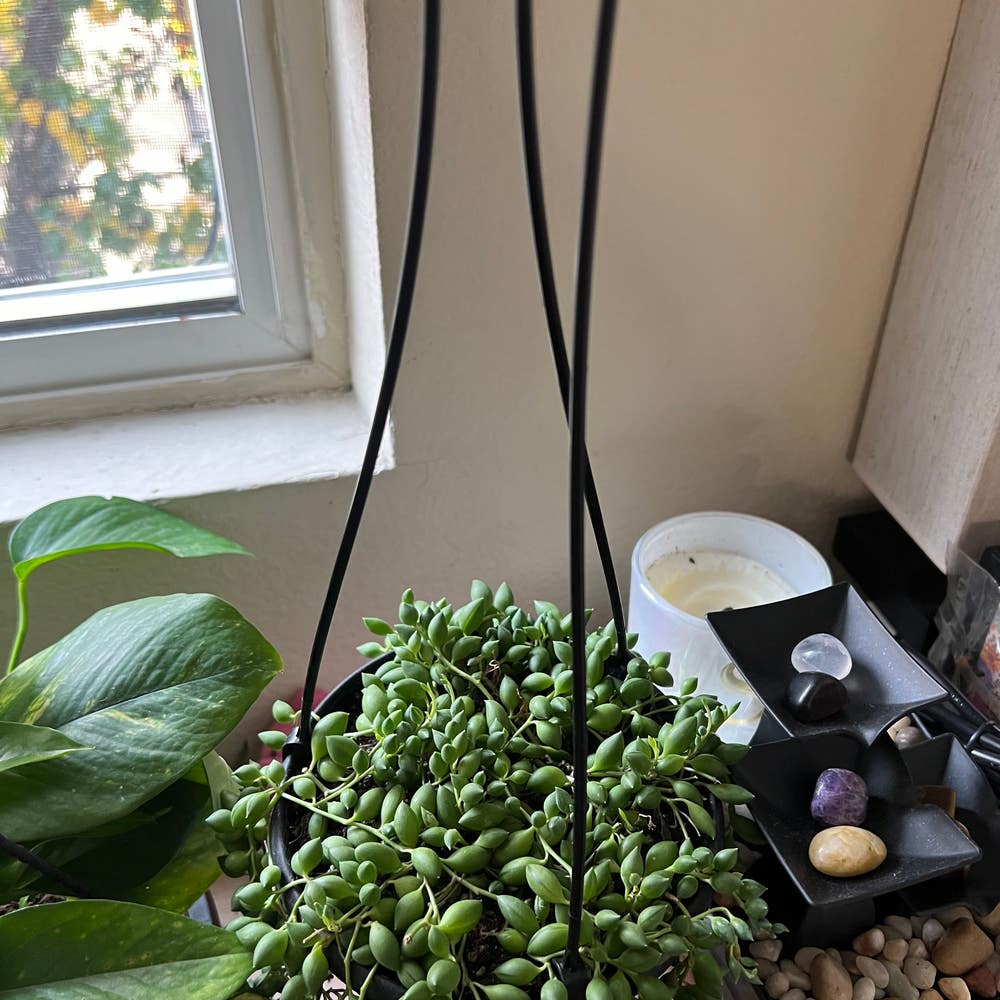
Curio Rowleyanus 'String of Raindrops' Humidity 💧
Curio rowleyanus 'String of Raindrops'
By the Greg Editorial Team
Jun 18, 2024•3 min read
This article was created with the help of AI so we can cover more plants for you. May contain errors. See one? Report it here.
Ensure your 'String of Raindrops' 🌧️ thrives by mastering its ideal humidity levels.
- Ideal humidity is like a spring day, not a tropical afternoon.
- Dry, brown edges signal need for more humidity.
- Use humidifiers or pebble trays; avoid over-misting to prevent rot.
Nailing the Perfect Humidity for Your 'String of Raindrops'
🌧️ What's the Sweet Spot?
Curio rowleyanus 'String of Raindrops' thrives in average household humidity. The ideal relative humidity range is a bit like the plant's comfort food—it's not about hitting a precise number, but rather creating a zone where it can chill without throwing a fit. Aim for a range that feels like a cozy spring day, not a tropical midsummer afternoon.
🚨 Signs Your Plant is Thirsty for Humidity
Watch for dry, brown leaf edges—they're your plant's version of a distress flare, signaling a need for more air moisture. If your 'String of Raindrops' starts looking more parched than a desert wanderer, it's time to reassess your humidity strategy and give it the moisture boost it craves.
🌊 Too Much of a Good Thing?
Conversely, if your plant's leaves are holding more water than a sponge, you've likely overdone it. Persistent wetness can turn your plant into a fungal rave, and nobody wants that. Keep the air around your 'String of Raindrops' comfortably moist, but let's not create a miniature swamp in your living room.

Local Humidity and Your 'String of Raindrops'
🌡️ Why Your Zip Code Matters
Humidity isn't just a buzzword; it's a crucial player in your 'String of Raindrops' well-being. Your local climate dictates the baseline for your indoor humidity, setting the stage for how you'll need to care for your plant. Whether you're in the arid Southwest or the muggy Southeast, your zip code has a direct line to your plant's health.
📏 Quick Tips for Measuring Humidity at Home
Hygrometers are your go-to gadget for keeping a pulse on your home's humidity. Place it near your 'String of Raindrops' but dodge those deceptive drafts and sunlight. Regular checks at different times capture the daily humidity dance, letting you pinpoint the perfect perch for your plant. Remember, it's not about hitting a specific number; it's about understanding the ebb and flow to create a consistent environment.

Balancing Act: Adjusting Humidity Levels
💦 Boosting Humidity Without the Fuss
Humidifiers are the unsung heroes in the quest for perfect plant humidity. They're like a personal climate control for your 'String of Raindrops', offering consistent moisture without the drama. Choose one that fits your space and style, and let it work its magic.
Pebble trays offer a low-tech alternative. Just a tray, some pebbles, and water, and you've got yourself a mini-humidifier. It's a simple setup that can slightly increase the humidity around your plant, ideal for those not keen on splurging on gadgets.
Misting can be a quick fix, a spritz here and there to freshen up your plant. But it's a band-aid solution, not a long-term strategy. Over-misting can lead to wet leaves and potential rot, so use this method sparingly and with caution.
🌬 Bringing Humidity Down a Notch
When your indoor garden starts resembling a swamp, it's time to bring in a dehumidifier. This device is like a dry spell in a box, sucking excess moisture out of the air and keeping your 'String of Raindrops' from turning into 'String of Soggy Leaves'.
Ventilation is another key player. Cracking a window or running a fan can help reduce humidity, promoting air circulation and preventing your plant's environment from becoming too muggy.
Remember, it's all about balance. Keep an eye on your plant and adjust your strategies as needed. Too much or too little humidity can turn your plant care routine into a botanical balancing act.

⚠️ Safety First
This content is for general information and may contain errors, omissions, or outdated details. It is not medical, veterinary advice, or an endorsement of therapeutic claims.
Always consult a qualified healthcare professional before using any plant as food, medicine, or supplement.
Never eat any plant (or feed one to pets) without confirming its identity with at least two trusted sources.
If you suspect poisoning, call Poison Control (800) 222-1222, the Pet Poison Helpline (800) 213-6680, or your local emergency service immediately.
Spotted an error? Please report it here.
Ensure your 'String of Raindrops' feels at home with ideal humidity 🌤 by leveraging Greg's local climate insights and tailored care reminders.