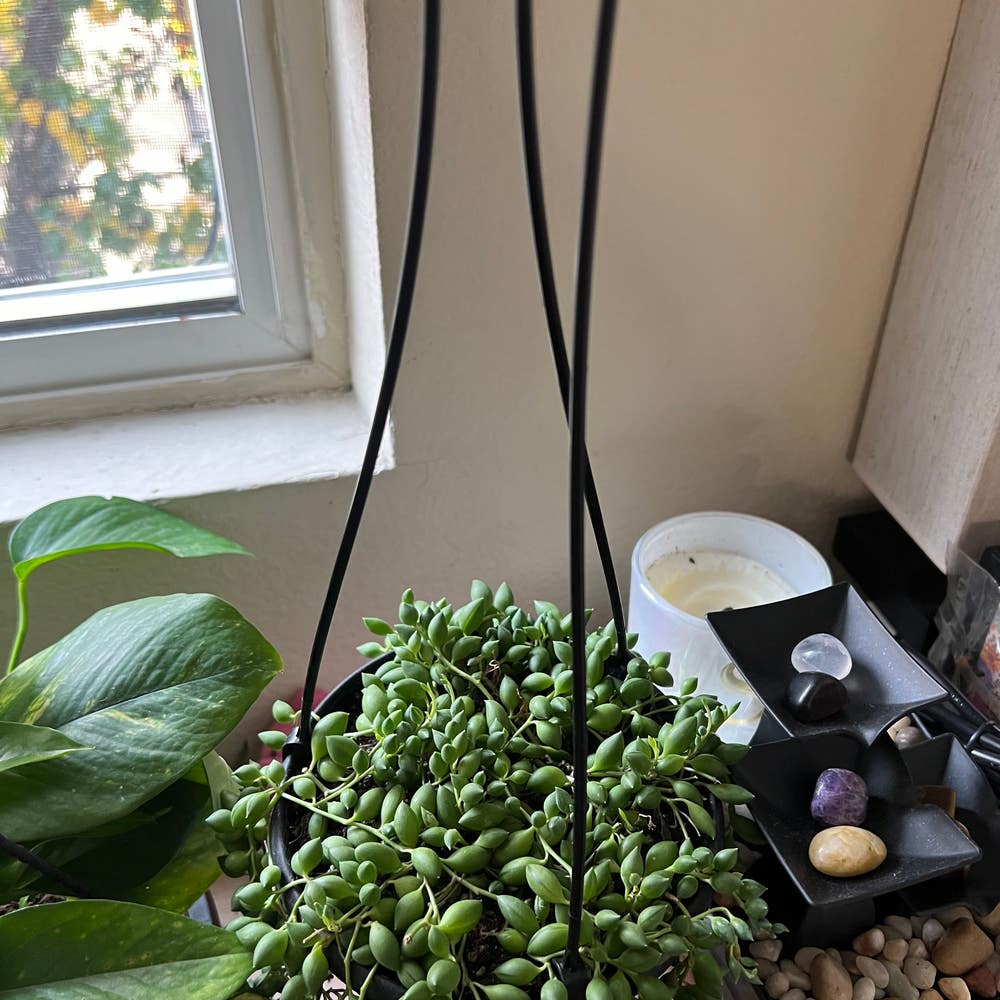
Curio Rowleyanus 'String Of Raindrops' Leaves Curling 💧
Curio rowleyanus 'String of Raindrops'
By the Greg Editorial Team
Jun 18, 2024•3 min read
This article was created with the help of AI so we can cover more plants for you. May contain errors. See one? Report it here.
Decode your 'String of Raindrops' 🌧️ distress signals to restore its quirky, healthy splendor.
- Leaf curling signals distress; watch for discoloration and texture changes.
- 🌡️ Avoid heat stress and over/under-watering to prevent curling.
- 🐛 Combat pests like spider mites with soapy water or neem oil.
Spotting the Signs: When Your 'String of Raindrops' Is Unhappy
🍃 Identifying Leaf Curling
- Leaf curling in Curio rowleyanus manifests as a departure from the plant's typical pea-like plumpness. Leaves may begin to bend subtly before progressing into tighter curls. This isn't a mere aesthetic change; it's a cry for help from your succulent.
🚨 Other Warning Signals
- Beyond the curl, be on the lookout for discoloration—yellowing or brown spots that often accompany the curling leaves. Soft or mushy leaves are a telltale sign of overwatering, while leaves that feel too dry or crispy suggest underwatering. These symptoms are your plant's non-verbal way of signaling distress.

The Root of the Problem: Pinpointing the Cause of Curling Leaves
💦 Thirsty or Drowning?
Watering is a delicate dance with Curio rowleyanus. To prevent leaf curling, the soil should feel like a wrung-out sponge—moist but not waterlogged. Check the top inch of soil; if it's dry, it's time to water. Remember, damp not drenched.
🌡️ Too Hot to Handle?
Temperature plays a critical role in leaf health. Heat stress can dehydrate your 'String of Raindrops', causing leaves to curl as a cry for help. Keep them in a comfortable temperature range to avoid the drama of a plant meltdown.
🌞 Light, But Not Too Bright
Sunlight is essential, but too much can fry the leaves, while too little can leave them reaching for more. Aim for bright, indirect light—think of it as the plant's preferred Instagram filter: flattering, but not harsh.

Unwanted Guests: Tackling Pest-Related Curling
🐜 Common Culprits
Pests are the sneaky villains in the tale of your 'String of Raindrops'. Spider mites, mealybugs, and aphids top the list of usual suspects. They're tiny but mighty in their capacity for chaos, often leaving behind a trail of curled leaves. To catch these critters, scrutinize the undersides of leaves and stems for any signs of webbing or tiny bugs.
🚪 Show Them the Door
When it comes to pest control, think of yourself as the bouncer of your plant's personal club. Soapy water spritzes are your first line of defense, gentle yet effective. For the more tenacious pests, neem oil is your eco-friendly muscle, showing those gatecrashers the door without the environmental guilt. If you spot sticky residue or actual bugs, it's time to act fast. Regular monitoring and cleanliness are your allies, keeping the plant's surroundings tidy to deter future infestations. Remember, a clean plant is a happy plant, and vigilance is your best weapon in the fight against these unwelcome guests.

Nip It in the Bud: Preventing Future Leaf Curling
🌡️ Consistency Is Key
Maintaining stable environmental conditions is crucial for the health of your Curio rowleyanus. Consistency in care is like the heartbeat of your plant's world. Avoid the rollercoaster of erratic temperatures; your plant craves a steady climate. Use tools like thermometers and hygrometers to monitor your room's conditions and keep them as constant as possible.
💧 The Watering Sweet Spot
Finding the perfect balance in watering is key to preventing leaf curl. Your 'String of Raindrops' doesn't appreciate a flood or a drought. It's all about that Goldilocks zone—not too wet, not too dry. Consider using a moisture meter to take the guesswork out of watering. This isn't coddling; it's smart plant parenting. Stick to a regular watering schedule, and adjust according to the season. Remember, a disciplined watering routine is the lifeline your succulent needs to thrive.
⚠️ Safety First
This content is for general information and may contain errors, omissions, or outdated details. It is not medical, veterinary advice, or an endorsement of therapeutic claims.
Always consult a qualified healthcare professional before using any plant as food, medicine, or supplement.
Never eat any plant (or feed one to pets) without confirming its identity with at least two trusted sources.
If you suspect poisoning, call Poison Control (800) 222-1222, the Pet Poison Helpline (800) 213-6680, or your local emergency service immediately.
Spotted an error? Please report it here.
Ensure your 'String of Raindrops' remains resilient 🛡️ with Greg's personalized care reminders, pest alerts, and environmental tracking for perfect watering every time.