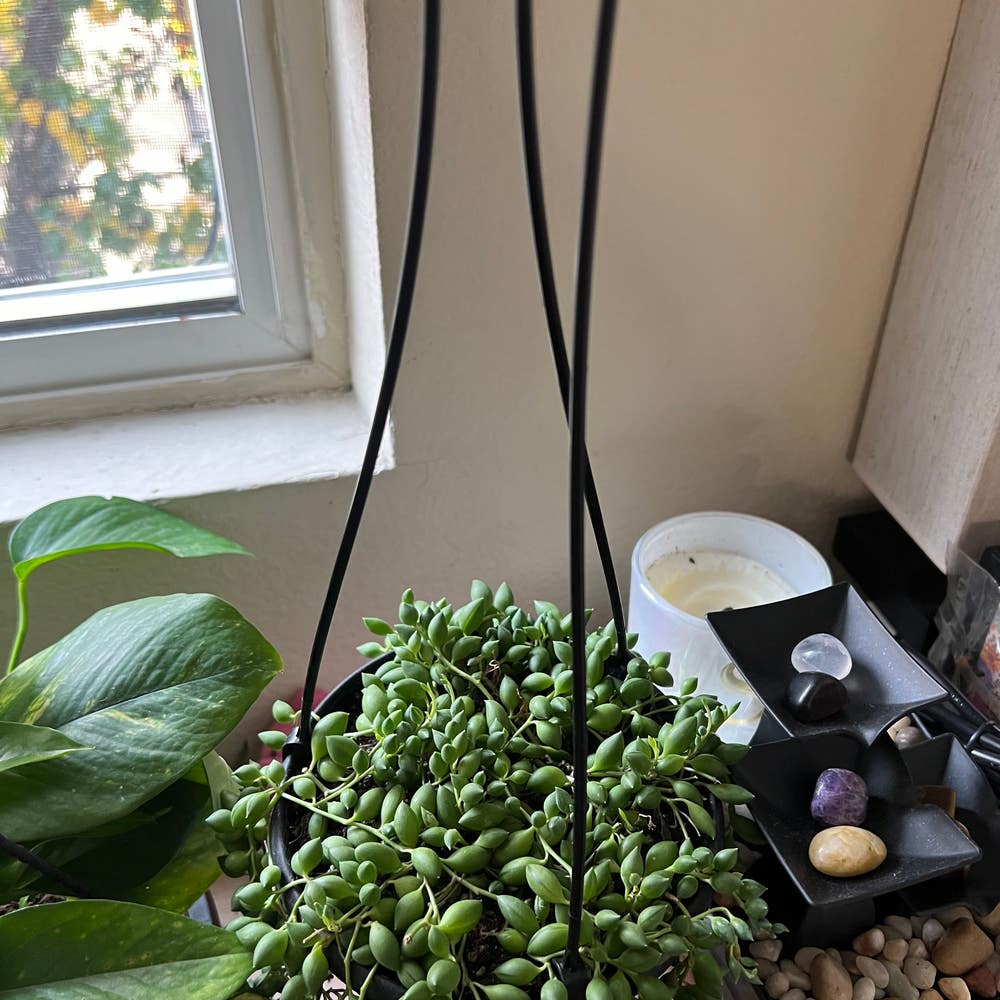
Curio rowleyanus 'String of Raindrops' Root Rot Solutions
Curio rowleyanus 'String of Raindrops'
By the Greg Editorial Team
Jun 18, 2024•5 min read
This article was created with the help of AI so we can cover more plants for you. May contain errors. See one? Report it here.
Rescue your 'String of Raindrops' 🌧️ from the grip of root rot with life-saving care tips.
- 🍂 Discolored leaves and stench indicate root rot in 'String of Raindrops'.
- ✂️ Prune roots, clean pot, change soil to treat and prevent rot.
- 💧🌞 Water wisely, balance light and humidity for healthy roots.
Spotting Trouble: Recognizing Root Rot in Your 'String of Raindrops'
👀 Visual Red Flags
Leaves don't lie. Discoloration is a distress signal from your 'String of Raindrops'. Yellowing or wilting leaves are the plant's SOS, hinting at possible root rot below. A stench of decay is another dead giveaway. Trust your nose—if it smells like a compost bin, it's time to investigate.
🕵️ Below the Surface
Roots should be firm, not reminiscent of overcooked noodles. Mushiness and a dark coloration are the hallmarks of root rot. Don't just peek—remove the plant from its pot for a full root inspection. Black or brown roots are a no-go; they mean your plant's in trouble. Remember, healthy roots are white or light tan and springy to the touch. If they're poking out of drainage holes or the soil smells like last week's leftovers, consider it a red flag.

Immediate Rescue: Treating Root Rot Step by Step
🌱 Unearthing the Problem
Inspect the roots of your 'String of Raindrops' for rot, which typically presents as soft, brown, or black areas. Gently remove the plant from its pot and clear away the soil to get a good look.
✂️ Surgical Precision
Prune the affected roots with sterilized scissors or shears, cutting back to healthy tissue. This step is like triage; you're removing the damaged parts to save the whole.
🏡 Fresh Foundations
Thoroughly clean the pot with a bleach solution or alcohol to kill any lingering pathogens. Then, provide your plant with new, well-draining soil, ensuring any excess water can escape through proper drainage holes.

Water Wisely: Keeping Roots Rot-Free
💧 Fine-Tuning Your Watering Schedule
Crafting the perfect watering routine for 'String of Raindrops' is more art than science. It's about reading the room—or in this case, the pot. Your succulent's soil should feel like a well-wrung sponge, not a marshland. Seasons change, and so should your watering habits. In summer, your plant might be as thirsty as a marathon runner, while in winter, it's more like a hibernating bear.
🌊 Mastery of Moisture
Avoiding root rot is about mastering the art of moisture control. Water deeply, then let the soil dry out before going in for another round. This isn't a set-it-and-forget-it kind of deal; it's an ongoing dance with nature. Use a moisture meter if you're not confident in your soil-poking skills. And remember, watering is about quenching thirst, not causing a flood. Use a long-spout watering can to target the roots and keep those leaves high and dry.

The Right Environment for Thriving Roots
💡 Light and Temperature Balance
Proper lighting is crucial for the 'String of Raindrops'—it's like a plant's daily bread. Too little light, and the roots get lazy, leading to rot. Too much, and the leaves might get a sunburn. Aim for bright, indirect light that mimics a shady day in the plant's natural habitat. Temperature is another piece of the puzzle. Keep your green buddy comfortable between 68-80°F. If it's too cold, the roots might catch a chill and decay; too hot, and they'll bake.
💧 Humidity Harmony
Humidity can be a root's best friend or worst enemy. It's all about balance. Air moisture levels should be just right—not too muggy, not too arid. Think of it as setting the mood for a cozy evening in. Use a dehumidifier if your air feels like a tropical rainforest, or a pebble tray if it's drier than a comedian's humor. And remember, good air circulation is non-negotiable. It's the difference between a healthy plant and a breeding ground for root rot. Keep the air moving, but avoid placing your plant in the path of harsh drafts.
Proactive Potting: Preventative Measures Against Root Rot
🌱 The Perfect Pot and Soil Mix
Selecting the right pot and soil mix is like setting the stage for a drama-free life for your 'String of Raindrops'.
🏺 Pot Selection
Choose a pot that's the Goldilocks size—not too big, not too small. Drainage holes are non-negotiable; they're your first line of defense against waterlogging. Terra cotta pots are a win; they breathe, helping the soil to dry out more efficiently than plastic.
🌿 Soil Composition
The soil mix should be the Ritz-Carlton for your succulent—luxury drainage with no unwanted guests. Aim for a mix that's one part organic potting soil, one part perlite, and a sprinkle of orchid bark or pumice. This combo ensures fast drainage and prevents the dreaded soggy soil syndrome.
🕵️ Ongoing Vigilance
Regular check-ups are the secret sauce to keeping root rot at bay.
💧 Soil Moisture Checks
Before you even think about watering, do the finger test. If the top inch of soil feels dry, go ahead. If not, hold off. Overwatering is like throwing a pool party for your plant's roots, and trust me, they can't swim.
🕰️ Periodic Pot Inspections
Every few months, take a peek at the pot's drainage situation. Clear any blockages and confirm that water can escape freely. It's like checking the exits during a fire drill—safety first.
By staying vigilant and providing the perfect pot and soil mix, you're not just preventing root rot; you're setting your 'String of Raindrops' up for a lifetime of health and happiness. Keep those roots dry, and your plant will thank you with a cascade of healthy, raindrop-like leaves.
⚠️ Safety First
This content is for general information and may contain errors, omissions, or outdated details. It is not medical, veterinary advice, or an endorsement of therapeutic claims.
Always consult a qualified healthcare professional before using any plant as food, medicine, or supplement.
Never eat any plant (or feed one to pets) without confirming its identity with at least two trusted sources.
If you suspect poisoning, call Poison Control (800) 222-1222, the Pet Poison Helpline (800) 213-6680, or your local emergency service immediately.
Spotted an error? Please report it here.
Ensure your 'String of Raindrops' stays healthy and hydrated 💧 with Greg's custom care reminders, preventing root rot before it starts.