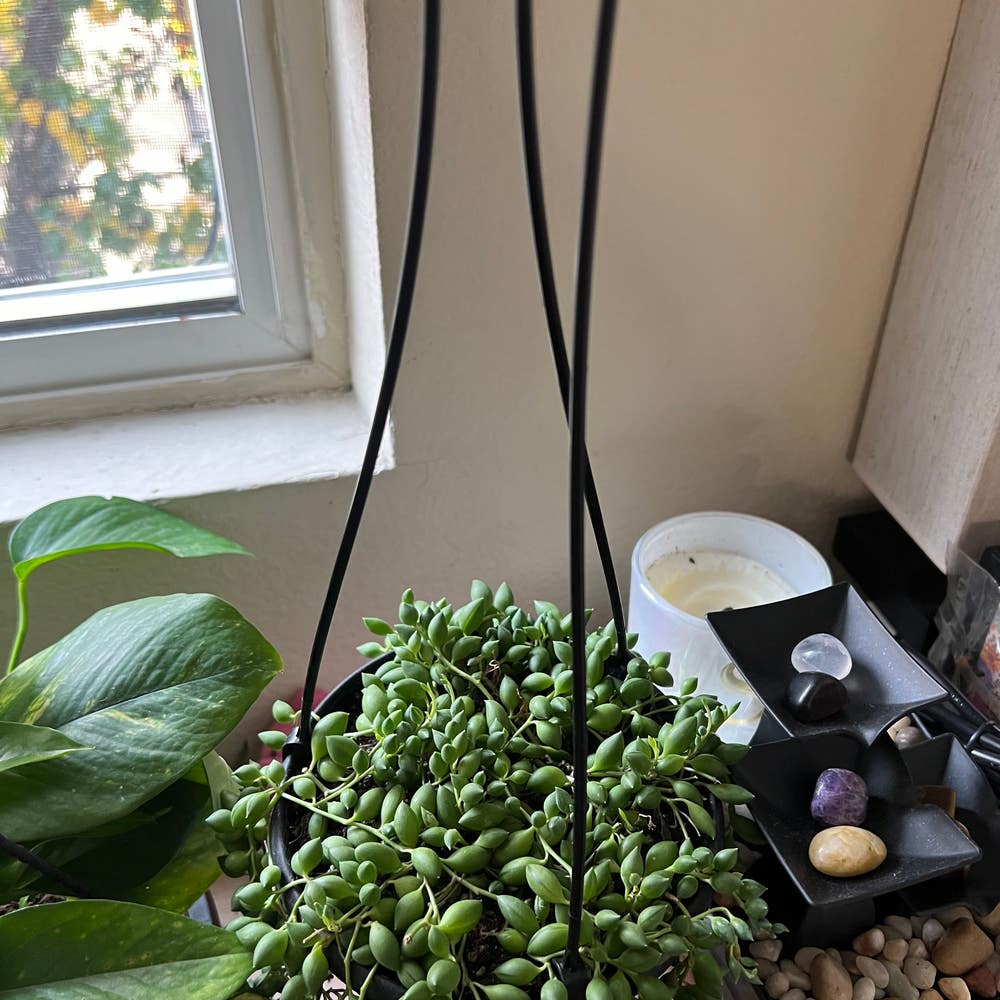
Curio Rowleyanus 'String Of Raindrops' Leaves Drooping
Curio rowleyanus 'String of Raindrops'
By the Greg Editorial Team
Jun 18, 2024•4 min read
This article was created with the help of AI so we can cover more plants for you. May contain errors. See one? Report it here.
Rescue your drooping 'String of Raindrops' 🌧️ and restore its perkiness with expert care secrets!
- 🚫 Overwatering causes limp leaves: Stop watering, check roots, repot if needed.
- 💧 Underwatering leads to crispy leaves: Adjust watering frequency and depth accordingly.
- 🌡️ Ideal temperature range: 70°F-80°F day, 60°F-68°F night for healthy growth.
When Too Much Love Drowns: Overwatering Woes
💦 Spotting the Soggy Culprit
Limp leaves and a pot heavier than your conscience after skipping the gym—classic signs your 'String of Raindrops' is overwatered. If the soil smells like a forgotten gym locker, it's time to rethink your watering schedule.
Brown spots with a yellow halo are not a plant fashion statement; they're distress flares. Check for a musty odor—it's the plant's way of crying out for help.
🚰 The Pot Check: Assessing Drainage Issues
If your pot's as water-tight as a submarine, you've got a problem. Drainage holes are a must; they should be as unobstructed as a freeway at midnight.
Terracotta pots are the unsung heroes of moisture control—they wick away excess like a good blotting paper. Consider switching if you haven't already.
🌊 Bailing Out Your Plant
- Stop watering immediately. Let the soil dry out to the touch, like a day-old bagel.
- Feel the weight of the pot. If it's reminiscent of a kettlebell, it's too soggy.
- Inspect the roots. If they're mushier than a romance novel, it's time to trim the rotten parts.
- Repotting might be your next step. Use fresh, well-draining soil that's as balanced as a yogi.
💧 Long-term Watering Strategies to Keep the Soil Just Right
Mulch isn't just for curb appeal—it's a moisture level regulator. It's like a thermostat for your soil, keeping things not too wet, not too dry.
Before watering, do the finger test. If the top inch of soil is dry, give it a drink, but don't drown it. Think of it as a sip, not a gulp.

Thirsty for Attention: The Underwatering Plight
🏜️ Crispy or Limp? Identifying Underwatering
- Crispy leaves on your 'String of Raindrops' are a distress signal; they're as desperate for water as a dehydrated hiker. If the topsoil feels like a barren wasteland, it's time to act.
- Check the root health by gently easing the plant out of its pot. Brittle, lifeless roots are a clear cry for help.
🚰 Quenching the Thirst
- Watering frequency is more art than science. It hinges on your home's climate, the plant's location, and the current season. Start with a weekly check, adjusting as needed.
- For deep watering, imagine you're a slow-moving cloud, not a storm. Drench the soil until it's saturated, then let it drain completely. This mimics the natural rainfall cycle, promoting healthy root growth without waterlogging.

A Balancing Act: Light and Temperature Tango
🍃 Reading the Leaves: Light and Heat Stress Signals
Droopy leaves on your 'String of Raindrops' could be the plant's way of saying it's had too much sun or is feeling the heat. Yellowing leaves are the plant's yellow card for excessive light, while brown tips scream, "I'm overheating!" The ideal temperature range for this succulent is between 70°F and 80°F during the day, and a cooler 60°F to 68°F at night. Consistency is crucial; think of it as setting the thermostat for a comfortable living space, not a fluctuating greenhouse.
🌿 Creating the Perfect Environment
To prevent your 'String of Raindrops' from wilting under the wrong conditions, adjust its location to ensure it receives bright, indirect sunlight. Direct beams are a no-go; they're the equivalent of a plant sunburn. As seasons change, so should your plant's position. In summer, it might need to be pulled back from a window, while in winter, it could require that coveted spot on the sill. Seasonal adjustments are key to keeping your plant content all year round. Remember, it's not just about surviving; it's about thriving.

The Proactive Plant Parent: Prevention Tactics
🌱 Crafting the Ultimate Care Routine
- Monitor your 'String of Raindrops' regularly to pre-empt droopy leaves.
- Implement a care calendar to schedule and track watering, fertilizing, and other care activities.
🛠 Tools and Techniques for the Proactive Plant Owner
- Use a moisture meter or the finger test to check soil dampness before watering.
- Rotate your plant periodically to ensure even light exposure and growth.
🌍 Environmental Control
- Keep an eye on room temperature and humidity; stable conditions are crucial.
- Shield your plant from drafts and direct sunlight to prevent stress.
🍃 Soil and Pot Management
- Ensure your pot has adequate drainage holes to avoid waterlogged soil.
- Opt for a well-draining soil mix and consider adding perlite or pumice for improved aeration.
🐜 Pest and Disease Vigilance
- Regularly inspect leaves for pests or signs of disease; early detection is key.
- Treat any issues promptly with appropriate pesticides or fungicides, following label instructions.
🌿 Nutrient Management
- Fertilize sparingly with a balanced solution to avoid nutrient excess or deficiency.
- Observe your plant's response to feeding and adjust the fertilizer schedule as needed.
📝 Record Keeping
- Keep a log of your plant's condition and care adjustments for future reference.
- Note any changes in leaf appearance or plant behavior to inform care decisions.
⚠️ Safety First
This content is for general information and may contain errors, omissions, or outdated details. It is not medical, veterinary advice, or an endorsement of therapeutic claims.
Always consult a qualified healthcare professional before using any plant as food, medicine, or supplement.
Never eat any plant (or feed one to pets) without confirming its identity with at least two trusted sources.
If you suspect poisoning, call Poison Control (800) 222-1222, the Pet Poison Helpline (800) 213-6680, or your local emergency service immediately.
Spotted an error? Please report it here.
Revive your 'String of Raindrops' from droopy despair by letting Greg 🌱 tailor a watering schedule that ensures just the right amount of hydration.