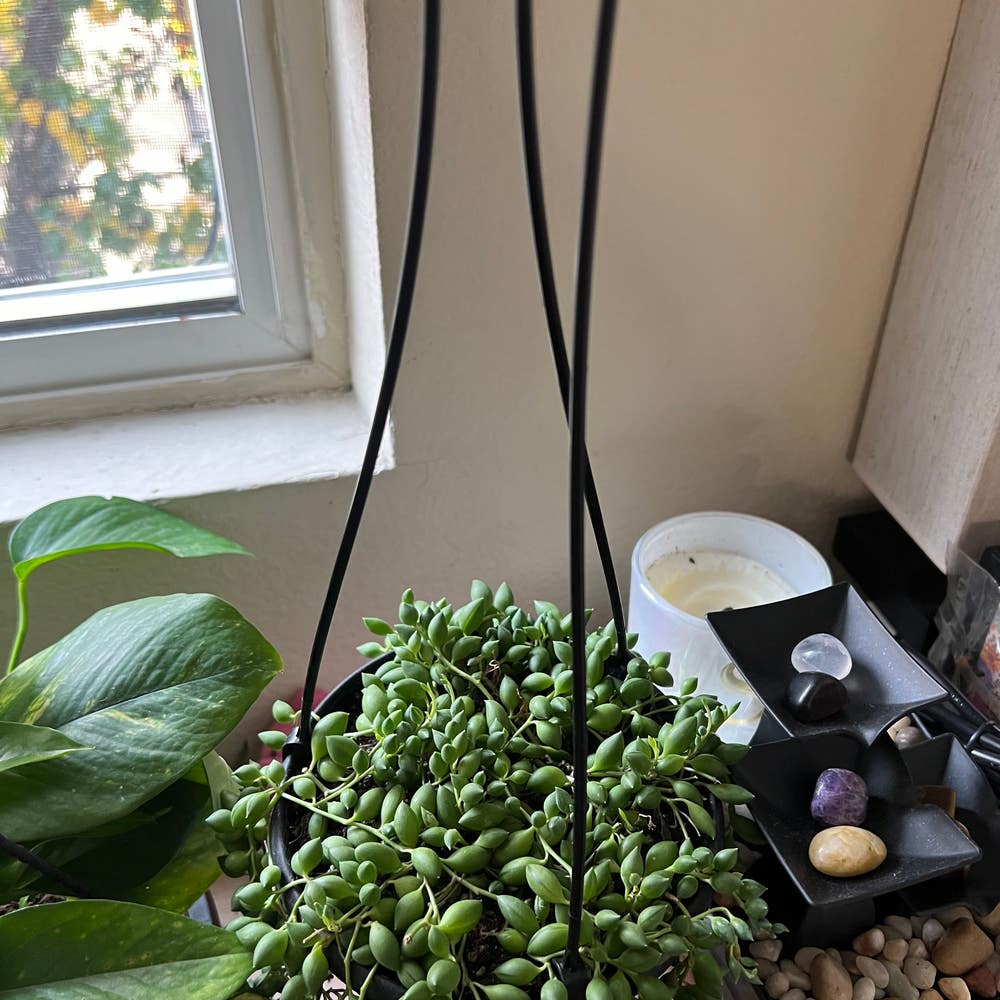
Curio Rowleyanus 'String Of Raindrops' Mushy Leaves 💧
Curio rowleyanus 'String of Raindrops'
By the Greg Editorial Team
Jun 18, 2024•4 min read
This article was created with the help of AI so we can cover more plants for you. May contain errors. See one? Report it here.
Prevent soggy succulents and ensure lush leaves with this ultimate watering guide for 'String of Raindrops' 🌧️🌿.
- 🚫 Stop watering immediately if leaves are mushy; let soil dry out.
- 🌱 Repot with drainage holes and well-draining soil to prevent root rot.
- 💧 Adjust watering frequency using moisture meters or the finger test.
Spotting Trouble: Signs Your 'String of Raindrops' is Too Wet
💦 Overwatering Symptoms
Soggy soil and limp stems are the distress signals of your 'String of Raindrops'. If your plant's leaves feel like a wet paper towel, it's a clear sign you've gone overboard with watering.
🚰 Drainage Woes
Inadequate drainage is like a bad roommate for your plant's roots—it doesn't let them breathe. If your pot is more of a swimming pool than a home, it's time to intervene. Check the bottom of your pot; if water isn't flowing freely, you've got a drainage drama on your hands.
🦠 The Root of the Problem: Root Rot
Root rot is the plant equivalent of a silent horror movie villain—it's there, lurking, even if you can't see it. When roots turn from firm and white to mushy and brown, it's the telltale heartache of root rot. Don't wait until your plant's leaves are slumping like a deflated balloon—take action at the first sign of trouble.

First Aid for Soggy Succulents
💧 Cutting Back on H2O
If your 'String of Raindrops' succulent is swimming in excess moisture, stop watering immediately. Let the soil dry out completely, which may feel like an eternity but is crucial for the plant's survival.
🥿 Improving Your Plant's "Shoes"
Repotting might be necessary if your pot is a water trap. Ensure your new pot has drainage holes and consider adding a layer of gravel at the bottom to keep roots away from any collected water. Swap out the old, soggy soil for a fresh, well-draining mix.
🌱 Root Rehab
Inspect the roots; if they're brown and mushy, it's time for surgery. With clean, sharp scissors, trim away the rotted parts. Let the roots air out before replanting to avoid diving back into a waterlogged nightmare. After repotting, resist the urge to water for a few days to allow the plant to settle.

Building a Better Watering Strategy
💧 Finding the Sweet Spot for Watering Frequency
Watering your 'String of Raindrops' is less about sticking to a rigid timetable and more about understanding its unique needs. Adjust your watering schedule based on the plant's environment, considering factors like light, temperature, and humidity. In general, start with a weekly routine, but be ready to tweak it.
🛠 Tools of the Trade
Moisture meters can be your best friend, offering a scientific approach to determine when it's time to water. For a low-tech option, the finger test—inserting a digit into the soil up to the first knuckle—can be surprisingly effective. If the soil feels dry, it's time to water. Remember, the goal is moist soil, not a swamp.
Watering cans with long spouts target the soil directly, avoiding wet leaves that could spell trouble. And if you're prone to overwatering, setting calendar reminders can help you avoid giving your plant an unwanted drink. But always, always check the soil before you water—your plant will thank you.

Soil and Pot Mastery to Keep Leaves Lush
🌱 Choosing the Right Mix
Selecting the right soil for your Curio rowleyanus 'String of Raindrops' is crucial. You want a mix that drains faster than a sieve, preventing your succulent's roots from stewing in moisture. Perlite or coarse sand should be your go-to additives, lightening the soil like a fluffy cake, ensuring it's well-aerated and quick to dry. Organic matter is also key; it's like the secret ingredient that retains just enough water to quench the plant's thirst without causing a flood.
🏺 The Perfect Pot
When it comes to pots, think of them as your plant's personal trainers—they need to provide support but also let them breathe. Terracotta pots are the all-stars, wicking away moisture like a pro, while plastic ones are more like sweat-trapping gym clothes. Ensure your pot has drainage holes; it's non-negotiable. The size also matters; too big, and you'll have water pooling like a lazy river, too small, and your plant's growth gets choked out. Aim for the Goldilocks zone—just right.
⚠️ Safety First
This content is for general information and may contain errors, omissions, or outdated details. It is not medical, veterinary advice, or an endorsement of therapeutic claims.
Always consult a qualified healthcare professional before using any plant as food, medicine, or supplement.
Never eat any plant (or feed one to pets) without confirming its identity with at least two trusted sources.
If you suspect poisoning, call Poison Control (800) 222-1222, the Pet Poison Helpline (800) 213-6680, or your local emergency service immediately.
Spotted an error? Please report it here.
Revive your 'String of Raindrops' from soggy to superb 🌧 with Greg's precise watering reminders, ensuring your succulent thrives without the guesswork.