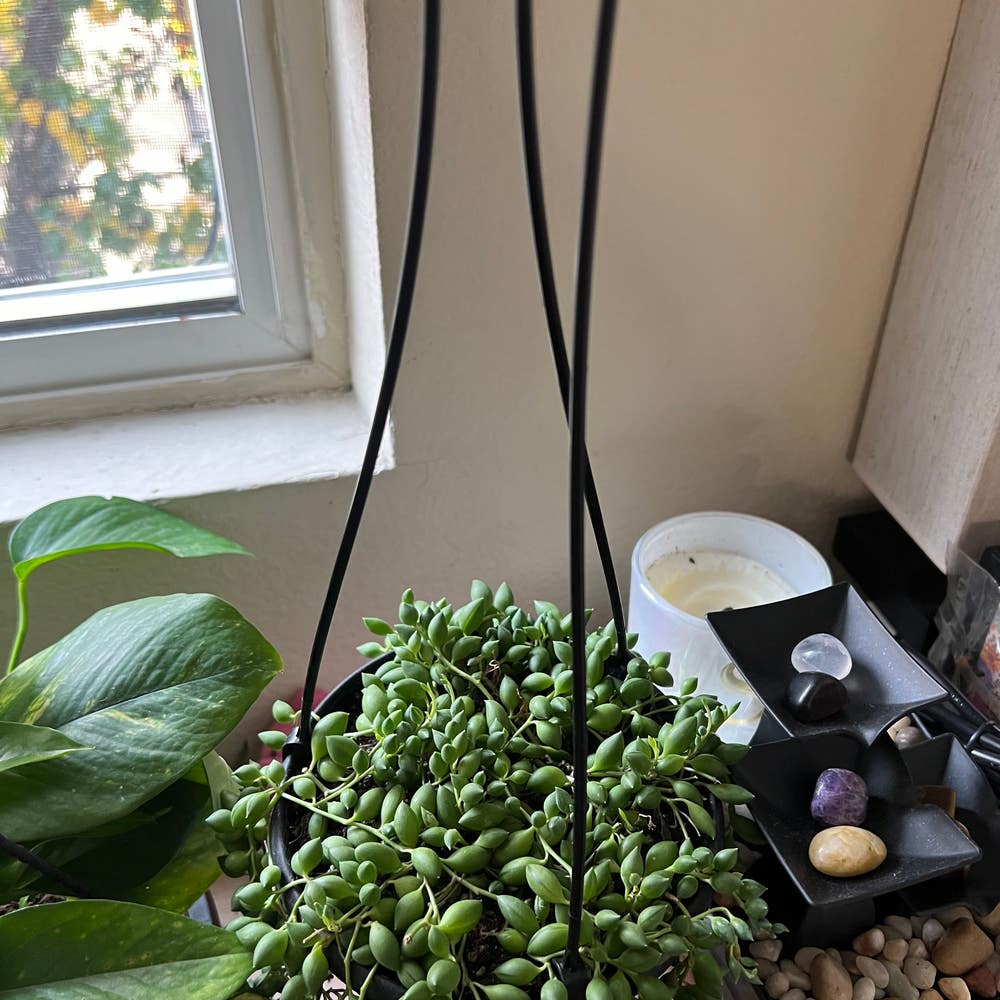
Curio Rowleyanus 'String Of Raindrops' Leaves Dropping 💧
Curio rowleyanus 'String of Raindrops'
By the Greg Editorial Team
Jun 18, 2024•5 min read
This article was created with the help of AI so we can cover more plants for you. May contain errors. See one? Report it here.
Prevent your 'String of Raindrops' from shedding tears 🌧️ with our ultimate plant-saving tips!
- Overwatering? Remove, dry, trim roots, and repot in well-draining soil.
- Underwatered? Water when top inch of soil is dry; keep consistent.
- Ideal conditions: Bright, indirect light and temperatures between 18-24ºC (64-75ºF).
When Overwatering Takes a Toll
🌧️ Spotting the Signs of Overwatering
Soggy soil and limp leaves are the distress signals of an overwatered 'String of Raindrops'. If the soil sticks to your fingers with a gloomy tenacity, it's a clear sign you've been too generous with your watering can. Yellowing leaves, black spots, and a musty odor from the soil are your plant's way of waving a white flag. Mushy roots are a no-go; they should be firm and white, not reminiscent of overcooked noodles.
💦 Saving an Overwatered Plant
If you've turned your pot into a swamp, don't despair. First, remove the plant from its pot to let the roots breathe and the soil dry out. Second, inspect the roots for rot—healthy ones are robust and white, not squishy. Third, if the stems near the soil feel like a soggy sponge, it's serious. Fourth, trim any rotten roots with sterilized scissors. Fifth, repot in fresh, well-draining soil and ensure your pot has drainage holes to prevent future waterlogged tragedies. Remember, your 'String of Raindrops' is not a fan of wet feet.

The Thirsty Plant: Underwatering Woes
💧 Telltale Symptoms of Underwatering
Dry soil and shriveled leaves are the SOS signals of your 'String of Raindrops' begging for a drink. If the soil feels like the surface of Mars and the foliage looks like it's been through a food dehydrator, it's high time for hydration.
Quenching the Thirst
Finding the sweet spot for watering isn't rocket science, but it does require attention. When the top inch of soil feels as dry as a comedian's wit, it's time to water. Use a moisture meter if you're the type who needs a gadget to remind you to drink water yourself. Remember, consistency is key—your plant craves routine, not surprises.

Light and Temperature: The Balancing Act
⚖️ Too Much or Too Little: Light's Impact on Leaf Stability
Bright, indirect sunlight is the gold standard for your 'String of Raindrops'. Direct sun can be a leaf scorcher, while too little light leaves them languishing. Rotate your plant to ensure even exposure; every leaf deserves its time in the spotlight.
Keeping the Temperature Just Right
Consistent temperatures between 18-24ºC (64-75ºF) are your plant's comfort zone. Avoid the drama of temperature swings by steering clear of drafty windows and heat sources. Think of it as maintaining a steady beat in the symphony of plant care.

Battling Pests and Disease
🐛 Common Culprits: Pests that Trigger Leaf Drop
Your 'String of Raindrops' might be under siege by tiny critters. Spider mites are like invisible ninjas, leaving behind a telltale webbing. If you spot them, it's time for action. Mealybugs are another adversary, easy to spot with their white fluff, and they leave a sticky mess. Both suck the life out of leaves, leading to a sad, droopy plant.
🚨 Immediate Actions
- Inspect regularly, especially the undersides of leaves.
- Isolate the affected plant to prevent a full-blown pest party.
- Use insecticidal soap or neem oil for a targeted takedown.
🍄 Fungal Foes and Rotten Roots
Fungi are the stealthy villains in this story, often slipping in unnoticed until it's too late. They love moist conditions and can leave your plant's leaves spotted or discolored.
🛡️ Fungal Defense Strategy
- Keep leaves dry; water at the base to avoid inviting fungi to a rave.
- Prune affected areas to stop the spread like a plant surgeon.
- If all else fails, a fungicide can be the necessary evil. Use it wisely.
💡 Proactive Measures
- Promote air circulation; it's like social distancing for plants.
- Introduce beneficial insects like ladybugs to handle aphids naturally.
- Stay vigilant with routine inspections. Catching pests early is key to avoiding a plant meltdown.
Proactive Plant Parenting: Preventing Future Fallout
💧 Perfecting Your Watering Technique
Watering your 'String of Raindrops' isn't just about sticking to a schedule—it's about observation and adaptation. Start by feeling the soil; if it's dry a couple of inches down, it's time to water. But remember, your plant's thirst varies with the seasons, and it's less parched in winter.
Quality of water counts too. Tap water can be harsh; consider rainwater or distilled water to keep your plant from throwing a fit. And always water at the base—wet leaves are a party invitation for fungi.
🏡 Ensuring the Ideal Home
Choosing the right spot for your 'String of Raindrops' is like picking a neighborhood—it's all about the community. Group plants to create a humid microclimate, or use a pebble tray for that spa-like humidity boost.
The pot is your plant's castle. Ensure it has drainage holes to avoid waterlogged roots. A layer of pebbles at the bottom? That's your plant's insurance against indoor flooding. Keep it in a bright spot but away from direct sunlight, which can be as harsh as a midday desert.
Remember, your plant's comfort zone is key—avoid drafts and sudden temperature changes. Think steady, not extreme. Your 'String of Raindrops' will thank you by staying lush and firmly attached.
⚠️ Safety First
This content is for general information and may contain errors, omissions, or outdated details. It is not medical, veterinary advice, or an endorsement of therapeutic claims.
Always consult a qualified healthcare professional before using any plant as food, medicine, or supplement.
Never eat any plant (or feed one to pets) without confirming its identity with at least two trusted sources.
If you suspect poisoning, call Poison Control (800) 222-1222, the Pet Poison Helpline (800) 213-6680, or your local emergency service immediately.
Spotted an error? Please report it here.
Ensure your 'String of Raindrops' thrives, not dives, by letting Greg's custom care plan 🌱 keep track of watering and environmental needs, so you never miss a beat—or a drop.