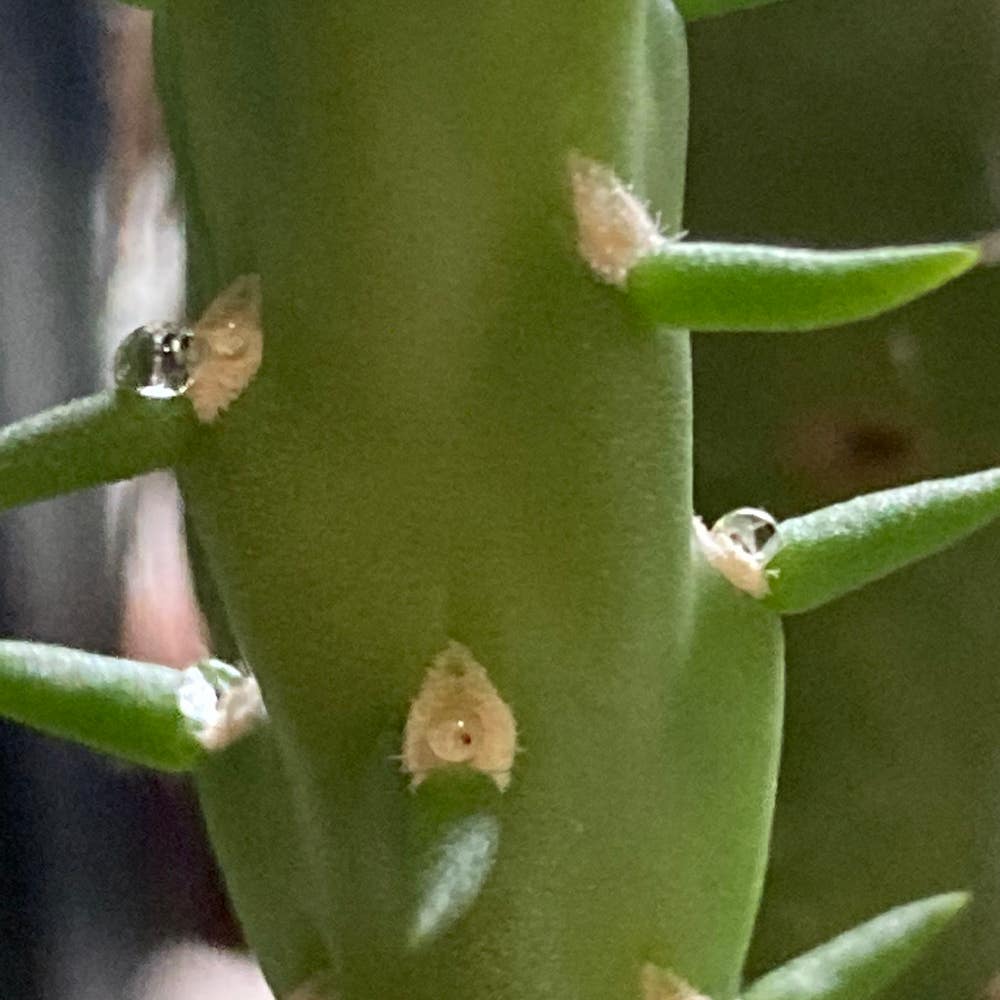
5 Tips for Healing Leaves Falling Over on Your Cholla 🌵
Cylindropuntia spp.
By the Greg Editorial Team
Oct 11, 2024•4 min read
This article was created with the help of AI so we can cover more plants for you. May contain errors. See one? Report it here.
- 💧 Overwatering and underwatering both cause leaf drop; adjust watering frequency accordingly.
- 🌡️ Environmental stressors like temperature and humidity affect Cholla health; maintain stability.
- 🐛 Regular pest inspections are crucial; use insecticidal soap for infestations.
Causes of Leaf Drop
💧 Overwatering Issues
Overwatering is a common culprit behind leaf drop in Cholla. Symptoms include soft, mushy pads and yellowing or browning leaves.
Excessive moisture can lead to root rot, which ultimately causes leaf drop, and can also invite fungal infections. To prevent this, allow the soil to dry out completely between waterings and opt for well-draining soil.
🚰 Underwatering Effects
On the flip side, underwatering can also trigger leaf drop. Look for signs like wrinkled or shriveled pads and premature leaf drop.
Insufficient moisture stresses the plant, leading to reduced growth and vigor. Establish a consistent watering schedule and regularly monitor soil moisture levels to keep your Cholla thriving.
🌪️ Environmental Stress Factors
Environmental stressors can wreak havoc on your Cholla. Common issues include temperature fluctuations and low humidity levels.
Signs of stress manifest as discolored or drooping leaves, with increased leaf drop during extreme weather. To mitigate these effects, maintain stable temperature conditions (ideally between 70°F and 100°F) and avoid placing your Cholla in drafty areas.
🐛 Pest Infestations
Pests can be a serious threat to your Cholla's health. Common offenders include mealybugs and scale insects.
Look for sticky residue on pads or visible insects as signs of infestation. Regular inspections for pests and using insecticidal soap or neem oil can help control these issues effectively.
🦠 Disease Symptoms
Cholla can also fall victim to various diseases. Fungal infections, such as root rot, and bacterial infections are among the most common.
Symptoms include dark spots or lesions on pads and a foul odor emanating from the soil. To prevent disease, ensure proper air circulation around the plant and avoid overcrowding in pots.
Understanding these causes of leaf drop is crucial for maintaining a healthy Cholla. With the right care, you can keep your cactus vibrant and flourishing. Next, let’s explore how to identify symptoms of leaf problems effectively.
Identifying Symptoms of Leaf Problems
🌿 Signs of Healthy vs. Unhealthy Leaves
Healthy Cholla leaves are a sight to behold. They should feel firm and plump, showcasing a vibrant color that signals vitality.
In contrast, unhealthy leaves exhibit clear warning signs. Softness or mushiness indicates potential overwatering, while discoloration—yellowing or browning—suggests stress that needs immediate attention.
🔍 How to Assess Leaf Condition
Regular visual inspections are crucial for maintaining your Cholla's health. Keep an eye out for any signs of stress or damage, and note any changes in color or texture.
The touch test is another effective method. Gently squeeze the pads to check for firmness; any mushy areas could point to overwatering issues that require your intervention.
Proper Watering Techniques
Frequency and Amount of Water 🌊
Watering your Cholla cactus is crucial for its health. During the growing season, aim to water every 2-4 weeks, adjusting based on the plant's needs.
In winter, reduce the frequency to prevent overwatering. When you do water, ensure you soak the soil until it drains from the bottom of the pot, promoting thorough saturation without causing waterlogging.
Signs of Overwatering vs. Underwatering 🚨
Recognizing the signs of overwatering is essential for your Cholla's well-being. Look for yellowing pads and signs of root rot, which indicate too much moisture.
On the flip side, underwatering manifests as wrinkled pads and premature leaf drop. Keeping an eye on these symptoms will help you maintain a healthy cactus.
By mastering proper watering techniques, you can significantly reduce the risk of leaf drop and ensure your Cholla thrives. Next, let’s explore preventative measures to keep your plant in top shape.
Preventative Measures for Leaf Drop
Regular Maintenance Practices 🌱
Regular inspections are key to keeping your Cholla healthy. Aim for monthly checks to spot any visible pests or signs of disease on the pads.
Seasonal care is equally important. Adjust your watering and light exposure based on the time of year to ensure your cactus thrives.
Environmental Adjustments 🌤️
Creating optimal growing conditions can make a significant difference. Maintain a consistent temperature and humidity level to avoid stressing your plant.
Be mindful of sudden environmental changes. Gradually adjust care routines, like reducing watering in winter months and increasing light exposure during spring and summer, to support your Cholla's health.
By implementing these preventative measures, you can help your Cholla stay vibrant and reduce the risk of leaf drop. Next, let’s explore how to identify symptoms of leaf problems effectively.
⚠️ Safety First
This content is for general information and may contain errors, omissions, or outdated details. It is not medical, veterinary advice, or an endorsement of therapeutic claims.
Always consult a qualified healthcare professional before using any plant as food, medicine, or supplement.
Never eat any plant (or feed one to pets) without confirming its identity with at least two trusted sources.
If you suspect poisoning, call Poison Control (800) 222-1222, the Pet Poison Helpline (800) 213-6680, or your local emergency service immediately.
Spotted an error? Please report it here.
Keep your Cholla thriving 🌵 with Greg's personalized watering reminders and pest alerts, ensuring those leaves stay vibrant and healthy!