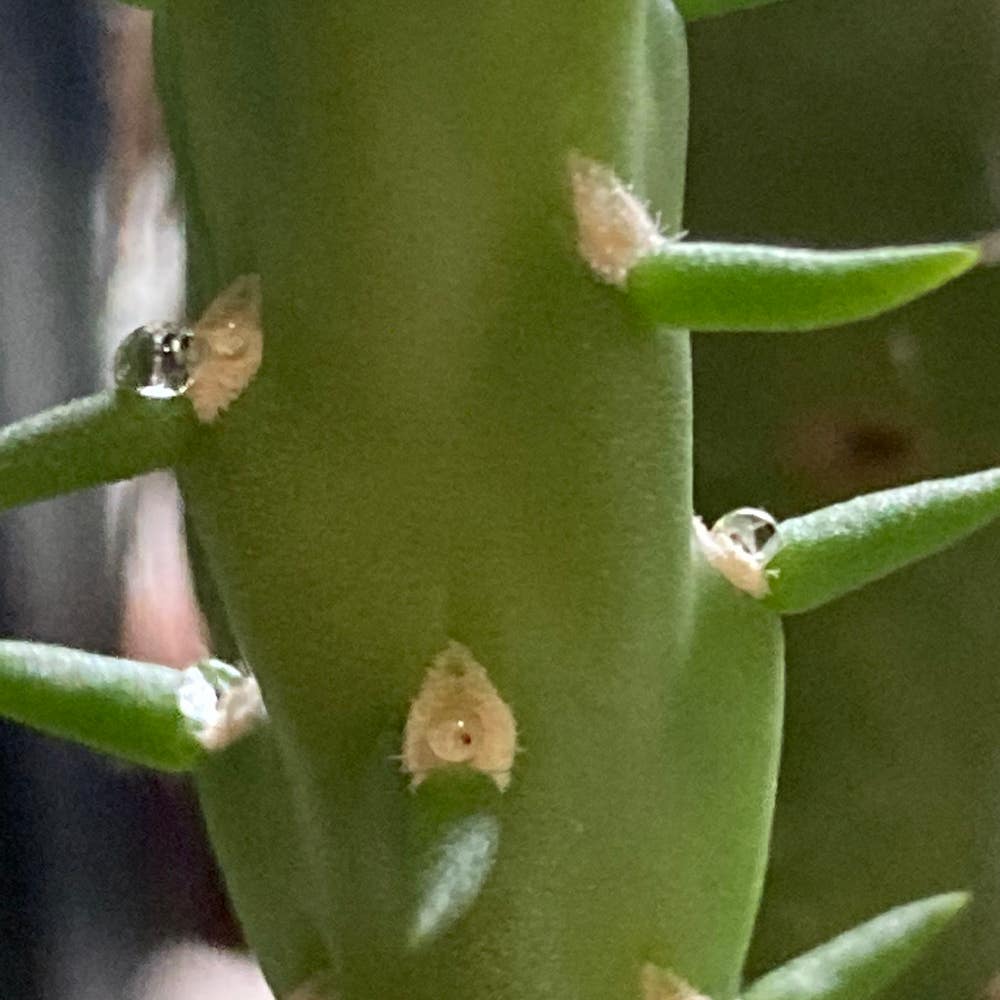
🌵 Understanding Brown Spots on Your Cholla Leaves
Cylindropuntia spp.
By the Greg Editorial Team
Oct 11, 2024•5 min read
This article was created with the help of AI so we can cover more plants for you. May contain errors. See one? Report it here.
- 🌱 Brown spots on Cholla arise from pests, overwatering, sunburn, or nutrient deficiencies.
- 💧 Overwatering causes brown spots; ensure proper soil drainage and let soil dry out.
- 🌞 Sunburn leads to light brown spots; provide 6-8 hours of direct sunlight daily.
Causes of Brown Spots
🦠 Fungal Infections
Fungal infections are a common culprit behind brown spots on Cholla leaves. Two notorious fungi, Fusarium and Phytophthora, can cause dark brown or black spots and lead to soft tissue decay.
Conditions that favor fungal growth include high humidity levels and poor air circulation. Keeping your Cholla in a well-ventilated area can help mitigate these risks.
🐛 Pest Infestations
Pests like mealybugs and scale insects can wreak havoc on your Cholla. Mealybugs appear as white, cotton-like masses on stems, while scale insects manifest as hard, shell-like bumps on leaves.
Signs of pest damage include yellowing leaves and sticky residue, known as honeydew, on the foliage. Regular inspections can help catch these pests early.
💧 Overwatering Issues
Overwatering is another leading cause of brown spots. Symptoms include brown spots that look water-soaked and wilting leaves, even when the soil feels moist.
To prevent overwatering, ensure your soil drains well. Sandy or cactus mix soils are ideal for Cholla, allowing excess moisture to escape.
☀️ Sunburn and Environmental Stress
Cholla can suffer from sunburn, which presents as light brown or bleached spots on the leaves. Leaf curling or wilting often accompanies these symptoms.
Environmental stressors, such as sudden temperature changes and excessive direct sunlight, can exacerbate these issues. Monitoring your plant's exposure can help maintain its health.
🌱 Nutrient Deficiencies
Nutrient deficiencies can also lead to brown spots on Cholla. A nitrogen deficiency typically causes yellowing leaves with brown spots, while magnesium deficiency results in interveinal chlorosis.
Balanced fertilization is crucial for healthy growth. Cactus-specific fertilizers can provide the necessary nutrients to keep your Cholla thriving.
Understanding these causes is essential for effective care. By addressing these issues, you can help your Cholla recover and flourish. Next, we'll explore how to diagnose the problem effectively.
Diagnosing the Problem
🌞 Assessing Environmental Conditions
Light Exposure
Cholla thrives in full sun, requiring 6-8 hours of direct sunlight daily. If your plant appears leggy or stretched, it’s a clear sign it’s not getting enough light.
Soil Moisture Levels
Checking soil moisture is crucial for Cholla health. Use the finger test by inserting your finger 1-2 inches into the soil, or opt for a soil moisture meter for more accurate readings.
Temperature Fluctuations
Cholla prefers a daytime temperature range of 70°F to 100°F (21°C to 38°C) and nighttime temperatures between 50°F and 60°F (10°C to 15°C). Watch for sudden leaf drop or browning, which indicates temperature stress.
🐛 Inspecting for Pests
Common Pests Affecting Cholla
Identifying pests early can save your Cholla. Look out for mealybugs, which appear as white, fluffy masses, and scale insects, characterized by small, hard bumps on leaves.
Signs of Infestation
Keep an eye out for sticky residue on leaves, often a sign of pest activity. Webbing or visible insects can also indicate an infestation that needs immediate attention.
Understanding these diagnostic steps will empower you to take action before issues escalate. Next, we’ll explore treatment options to restore your Cholla’s health.
Treatment Options
🚨 Immediate Actions to Take
Pruning Affected Leaves
Pruning is a crucial first step in treating brown spots on your Cholla.
- Use sterilized pruning shears to prevent introducing new pathogens.
- Remove all affected leaves and stems to halt the spread of damage.
- Dispose of cuttings properly to ensure they don't infect other plants.
Adjusting Watering Schedule
Watering practices significantly impact the health of your Cholla.
Allow the soil to dry out completely between waterings to prevent overwatering.
Signs of proper watering include firm, plump leaves that show no browning.
Treating Fungal Infections
Fungal infections can be persistent, but treatment options are available.
- Apply fungicides according to package instructions for effective control.
- For a natural remedy, mix water with baking soda and spray it on affected areas.
🌱 Long-Term Care Strategies
Improving Soil Drainage
Good drainage is essential for Cholla health.
Enhance drainage by adding perlite or sand to your potting mix.
Choosing pots with drainage holes is also vital to prevent water accumulation.
Using Appropriate Fertilizers
Fertilization plays a key role in maintaining Cholla vitality.
Follow a monthly fertilization schedule during the growing season for best results.
Opt for a balanced cactus fertilizer that includes essential micronutrients.
By implementing these treatment options and long-term care strategies, you can help your Cholla thrive and prevent future issues. Next, let’s explore preventive measures to keep your plant healthy year-round.
Preventive Measures
🌵 Best Practices for Cholla Care
Ideal Watering Techniques
Watering your Cholla correctly is crucial for its health. Aim for deep watering but do it infrequently to prevent root rot.
Using a moisture meter can help you gauge when it's time to water. This ensures your plant gets the right amount of moisture without being overwatered.
Optimal Light Conditions
Cholla thrives in bright light, so ensure it gets plenty of sun. If you're moving it from indoors to outdoors, gradually acclimate it to full sun to avoid shock.
This gradual exposure helps the plant adjust and prevents sunburn, keeping those vibrant colors intact.
Regular Inspections for Pests and Diseases
Make it a habit to inspect your Cholla weekly. Early detection of pests or diseases can save your plant from significant damage.
Look for any unusual signs, such as sticky residue or discoloration, to catch issues before they escalate.
🌦️ Seasonal Care Tips
Adjusting Care During Different Seasons
In summer, increase your watering frequency as temperatures rise. Your Cholla will appreciate the extra moisture during hot months.
Conversely, in winter, reduce watering and protect your plant from frost. This helps it conserve energy and stay healthy during colder months.
Preparing for Extreme Weather Conditions
When extreme weather hits, be proactive. Move your Cholla indoors during severe cold or heat to shield it from harsh conditions.
Using shade cloth during intense sun exposure can also protect your plant. These simple measures can make a big difference in your Cholla's well-being.
By following these preventive measures, you can keep your Cholla thriving and vibrant. Next, let’s dive into diagnosing any issues that may arise.
⚠️ Safety First
This content is for general information and may contain errors, omissions, or outdated details. It is not medical, veterinary advice, or an endorsement of therapeutic claims.
Always consult a qualified healthcare professional before using any plant as food, medicine, or supplement.
Never eat any plant (or feed one to pets) without confirming its identity with at least two trusted sources.
If you suspect poisoning, call Poison Control (800) 222-1222, the Pet Poison Helpline (800) 213-6680, or your local emergency service immediately.
Spotted an error? Please report it here.
Combat those pesky brown spots on your Cholla leaves with Greg's tailored watering reminders 🌵, ensuring your plant gets the care it needs to thrive and shine!