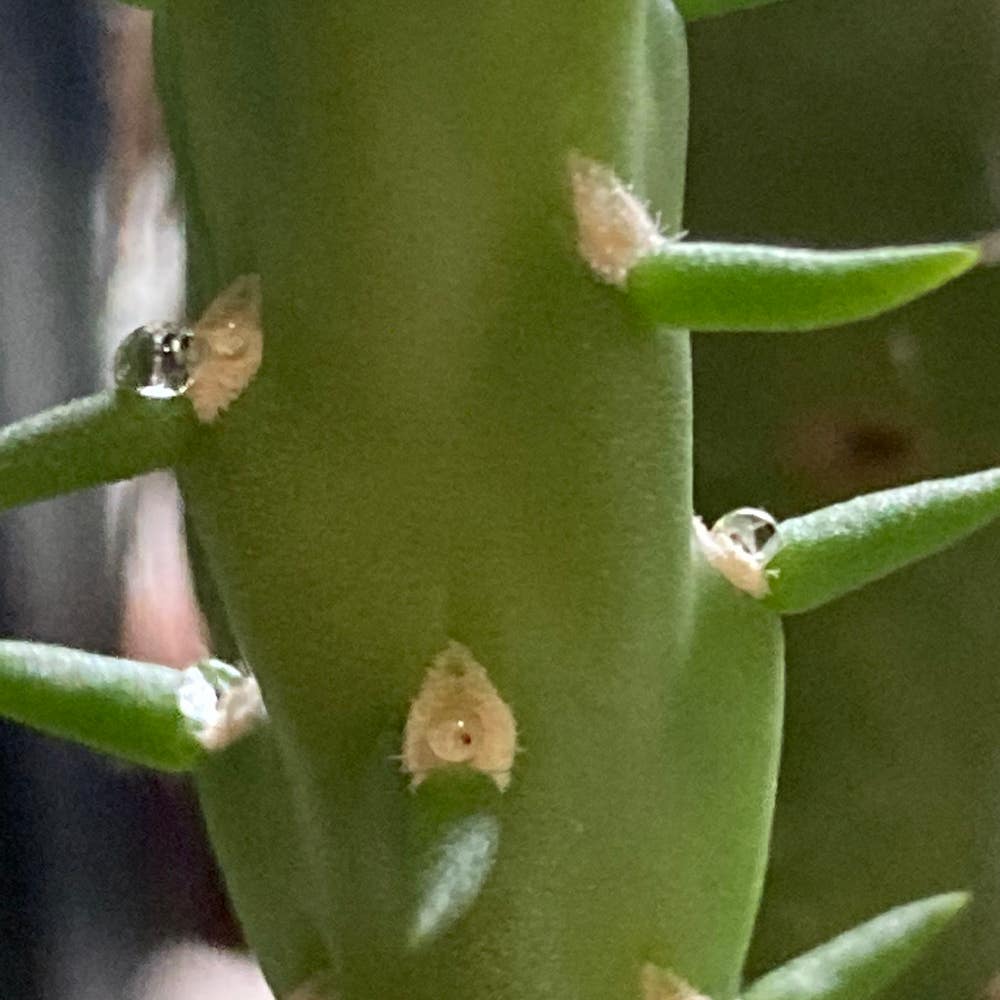
🌵 How to Fix Curling Leaves on Your Cholla
Cylindropuntia spp.
By the Greg Editorial Team
Oct 11, 2024•4 min read
This article was created with the help of AI so we can cover more plants for you. May contain errors. See one? Report it here.
- 🌵 Curling leaves indicate issues like overwatering, underwatering, or pests—act quickly!
- 💧 Establish a consistent watering schedule to prevent underwatering and overwatering problems.
- ☀️ Gradually acclimatize to sunlight to avoid sunburn and protect your Cholla's health.
Diagnosing the Problem
💧 Overwatering Signs and Solutions
Overwatering is a common issue for Cholla plants. Look for soft, mushy stems and yellowing leaves as primary symptoms.
Root rot can also be a serious concern, indicated by a foul smell and blackened roots. If you notice these signs, it’s time to act.
To remedy overwatering, adjust your watering frequency. Ensure the soil dries completely between waterings.
Improving drainage is crucial; use a well-draining soil mix to prevent water accumulation. If problems persist, consider repotting and checking root health.
🚰 Underwatering Signs and Solutions
Underwatering can be just as detrimental. Symptoms include wrinkled or shriveled leaves, stunted growth, and a dry, brittle texture.
To combat underwatering, establish a consistent watering schedule. Regularly monitor soil moisture levels, perhaps with a moisture meter.
Gradually increase water intake to help your Cholla recover. This will ensure it gets the hydration it needs without overwhelming the roots.
☀️ Sunburn and Its Effects
Sunburn can severely impact your Cholla’s health. Look for bleached or brown patches on leaves as clear indicators.
These signs can reduce photosynthesis, affecting overall growth. If you suspect sunburn, take immediate action.
Gradually acclimatize your Cholla to sunlight to prevent shock. Providing shade during peak hours can also help.
Consider adjusting its placement to a less intense light area for optimal growth. This simple change can make a significant difference.
🐛 Pest Infestations and How to Identify Them
Pest infestations can wreak havoc on your Cholla. Common culprits include mealybugs, which appear as cotton-like clusters on stems, and spider mites, recognizable by fine webbing.
Symptoms of pest issues include leaf curling, discoloration, and stunted growth. If you notice these signs, it’s time to investigate further.
Manual removal is an effective first step; wipe off pests with a damp cloth. For more severe infestations, consider using insecticidal soap or neem oil.
Regular monitoring is key for early detection. This proactive approach can save your plant from significant damage.
🌱 Nutrient Deficiencies and Their Impact
Nutrient deficiencies can lead to poor growth and yellowing leaves. Common deficiencies in Cholla include nitrogen, potassium, and magnesium.
To identify these issues, keep an eye on your plant’s overall health. If you notice symptoms, it’s time to take action.
Using a balanced cactus fertilizer can help restore nutrients. Fertilize during the growing season for the best results.
Soil testing can also provide insights into nutrient levels. This will guide your fertilization strategy and ensure your Cholla thrives.
With these diagnostic tools and solutions, you can effectively address the curling leaves on your Cholla. Next, let’s explore treatment options to further enhance your plant’s health.
Treatment Options
🌊 Adjusting Watering Practices
Establishing a proper watering schedule is crucial for your Cholla's health. Aim to water every 2-3 weeks during the growing season, ensuring the soil dries out completely between waterings.
Deep watering techniques can encourage robust root growth. This means soaking the soil thoroughly, allowing the water to reach deeper roots, which helps your plant thrive.
🌱 Monitoring Soil Moisture
Keeping an eye on soil moisture is essential. Use a moisture meter for precise readings or simply perform a finger test to gauge whether your Cholla needs water.
Regular monitoring helps prevent both overwatering and underwatering, ensuring your plant stays happy and healthy.
☀️ Providing Adequate Sunlight
Optimal sunlight conditions are vital for your Cholla. Aim for full sun exposure of 6-8 hours daily to promote healthy growth.
Adjust light levels based on the season and your plant's location. If you notice signs of stress, consider moving your Cholla to a spot with more or less sunlight as needed.
🐞 Pest Control Methods
Integrated pest management strategies can keep your Cholla free from pests. Regular inspections are key for early detection of issues.
Consider introducing natural predators like ladybugs or lacewings to help control pest populations. If necessary, use chemical treatments, but always follow label instructions to ensure safety.
🌿 Fertilization Tips for Cholla
Choosing the right fertilizer is essential for your Cholla's growth. Look for balanced NPK ratios suitable for cacti, or consider organic options like compost or worm castings.
For application, dilute the fertilizer and apply every 4-6 weeks during the growing season. This will provide the nutrients your plant needs to flourish.
With these treatment options, you can effectively care for your Cholla and address any curling leaves. Next, let’s explore how to diagnose specific problems more deeply.
⚠️ Safety First
This content is for general information and may contain errors, omissions, or outdated details. It is not medical, veterinary advice, or an endorsement of therapeutic claims.
Always consult a qualified healthcare professional before using any plant as food, medicine, or supplement.
Never eat any plant (or feed one to pets) without confirming its identity with at least two trusted sources.
If you suspect poisoning, call Poison Control (800) 222-1222, the Pet Poison Helpline (800) 213-6680, or your local emergency service immediately.
Spotted an error? Please report it here.
Keep your Cholla thriving 🌵 by using Greg's tailored reminders and expert tips to master watering, sunlight, and pest management for a healthy, happy plant!