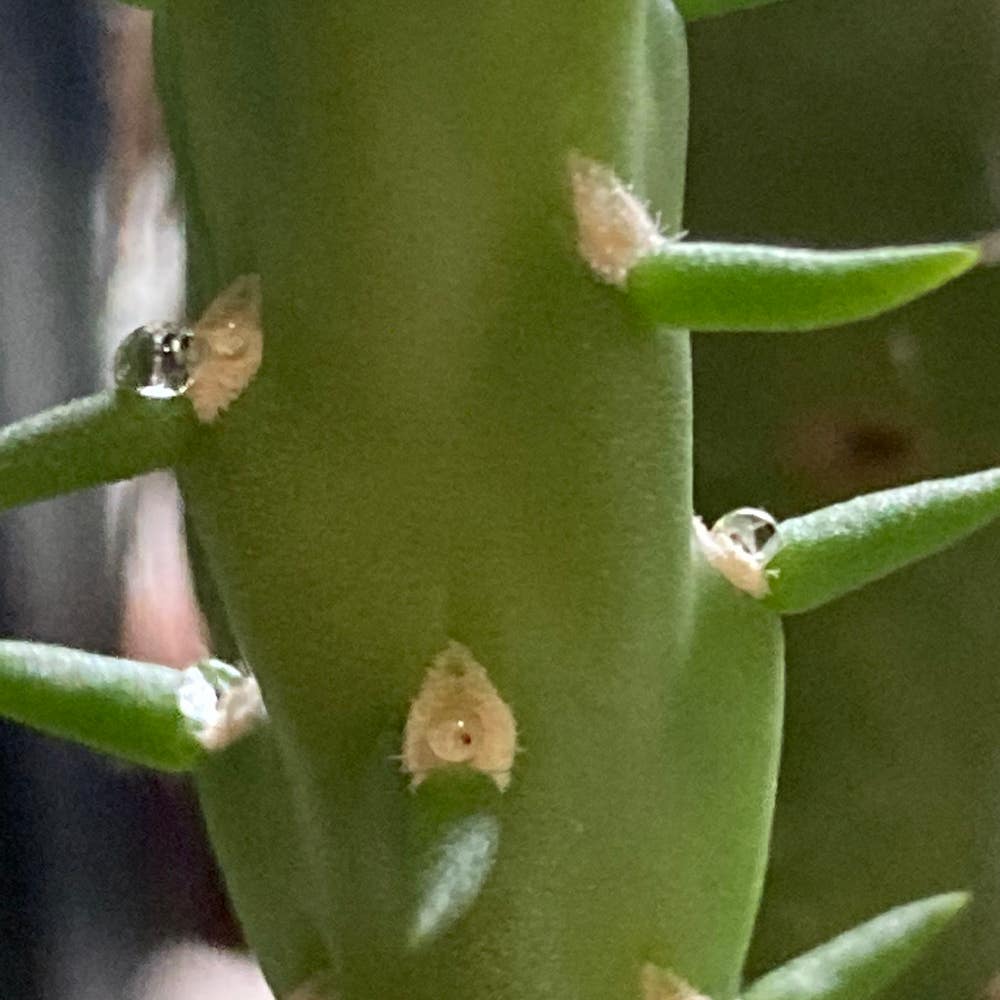
🌵 Understanding Cholla Leaves with Black Spots
Cylindropuntia spp.
By the Greg Editorial Team
Oct 11, 2024•5 min read
This article was created with the help of AI so we can cover more plants for you. May contain errors. See one? Report it here.
- 🌱 Black spots on Cholla arise from infections, pests, or environmental stress.
- 💧 Overwatering and poor drainage are common causes; ensure proper soil conditions.
- ☀️ Sunburn can cause black spots; provide 6-8 hours of direct sunlight daily.
Causes of Black Spots
🦠 Fungal Infections
Fungal infections are a common culprit behind black spots on Cholla leaves. Look for black, sunken spots that indicate the presence of fungal pathogens, thriving in high humidity and poor air circulation.
🦠 Bacterial Infections
Bacterial infections present differently, often starting as water-soaked lesions that quickly turn black. These infections spread more rapidly than fungal ones, making early detection crucial.
🐛 Pest Infestations
Pests can also lead to black spots on your Cholla. Scale insects leave behind sticky residue and black spots, while mealybugs create cotton-like masses that discolor leaves.
🌧️ Environmental Stress
💧 Overwatering
Overwatering is a frequent issue for Cholla owners. Symptoms include yellowing leaves and a mushy texture, highlighting the importance of proper soil drainage.
☀️ Sunburn
Sunburn can manifest as bleached or scorched areas alongside black spots. This often occurs due to sudden exposure to intense sunlight, so gradual acclimatization is key.
Understanding these causes is essential for effective treatment and prevention. Next, we’ll explore how to diagnose the specific issues affecting your Cholla.
Diagnosing the Problem
🕵️ Identifying the Type of Black Spots
Understanding the type of black spots on your Cholla leaves is crucial for effective treatment.
Differences Between Fungal and Bacterial Spots
Fungal spots are typically round, sunken, and may have a fuzzy appearance. In contrast, bacterial spots are irregularly shaped and often accompanied by wilting, indicating a more aggressive infection.
🐛 Recognizing Pest Damage
Pest infestations can also lead to black spots on your Cholla.
Look for visual signs such as webbing, sticky residue, or visible insects on the leaves.
Don’t forget to check the undersides of leaves, as pests often hide there.
🌤️ Assessing Environmental Factors
Environmental conditions play a significant role in the health of your Cholla.
Light Exposure
Cholla thrives in full sun, requiring 6-8 hours of direct sunlight daily.
Inadequate light can lead to weak growth and increased susceptibility to black spots.
Watering Practices
Proper watering is essential for Cholla health.
Allow the soil to dry out between waterings to prevent overwatering, which can cause wilting, black spots, or leaf drop.
Soil Conditions
The right soil composition is vital for preventing black spots.
A well-draining cactus mix is ideal, as it helps maintain proper moisture levels and prevents root rot.
By diagnosing the problem accurately, you can take the necessary steps to restore your Cholla's health. Next, let’s explore effective treatment options to tackle these issues head-on.
Treatment Options
🏃 Immediate Actions to Take
Pruning Affected Leaves
Pruning is your first line of defense against black spots on Cholla leaves. Use clean, sharp tools to remove all affected areas, ensuring you cut back to healthy tissue.
Timing matters too; the best time to prune is early morning or late afternoon. This minimizes stress on the plant and reduces the risk of further infection.
Applying Fungicides or Bactericides
If pruning isn't enough, consider applying fungicides or bactericides. Look for products specifically formulated for cacti to ensure effective treatment.
Always follow label instructions for application methods. Proper use maximizes the benefits while minimizing potential harm to your plant.
📅 Long-Term Treatment Strategies
Adjusting Watering Schedule
Watering practices play a crucial role in Cholla health. Adjust your watering frequency and amount based on the season to prevent overwatering or underwatering.
Keep an eye out for signs that indicate a need for adjustment, such as wilting or black spots. These clues can guide you in fine-tuning your care routine.
Improving Soil Drainage
Soil drainage is vital for preventing black spots. Enhance drainage by adding perlite or sand to your soil mix, which helps prevent water from pooling.
Choosing the right pot is equally important; always use pots with drainage holes. This simple step can make a significant difference in your plant's health.
Monitoring for Pests
Regular inspections are essential for catching pest infestations early. Aim for at least once a week to check for signs of trouble.
Look for sticky residue, webbing, or visible insects on your Cholla. Early detection can save your plant from severe damage and keep it thriving.
These treatment options not only address existing issues but also set the stage for healthier growth. Next, let’s explore how to prevent black spots from becoming a recurring problem.
Preventing Black Spots
🌵 Best Practices for Cholla Care
Proper Watering Techniques
The soak and dry approach is the gold standard for watering Cholla. Always check the soil moisture before watering to avoid overwatering, which can lead to black spots.
Ideal Soil Composition
A well-draining cactus mix is crucial for Cholla health. Aim for a blend of sand, perlite, and potting soil to ensure proper drainage and prevent disease.
Sunlight Requirements
Cholla thrives in full sun, requiring at least 6 hours of sunlight daily. Adjust their placement based on seasonal changes to maximize exposure.
🌦️ Seasonal Care Considerations
Adjusting Care During Different Seasons
Watering frequency should decrease in winter and increase during the growing season. Fertilize during active growth periods for optimal health.
Preparing for Extreme Weather Conditions
Protect your Cholla from frost by covering them or moving them indoors. During intense heat, provide shade during peak sun hours to prevent stress and damage.
By implementing these preventive measures, you can keep your Cholla healthy and vibrant, minimizing the risk of black spots. Next, let’s explore how to diagnose any issues that may arise.
⚠️ Safety First
This content is for general information and may contain errors, omissions, or outdated details. It is not medical, veterinary advice, or an endorsement of therapeutic claims.
Always consult a qualified healthcare professional before using any plant as food, medicine, or supplement.
Never eat any plant (or feed one to pets) without confirming its identity with at least two trusted sources.
If you suspect poisoning, call Poison Control (800) 222-1222, the Pet Poison Helpline (800) 213-6680, or your local emergency service immediately.
Spotted an error? Please report it here.
Keep your Cholla spot-free 🌵 by using Greg's tailored care tips and reminders to ensure it gets the perfect balance of sunlight and water!