Black Spots on My Lithops Leaves
Lithops bromfieldii
By the Greg Editorial Team
Jun 18, 2024•5 min read
This article was created with the help of AI so we can cover more plants for you. May contain errors. See one? Report it here.
Prevent the panic of black spots on your Lithops 🌵 and ensure their quirky charm with this essential care guide.
- Overwatering and sunburn are common causes of black spots on Lithops.
- Texture and location help identify the cause of black spots.
- Prevent with proper care: correct watering, soil, and sunlight management.
Symptoms of Black Spots
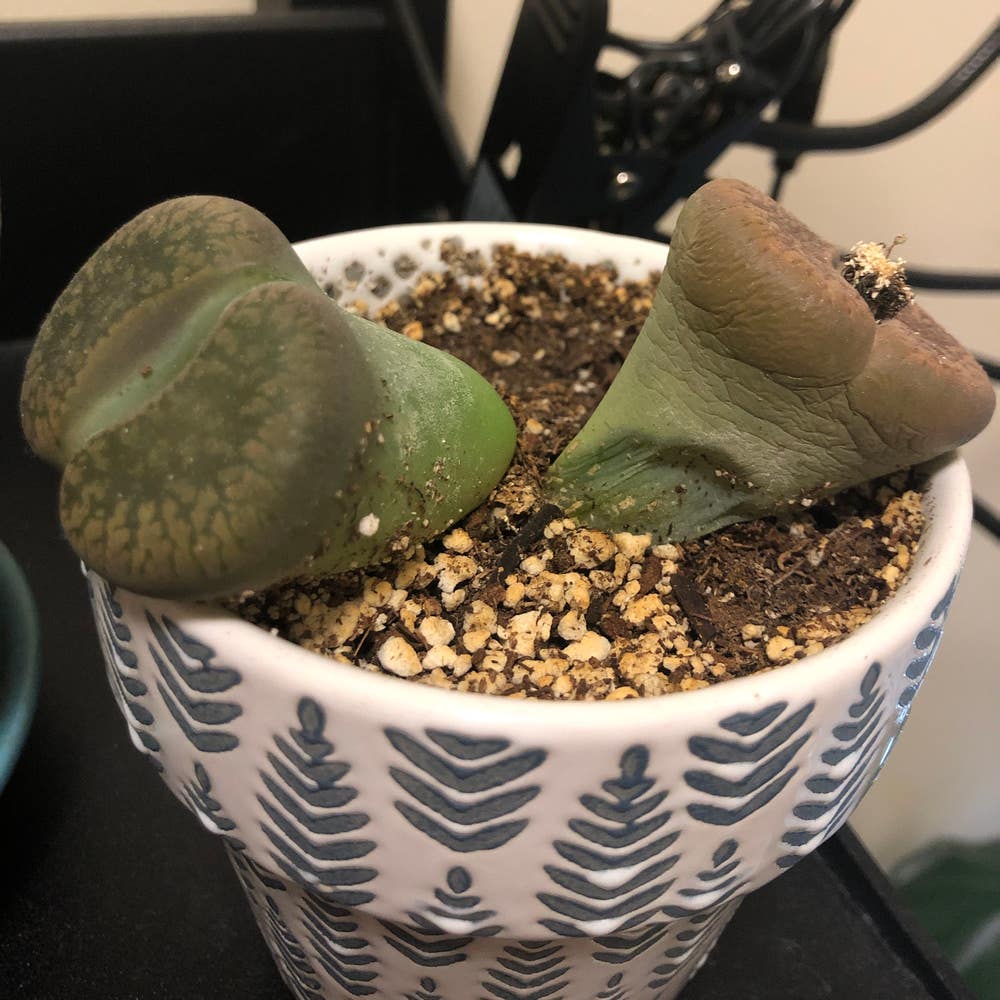
When Lithops betray their stone-like disguise with unsightly black spots, it's a clear signal that all is not well in their arid world. These blemishes can range from pinhead-sized dots to larger, more ominous blotches, often encircled by a telltale yellow halo.
🕵️♂️ Early Signs
Vigilance is key. Catching these spots early, when they're mere specks on the otherwise smooth or pebbly leaf surfaces, can prevent a full-blown leaf-yellowing crisis.
📈 Progression
Without intervention, the spots can expand, leading to a total leaf color overhaul from healthy green or gray to a sickly yellow. In time, the affected leaf may shrivel up and bid adieu, leaving you with a less-than-thriving Lithops.
👀 Visual Diagnosis
Texture and location matter. If the spots feel dry or brittle, or if they're concentrated at the leaf tips, you're likely dealing with a different beast than if they're soft or water-soaked.
🚫 Misdiagnosis Pitfalls
Don't be fooled by imitators. White splotches might scream spider mites, but without the critters in sight, you could be barking up the wrong succulent.
☀️ Sunburn vs. Disease
Sunburn spots can mimic the look of a pathogen's handiwork. If the black spots are on the top leaves and your Lithops has been sunbathing a tad too long, you might just need to dial back the solar love.
Remember, the devil's in the details. Keep a keen eye on your living stones, and they'll reward you by staying solidly spotless.

Causes of Black Spots on Lithops Leaves
💦 Overwatering: The Root of the Problem
Overwatering is like giving your Lithops a drink when they're not thirsty—it's a no-go. These succulents prefer a dry climate, and too much H2O leads to root rot. Picture roots turning into mushy, brown strings—yikes. If you spot yellow, mushy leaves, it's time to dial back on the watering can.
🍄 Fungal Infections: A Spotty Situation
Fungi love moisture as much as ducks do. A wet Lithops is a fungal playground. Black spots from fungal infections are like unwanted tattoos on your plant's leaves. Keep the substrate drier to avoid this fungal fiesta.
🩹 Physical Damage: Bumps and Bruises
Lithops can get "bruised" if something gives them a knock. Think of it as a plant version of a shiner. These injuries can lead to black spots, but they're mostly cosmetic. The plant will soldier on, and new leaves should be spot-free.
🌞 Sunburn: Too Much of a Good Thing
Yes, plants can get sunburned, and Lithops are no exception. Too much direct sunlight can cause black spots, similar to how we might get a sunburn. It's like a plant's cry for some shade—listen to it.
The Takeaway
So, what's the moral of the story? Treat your Lithops like the desert royalty they are. Not too wet, not too bright—just right. Keep an eye out for these causes, and your Lithops will thank you by staying spotless.

Alleviating Black Spots
💧 Adjusting Watering Practices
Overwatering is a common misstep. Ensure your Lithops are not sitting in water. If they are, it's time to rethink your watering schedule. Let the soil dry out completely before giving them another drink. Consider a pot within a pot system to improve drainage and prevent root rot.
🍄 Treating Fungal Infections
Fungal foes are no joke. If you suspect a fungus among us, isolate your plant pronto. A fungicide might be your next best friend—Carbendazim can work wonders. Spray the affected areas and watch for improvement. Remember, good ventilation is key in preventing these pesky spores from settling in.
🛡️ Protecting from Physical Damage
Your Lithops are tough, but not invincible. Keep them safe from harm's way—no poking, prodding, or squishing. If they've been roughed up, give them some TLC and time to heal.
🌞 Treating Sunburn
Sunburn isn't just a human problem. If your Lithops are looking a bit crispy, they might need a break from the intense rays. Move them to a spot with bright, indirect light. And if you're feeling fancy, a 6-needle shading net could be your Lithops' new best accessory.
🐜 Integrated Pest Management
Keep your Lithops' leaves dry and happy. Overhead watering? Not on your watch. Water at the base and early in the day. And don't forget—airflow is your ally. Prune thoughtfully to keep those leaves basking in the breeze.
Remember, your Lithops are resilient little rockstars. With the right care, they'll bounce back from those black spots in no time.

Preventing Black Spots
💧 Proper Watering Techniques
Water only when necessary. Lithops are drought-tolerant and excessive moisture is a no-go. Wait until the top 50-75% of the soil is dry before watering. When you do, water thoroughly and let the excess drain away. No sips here; these plants prefer a good gulp and then a long dry spell.
🌱 Suitable Soil Conditions
Drainage is king. Use a well-draining soil mix, and if you're feeling crafty, consider a pot within a pot system for even better moisture management. Rocks at the bottom of the pot? Forget about it. They're about as useful as a chocolate teapot.
🌞 Sunlight Without Sunburn
Sunlight is good; sunburn is bad. Lithops need bright light but direct, scorching sun can cause black spots faster than you can say "crispy." Provide some shade during the hottest part of the day, especially in summer. A 6-needle shading net? Black ones work wonders.
🚰 Ensuring Proper Drainage
Elevate your Lithops game. Ensure pots have drainage holes to prevent water from pooling and causing root rot. If your pot lacks holes, grab a drill and make some. It's a simple step that can save your plant's life. And remember, no sitting in water; that's just asking for trouble.
⚠️ Safety First
This content is for general information and may contain errors, omissions, or outdated details. It is not medical, veterinary advice, or an endorsement of therapeutic claims.
Always consult a qualified healthcare professional before using any plant as food, medicine, or supplement.
Never eat any plant (or feed one to pets) without confirming its identity with at least two trusted sources.
If you suspect poisoning, call Poison Control (800) 222-1222, the Pet Poison Helpline (800) 213-6680, or your local emergency service immediately.
Spotted an error? Please report it here.
Prevent black spots 🛑 on your Lithops by letting Greg fine-tune your watering and sunlight schedule for spotless leaves!