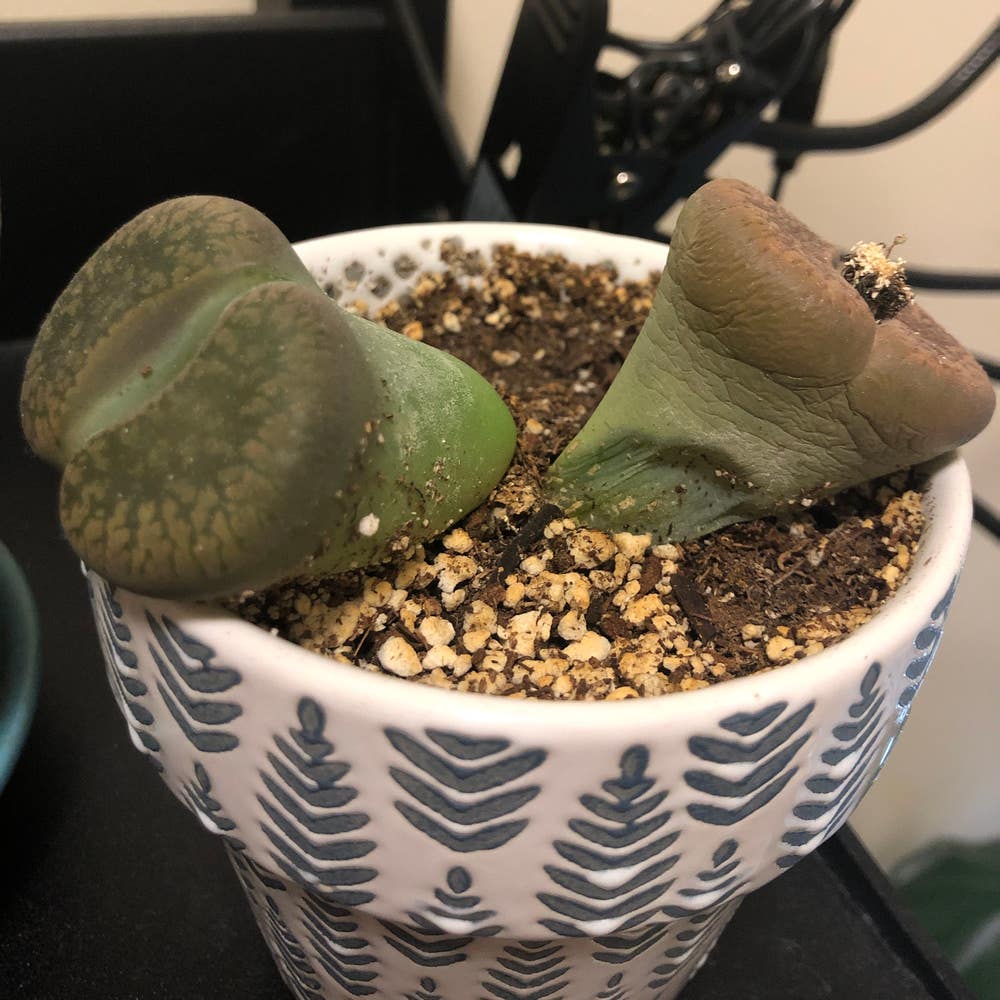
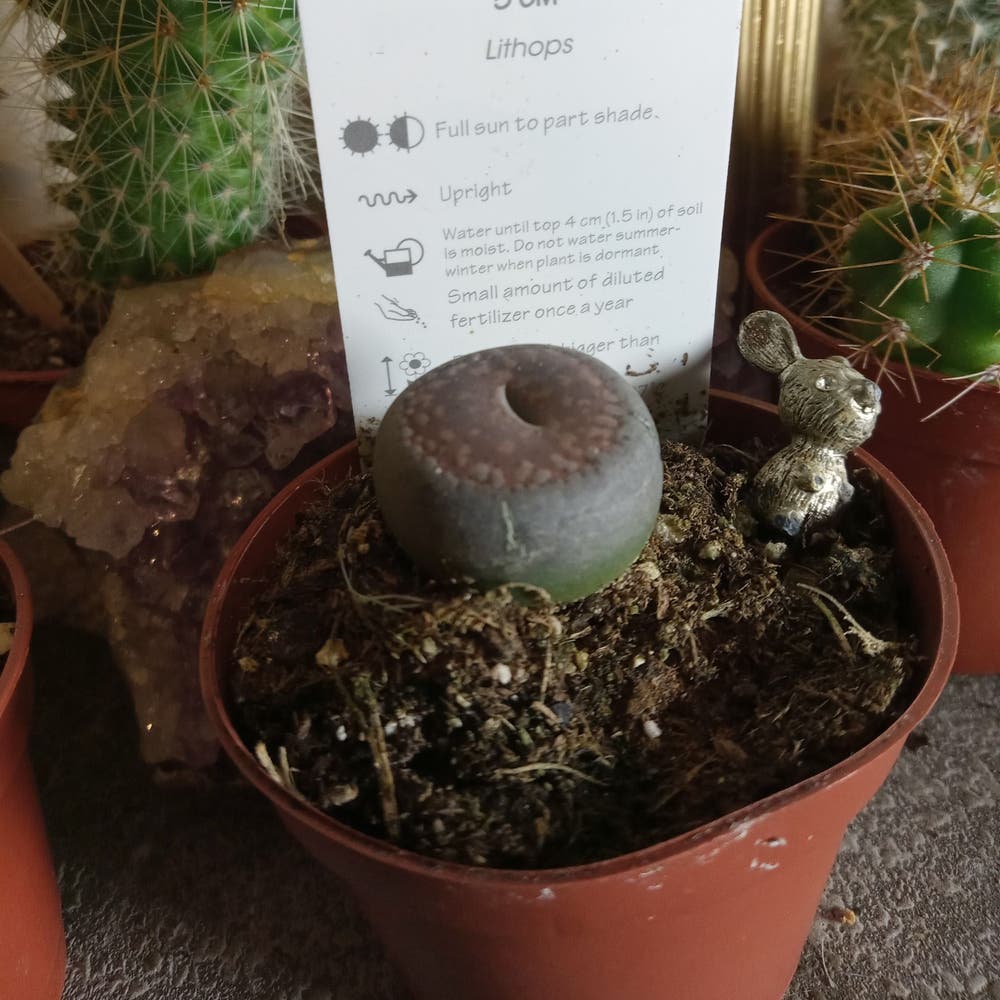
Why Are My Lithops bromfieldii Leaves Turning Yellow?
Lithops bromfieldii
By the Greg Editorial Team
Jun 18, 2024•4 min read
This article was created with the help of AI so we can cover more plants for you. May contain errors. See one? Report it here.
Revive your Lithops' vibrant hues 🌈 by pinpointing and fixing the yellow-leaf conundrum!
- Over/underwatering and light exposure affect Lithops bromfieldii leaf color.
- Soil and root health are key; use well-draining mix and check roots.
- Adjust watering, soil, and environment to prevent and treat yellow leaves.
Identifying the Cause of Yellowing Leaves
💦 Overwatering vs. Underwatering
Overwatering is like a bad relationship—it's suffocating. Roots can't breathe, leading to a yellowing mess. If your Lithops bromfieldii feels like a damp sponge, it's time to dial back the drinks. Underwatering, on the flip side, leaves your plant gasping for moisture. When the soil is as dry as a desert, it's a cry for hydration. Check the soil's top inch; if it's parched, it's time to quench that thirst.
☀️ Sun Exposure
Too much sun, and your Lithops bromfieldii will sport a bleached, washed-out look. Think of it as a plant sunburn. Not enough light? The leaves will yell for help, turning a sad shade of yellow. Your Lithops needs that Goldilocks zone of light—just right. Adjust its spot to avoid the extremes of a scorching sunbath or a gloomy cave.

Assessing Soil and Root Health
🌱 Soil Quality: The Role of Soil Composition
Soil composition is crucial for Lithops bromfieldii. A well-draining and airy mix is the lifeline for these succulents. If your plant's leaves are channeling autumn vibes with their yellow hue, it's time to investigate the soil. Compaction or poor drainage can leave roots gasping for air, so consider a gritty mix that mimics their native, rocky habitat.
🕵️♂️ Root Check: Inspecting for Health Issues
Root health is a telltale sign of your plant's overall well-being. Gently unearth the roots and look for bright, white tendrils; anything mushy or darker than your morning coffee suggests trouble. Root rot could be the culprit behind the yellowing leaves, and it's often a sign of overwatering or poor drainage. If the roots look like they've seen better days, it's time for some root rehab.
🕵️♂️ How to Inspect Roots
- Remove the plant from its pot with care.
- Shake off excess soil to reveal the root system.
- Look for firm, white roots—brown or black indicates rot.
- Trim any affected areas with sterilized scissors.
- Repot in fresh, appropriate soil to give your Lithops a new lease on life.
Remember, Lithops bromfieldii are like the camels of the plant world; they store water in their leaves, so they don't need a drink as often as your average houseplant. Keep the watering sparse and the soil like a desert oasis—light and loose.

Corrective Measures for Yellow Leaves
💧 Watering Adjustments: Tailoring Watering Schedules
Overwatering is a common misstep. If your Lithops bromfieldii's soil feels like a swamp, it's time to dial it back. Allow the soil to dry out between waterings. Conversely, if the soil is drier than a desert, give your plant a thorough drink, ensuring it reaches the roots without leaving the plant soggy.
🌱 Soil Improvement: Enhancing Drainage and Nutrient Balance
The right soil mix is like a tailored suit; it needs to fit your plant's needs perfectly. If your Lithops bromfieldii is sitting in dense soil, it's like wearing a raincoat in a sauna—uncomfortable and unhealthy. Switch to a mix with sharp drainage and a sprinkle of organic matter to keep those leaves vibrant.
🌿 Fertilizing Schedule
A balanced fertilizer is your plant's best friend, but like any friendship, it's all about boundaries. Too much and you're the clingy friend; too little and you're neglectful. Find that sweet spot, and always apply when the soil is moist to avoid root burn.
🐜 Pest and Disease Control
Keep an eye out for uninvited guests. Mealybugs and nematodes are about as welcome as a cold in summer. Spot them early and show them the door with appropriate pest control measures. Remember, prevention is better than cure, so regular checks are essential.
When to Water
Don't be a slave to the calendar when it comes to watering. Check the soil's moisture level; your plant's thirst isn't dictated by the days of the week. Aim for consistency—think of it as keeping your plant's drink topped up without overdoing it.

Environmental Factors Affecting Leaf Color
🌞 Light and Location
Sunlight is a fickle friend to Lithops bromfieldii. These succulents need their sunbathing time, but without the harsh midday glare that can lead to a sunburned sulk. Aim for a golden balance of bright, indirect light. If your indoor lighting is more cave-like than sunny, consider grow lights to keep the yellow at bay, especially during those short, dark winter days.
Temperature and Humidity
Lithops bromfieldii aren't fans of the extremes. They prefer a consistent temperature and a touch of humidity. If your air is drier than a stand-up comedian's wit, try a pebble tray or humidifier to up the moisture. Remember, too much heat can make your plant's leaves drop like bad punchlines, so keep it cool, but not cold.
⚠️ Safety First
This content is for general information and may contain errors, omissions, or outdated details. It is not medical, veterinary advice, or an endorsement of therapeutic claims.
Always consult a qualified healthcare professional before using any plant as food, medicine, or supplement.
Never eat any plant (or feed one to pets) without confirming its identity with at least two trusted sources.
If you suspect poisoning, call Poison Control (800) 222-1222, the Pet Poison Helpline (800) 213-6680, or your local emergency service immediately.
Spotted an error? Please report it here.
Ensure your Lithops bromfieldii never suffers from yellow leaves again by letting Greg craft a custom watering schedule 💧 based on your specific environment and plant needs.