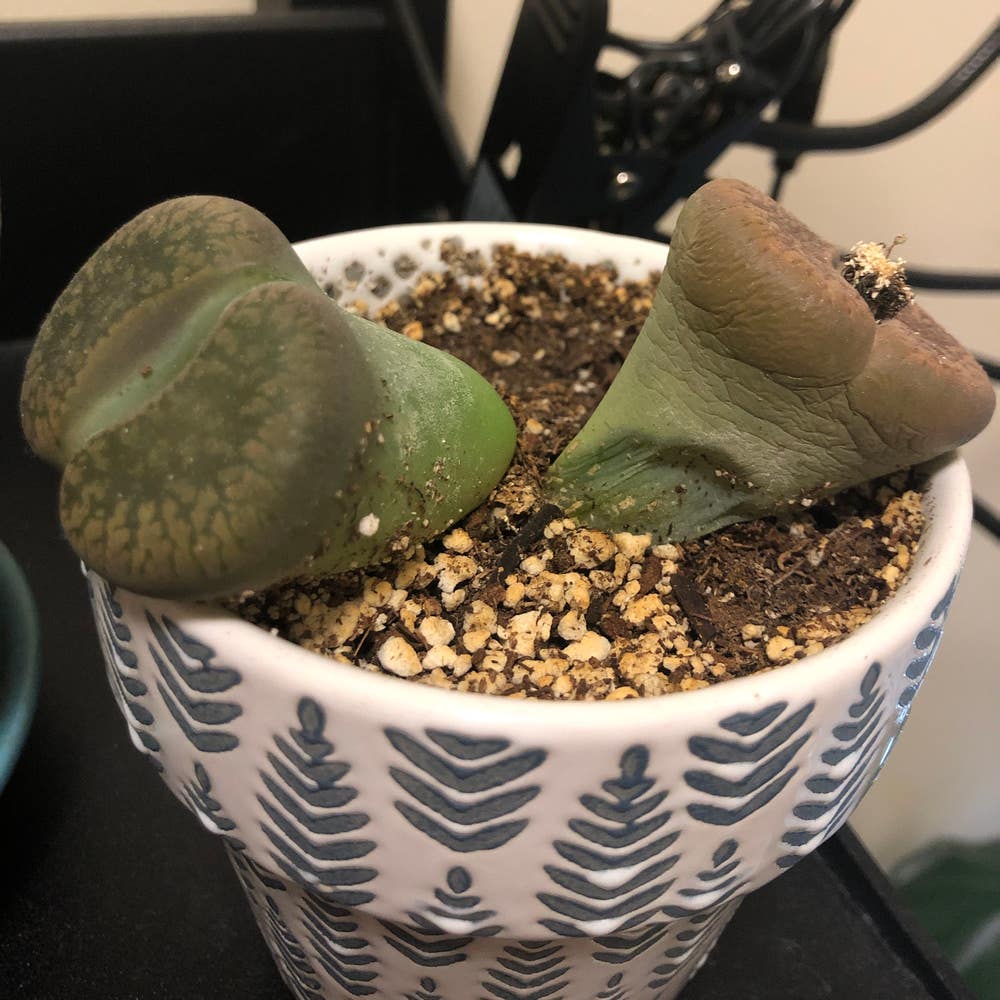
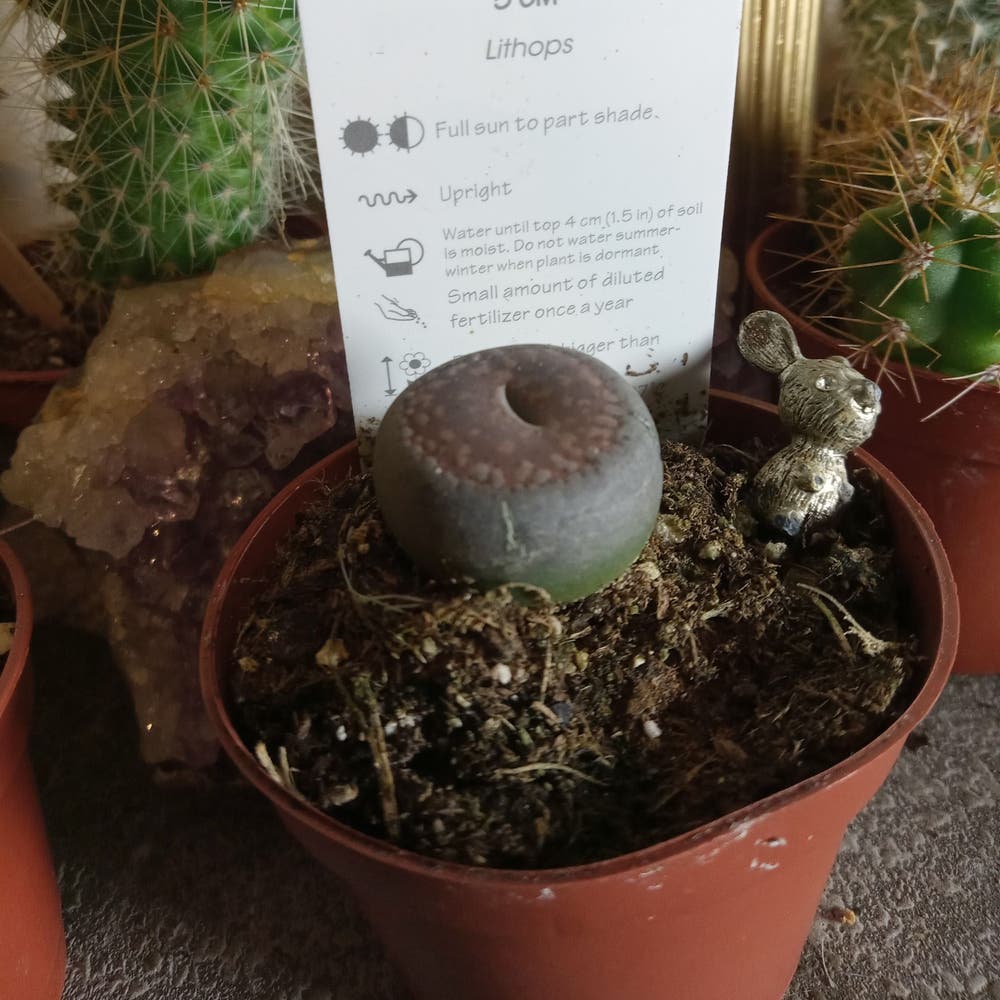
Why Is My Lithops bromfieldii Not Doing Well?
Lithops bromfieldii
By the Greg Editorial Team
Jun 18, 2024•9 min read
This article was created with the help of AI so we can cover more plants for you. May contain errors. See one? Report it here.
Nurse your Lithops bromfieldii back to health 🌵 by tackling these key care challenges—your plant will thank you!
- Water wisely: Over-watering causes root rot, under-watering leads to shriveling.
- Light & temperature matter: Avoid sunburn and etiolation; keep stable 65°F-80°F.
- Pest & disease vigilance: Treat infestations promptly, prevent with good plant hygiene.
Water-Related Issues in Lithops bromfieldii
Identifying the signs of improper watering is crucial for Lithops bromfieldii care.
💧 Over-Watering Symptoms
Yellow, mushy leaves or brown spots? Your plant might be drowning in love. Over-watering can lead to a host of problems, including root rot and uninvited pests. Lithops are succulents, not fish; they can't swim.
🏜️ Under-Watering Signs
On the flip side, if your Lithops looks wrinkled or shriveled, it's thirstier than a traveler in the desert. These plants are drought-tolerant, but they do need a drink now and then.
🚰 Correcting Water Woes
Caught in a watering conundrum? Ease up on the H2O if it's too much. If underwatered, gradually increase watering. Remember, Lithops prefer to be on the drier side – think of them as the camels of the plant world.
🔄 Establishing a Watering Routine
Consistency is key. Water sparingly and only when the soil is dry. A good soak every few weeks should suffice, but always check the soil first. It's better to under-water than to over-water these living stones.
🌱 Pro Tips
- Use a well-draining soil mix with added perlite or vermiculite.
- Avoid high humidity; these aren't tropical plants.
- Monitor closely after watering to ensure the plant isn't sitting in water.
- When in doubt, don't water. Lithops will signal when they're thirsty.
Remember, Lithops bromfieldii care is not rocket science. It's more like a delicate dance with Mother Nature – lead with a light touch and watch your step.

Light-Related Stress and Its Impact
💡 Symptoms of Improper Light Exposure
Too much light can cause your Lithops bromfieldii to develop a sunburned look, with scorch marks or a bleached appearance. On the flip side, too little light leads to etiolation, where your plant stretches awkwardly towards any light source, becoming leggy and losing its compact, stone-like charm.
💡 Adjusting Light Conditions
To prevent the botanical equivalent of a bad tan, gradually acclimate your Lithops to brighter conditions if it's been lurking in the shadows. Conversely, if it's basking in the glare of the midday sun like a lizard in the desert, provide some shade to dial down the intensity. Remember, it's about finding that sweet spot where your Lithops can soak up the rays without turning into a crispy critter.
💡 Monitoring and Adapting
Keep a vigilant eye on your Lithops; it's not just a plant, it's a living barometer for light conditions. Adjustments might be needed on the fly—think of it as tuning an instrument, except the music is growth and the instrument is a succulent. If you notice signs of stress, don't panic—just tweak the light levels. Your Lithops will thank you by not looking like it's on the verge of a plant meltdown.

Temperature Fluctuations and Plant Stress
🌡️ Recognizing Temperature Stress
Lithops bromfieldii, a plant that thrives in stable environments, can show clear distress when subjected to temperature extremes. Wilting or discoloration may indicate heat stress, while cold stress often presents as dark, mushy spots. These symptoms are your plant's SOS; it's begging for a climate intervention.
🌡️ Creating a Stable Temperature Environment
To prevent your Lithops bromfieldii from throwing a temper tantrum, consistency is your best friend. Keep it away from drafty windows or the Sahara-like heat of radiators. Aim for the sweet spot of 65°F to 80°F—think comfortable spring day, not Death Valley or the Arctic. If you're growing your stone plant outdoors, make sure it's in a zone that doesn't dip below 12°C, because frankly, Lithops bromfieldii doesn't do winter chills.
🌡️🚫 Avoiding Temperature Shock
Rapid changes? Your Lithops bromfieldii hates them. It's not a fan of surprises. So, when transitioning between seasons or moving the plant, do it gradually. Think of it like acclimating a goldfish to a new tank—slow and steady wins the race.
🌡️ Insulation Tactics
When Jack Frost is lurking, it's time to get crafty. Use bubble wrap or plant cloches to shield your plant baby from the cold. But don't overdo it; you're not packing it for a trip to the moon. Just enough to fend off the cold without creating a mini greenhouse.
🌡️ Vigilance is Key
Keep an eye on the thermometer like it's the countdown to your favorite show's finale. Temperature monitoring helps you catch issues before they escalate. Remember, your Lithops bromfieldii isn't just a plant; it's a living barometer for its environment.

Pest Infestations on Lithops bromfieldii
🐞 Identifying Common Pests
Mealybugs look like someone spilled tiny bits of cotton on your plant. They suck the life out of leaves and hide in the roots, causing a mysterious decline in your Lithops' health. Thrips are the ninjas of the pest world, barely visible until they've formed a small cloud of doom around your plant. They leave behind deformed leaves and a sense of betrayal. Scale insects are like unwanted freckles on your Lithops, appearing as small brown spots that are actually armor for these sap-sucking pests. Aphids are the vampires of the plant world, draining the sugary juices and often bringing friends—like ants—to the feast.
🛁 Treatment Tactics
When mealybugs make an appearance, it's time for a spa day—give your Lithops a gentle bath with a diluted alcohol solution. For thrips, insecticidal soap is your weapon of choice, but remember to rinse thoroughly unless you want your plant to suffocate under a soapy tomb. Scale insects can be evicted manually with a cotton swab, but you'll need the patience of a saint. Aphids? Unleash the ladybugs! They're the natural pest control agents that don't charge by the hour.
🚫 Prevention: Better Safe Than Sorry
Quarantine new plants like they're suspects in a crime drama—three weeks should do the trick to prevent any pest breakout. Keep your Lithops healthy; a stressed plant is like a magnet for these tiny terrors. And remember, water from one pot to another is a no-go—it's like giving pests a free ride to their next victim.
💣 Real Talk: Chemicals and Consequences
Sure, you can go nuclear with insecticides, but that's like burning down the house to get rid of spiders. You'll kill the pests, but you'll also take out the good guys. And sometimes, the pests come back stronger, like villains in a horror sequel. So, use chemicals as a last resort, and always spot-test first—your Lithops isn't a lab rat.
Addressing Leaf Scorching
Leaf scorching in Lithops bromfieldii often stems from excessive light. These succulents adore brightness but can be sensitive to harsh, direct sunlight, leading to a bleached or burnt appearance.
🌞 Recognizing Leaf Scorch
Look for a color shift from the plant's typical hues to a lighter, creamier tone, which may indicate the onset of sunburn.
🛡️ Preventive Measures
Partial shade can be a game-changer. Use a sheer curtain or move the plant to a spot with indirect light to prevent further damage.
🩹 Treatment Strategies
For scorched leaves, trimming may be necessary. Remove the damaged parts to prevent potential decay spreading to healthy tissue.
🏥 Ensuring Recovery
Post-trimming, place your Lithops in a well-ventilated area with moderate light to promote healing. Keep an eye on moisture levels; too dry conditions can exacerbate scorch issues.
Remember, Lithops are tough cookies. They'll bounce back with the right care adjustments.
Combating Mold and Fungus
🍄 Signs of Mold and Fungus
Mold and fungus on your Lithops bromfieldii are like unwanted party crashers; they show up uninvited and can wreak havoc. White, fuzzy growths on the soil or leaves are tell-tale signs. You might also spot black or brown lesions on your plant, which scream "fungus among us."
🛠️ Remediation Techniques
Caught early, mold and fungus are like a bad joke—annoying but manageable. Increase airflow around your plant to simulate a gentle breeze. Cut back on watering—Lithops are desert plants and too much moisture is their kryptonite. If you spot an infected area, it's time to channel your inner surgeon and remove the affected parts with precision.
🛡️ Prevention Strategies
Prevention is like a good insurance policy—it's all about minimizing risk. Ensure your Lithops has excellent drainage; these guys hate wet feet. Keep an eye on humidity levels; they prefer it more on the arid side. And if you're feeling extra protective, consider a fungicide as a preventative measure during the riskier, humid months. Remember, a healthy Lithops is a happy Lithops, and a happy Lithops won't give mold the time of day.
Root Rot: Identification and Recovery
🚨 Spotting the Trouble
Root rot in Lithops bromfieldii is a silent killer, often going unnoticed until it's too late. Look out for dark, mushy roots or a plant that's wilting without cause. A grayish-green discoloration is a telltale sign that your succulent's roots might be in distress.
🚑 The Recovery Mission
- Unpot your Lithops carefully and inspect the roots. Time to play detective—healthy roots are firm and light-colored.
- Snip away the rotten roots with clean shears. It's like giving your plant a haircut, but the stakes are survival.
- Dry out the remaining roots. Think of it as a spa day for your plant, minus the cucumber water.
- Repot with fresh, well-draining soil. Your Lithops' new home should have drainage holes to avoid future waterlogging.
🌱 Encouraging Regrowth
After surgery, your Lithops needs rest and recovery. Avoid watering for a bit to let the wounds heal. When you resume, water sparingly—these plants are desert dwellers at heart.
🛡️ Preventative Measures
To prevent a repeat, consider a gritty potting mix and a pot that's cozy, not cavernous. Overpotting can lead to excess moisture, which is about as good for Lithops as a flood in the desert.
🔄 When All Else Fails
If the rot has reached the point of no return, it's time to channel your inner phoenix and propagate. Snip a healthy piece, let it callous, and start anew. It's the circle of plant life, and it moves us all.
⚠️ Safety First
This content is for general information and may contain errors, omissions, or outdated details. It is not medical, veterinary advice, or an endorsement of therapeutic claims.
Always consult a qualified healthcare professional before using any plant as food, medicine, or supplement.
Never eat any plant (or feed one to pets) without confirming its identity with at least two trusted sources.
If you suspect poisoning, call Poison Control (800) 222-1222, the Pet Poison Helpline (800) 213-6680, or your local emergency service immediately.
Spotted an error? Please report it here.
Nurture your Lithops bromfieldii 🌵 to perfection with Greg's custom watering and light reminders, helping you avoid overwatering and sunburn for a happy, healthy succulent!