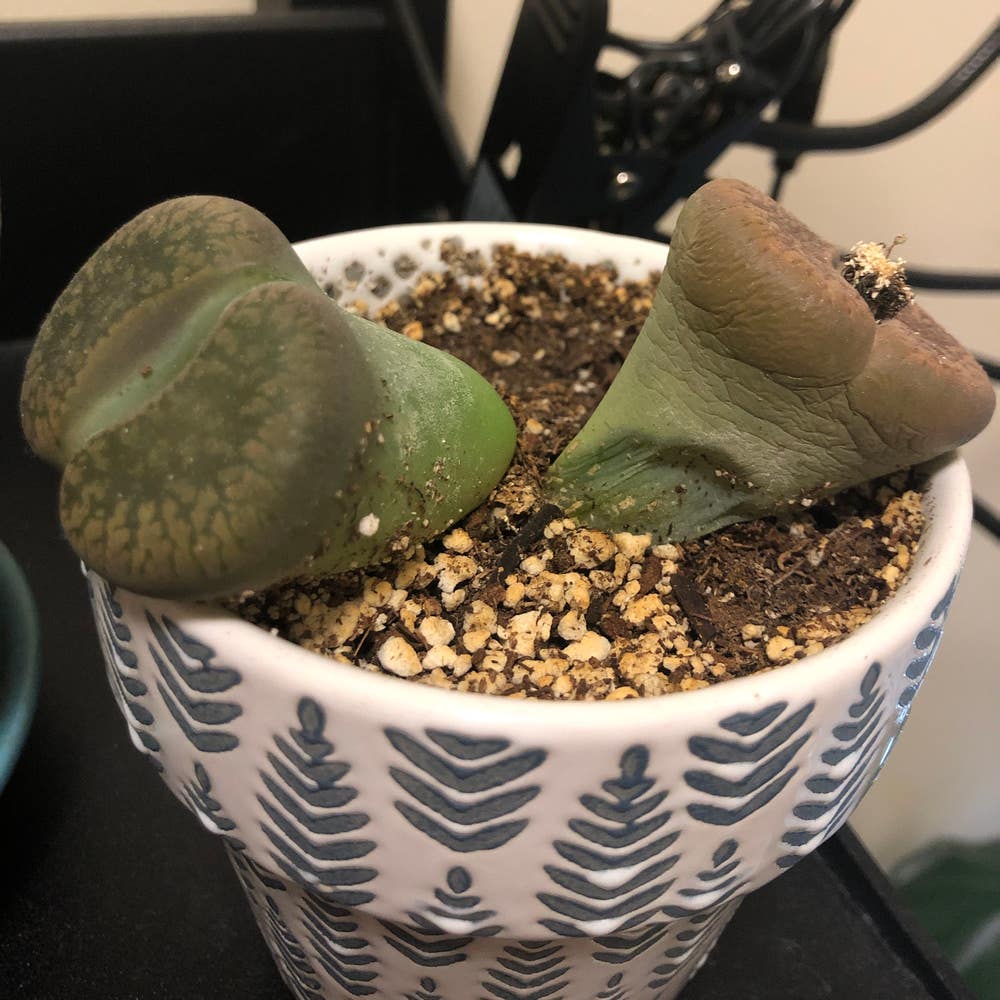
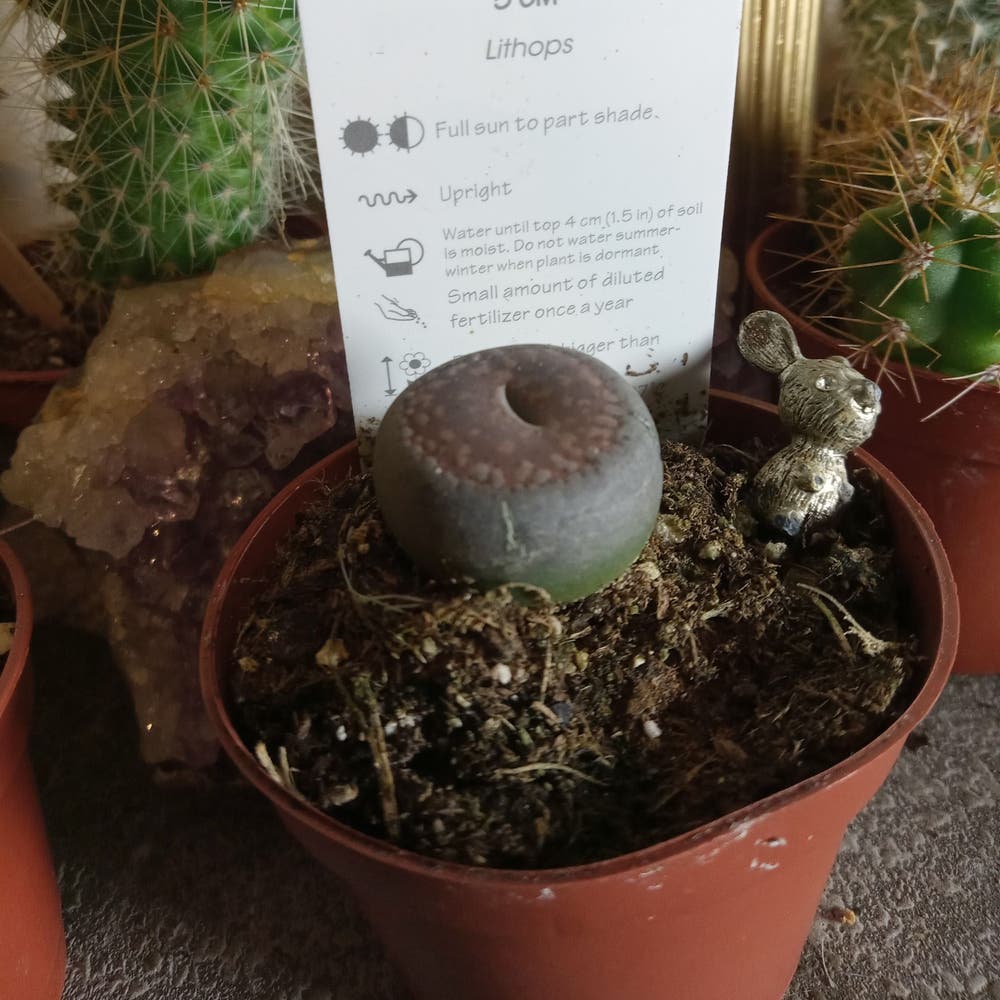
Why Are My Lithops bromfieldii Leaves Falling Over? 🪨
Lithops bromfieldii
By the Greg Editorial Team
Jun 18, 2024•6 min read
This article was created with the help of AI so we can cover more plants for you. May contain errors. See one? Report it here.
Prevent your Lithops bromfieldii from toppling with these essential care tips 🌵—your succulent's life depends on it!
- Overwatering leads to heavy, waterlogged leaves that cause Lithops to topple.
- 🌞 Bright, indirect sunlight and dry soil are key to preventing droopy leaves.
- Monitor for pests and diseases, treat with neem oil or fungicide if needed.
Overwatering as a Primary Cause
Overwatering is a common misstep that can cause your Lithops bromfieldii to topple over. When these succulents receive more H2O than they can handle, the leaves may become waterlogged, leading to a soft and mushy texture. This excess weight is often too much for the leaves to bear, causing them to fall over.
🚱 Recognizing the Signs
- Translucent leaves are a telltale sign that your plant is drinking up more than its share.
- If the soil feels wet an inch or two below the surface, it's a red flag that you're overdoing the watering.
- New growth that withers or turns light green suggests your Lithops is drowning in excess moisture.
- Leaves that break easily or show water-soaked spots are screaming for you to ease up on the watering can.
🕵️♂️ The Root of the Problem
- Overwatering can lead to root rot, a sneaky assassin that thrives in waterlogged conditions.
- Dark, mushy roots are a grim indicator that your plant's foundation is compromised.
- A constantly wet base is a no-go zone for these desert dwellers.
🔄 Adjusting Your Approach
- Check the soil's moisture with a finger test or use a moisture meter for a more precise reading.
- Cut back on watering and allow the top inch of soil to dry out before giving your plant another drink.
- Remember, Lithops bromfieldii prefers a drought to a deluge. Keep it on the dry side to prevent a leafy landslide.

Environmental Stressors Leading to Leaf Problems
💧 Underwatering: The Silent Saboteur
Underwatering is like sending your Lithops bromfieldii on a forced march through the Sahara—without a canteen. If your soil is drier than a stand-up comedian's humor, it's a red flag. Leaves may start to look as parched as a desert, with yellow hues and crispy edges. They might droop or fall over in a dramatic attempt to conserve water.
🌞 Light Conditions: A Balancing Act
Too much sun and your Lithops bromfieldii might start to feel like it's under interrogation. Not enough, and it's like living in a cave—depressing and growth-stunting. Aim for bright, indirect sunlight; think of it as the plant equivalent of a cozy reading nook. Avoid the full midday sun, which can be as aggressive as a midday showdown in an old western.
Creating the Ideal Environment
To prevent your Lithops bromfieldii from toppling over like a fainting goat, here's the drill:
- Stable temperatures are key. Avoid placing your plant next to a heater or an air conditioner.
- Humidity matters. If your air is drier than a prohibition-era bar, consider a humidifier or a pebble tray to keep the air moisture above 50%.
- Soil check: Before you water, dig a finger in. If the soil is dry an inch down, it's time to water. Think of it as the plant's thirst meter.
- Potting mix: Ensure it's well-draining. Your Lithops bromfieldii doesn't want to swim; it just wants a drink.
Remember, these succulents are more self-sufficient than a teenager claiming they can live on pizza alone. They don't need constant attention, just the right conditions to thrive.

Pests and Diseases That Cause Leaves to Droop
🕵️ Identifying the Culprits
Pests such as spider mites, thrips, and mealybugs are notorious for wreaking havoc on Lithops bromfieldii. These tiny invaders can cause significant stress, leading to leaf droop. Look for telltale signs like webbing, discolored spots, or a sticky residue on the leaves.
🤒 Diseases to Watch Out For
Fungal infections are another common issue, often exacerbated by poor light conditions or excessive moisture. Symptoms may include soft, water-soaked spots or a general wilting of the plant. Root rot is a particularly insidious disease, often a result of overwatering, which can cause leaves to collapse from the base.
💉 Treatment Tactics
For pests, a strong blast of water or applications of neem oil can be effective. In the case of diseases, remove affected parts and consider a fungicide. Always test any chemical treatment on a small area first to prevent further damage. Quarantine new or affected plants to prevent the spread of pests and diseases.
🛡️ Preventative Measures
Prevention is key. Ensure your Lithops are in a well-draining soil mix and are not overwatered. Keep an eye out for early signs of distress and act quickly. Regular monitoring and maintaining a healthy growing environment can help your Lithops bromfieldii stay pest and disease-free.

Correcting Watering and Soil Practices
💧 Adjusting Watering Habits
Watering is a delicate dance with Lithops bromfieldii. These succulents thrive on neglect rather than nurture. Overwatering is a common misstep that leads to mushy, toppling leaves. To prevent this, water only when the soil is completely dry. During active growth in fall and spring, water sparingly. In summer, dial it back further; these are desert plants that can handle the heat. Winter? Practically a watering wasteland. Think of it as a drought simulation.
🏜️ Choosing the Right Soil Mix
Soil is the unsung hero in the Lithops saga. It should be well-draining, mimicking the arid environments of their origin. A mix of potting soil with added sand or perlite does wonders. The goal is to avoid water retention that can lead to root rot. Remember, these plants are more camel than fish.
🌱 Selecting the Ideal Pot
Pot selection is not just about aesthetics. Sure, you want your Lithops to look chic, but functionality is key. Go for pots with drainage holes to let excess water escape. Size matters too; cozy is better. An oversized pot invites soil to stay wet longer, which is a no-go zone for your stone-like buddies.
🍂 Seasonal Adjustments
As the seasons change, so should your care routine. Hot summers may call for a bit more moisture retention, while cooler winters demand a drier bed for your Lithops to sleep in. Stay vigilant and tweak your soil mix accordingly. It's like updating your wardrobe for the weather, but for plants.
👀 Monitoring and Maintenance
Keep an eye on your Lithops like a botanical hawk. If they look unhappy, dive into the root zone for a quick health check. Compacted soil or poor drainage should be addressed with the urgency of a plant ER. A little organic matter, like compost, can be the vitamin boost your soil needs. And always, always, avoid the siren call of overwatering.
⚠️ Safety First
This content is for general information and may contain errors, omissions, or outdated details. It is not medical, veterinary advice, or an endorsement of therapeutic claims.
Always consult a qualified healthcare professional before using any plant as food, medicine, or supplement.
Never eat any plant (or feed one to pets) without confirming its identity with at least two trusted sources.
If you suspect poisoning, call Poison Control (800) 222-1222, the Pet Poison Helpline (800) 213-6680, or your local emergency service immediately.
Spotted an error? Please report it here.
Prevent your Lithops bromfieldii from toppling with custom watering schedules 🪴 from Greg, ensuring they stay hydrated just right without the risk of overwatering.