Why Are My Lithops Leaves Mushy?
Lithops bromfieldii
By the Greg Editorial Team
Jun 18, 2024•4 min read
This article was created with the help of AI so we can cover more plants for you. May contain errors. See one? Report it here.
Revive your Lithops and prevent mushy leaves with these essential care tips! 🌵🛠️
- Overwatering leads to mushiness, turning firm leaves translucent and discolored.
- 🌵 Mimic arid conditions with sparse watering and proper drainage.
- Adjust environment to prevent and treat mushy leaves—light, temperature, humidity.
Spotting Trouble: Signs Your Lithops Leaves Are Too Mushy
🚱 Visual Symptoms
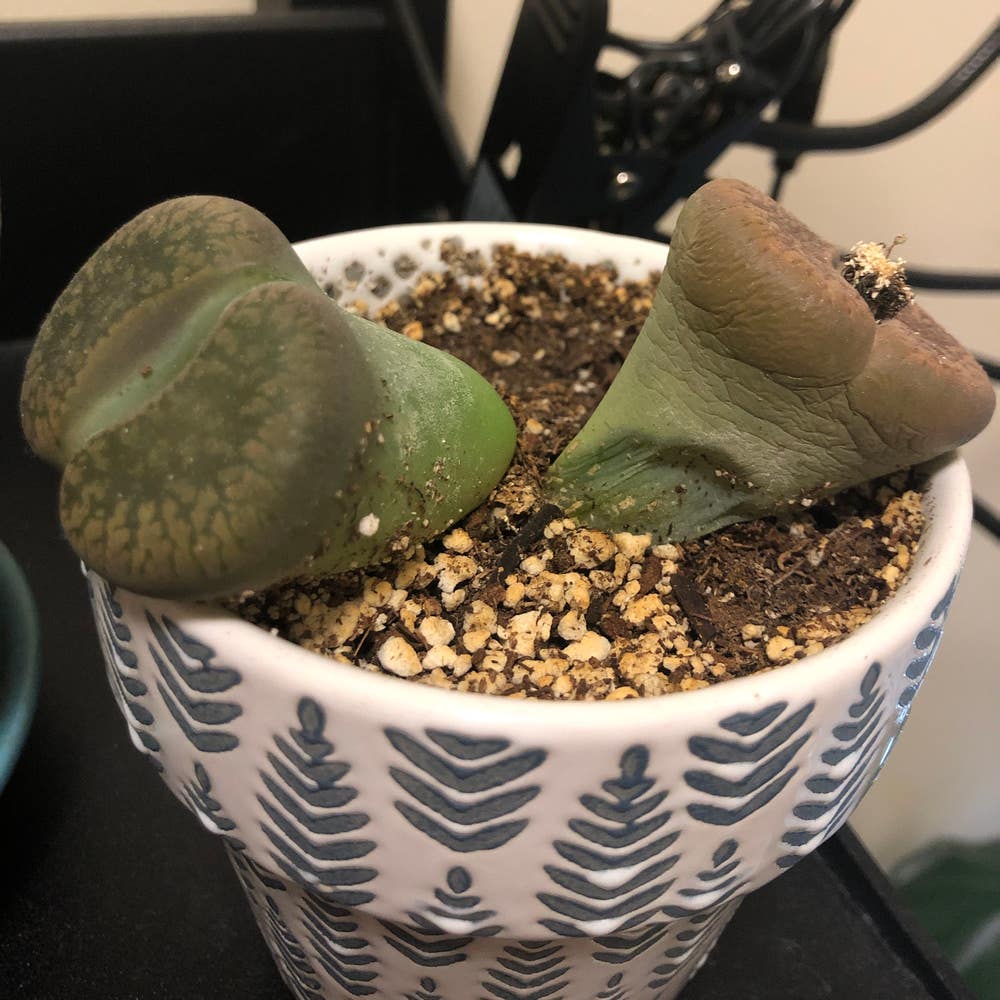
When your Lithops starts to resemble a deflated balloon rather than a plump stone, alarm bells should ring. Overwatered Lithops leaves lose their firm, pebble-like structure, turning translucent and changing color. They may become a faded green, yellow, or even brown, signaling a health crisis for your succulent friend.
🖐️ Tactile Clues
Touch is a telltale tool. Healthy Lithops leaves should resist your poke like a firm handshake. If they feel like a squishy stress ball, you've got a case of the mushies. Soggy leaves that yield to gentle pressure are crying out for an intervention. Remember, a Lithops that feels like overcooked vegetables is in dire straits.

Rooting Out the Causes: What Makes Lithops Leaves Go Mushy
🌊 The Perils of Overwatering
Overwatering turns your resilient Lithops into a mushy mess. It's a classic case of too much love; your watering can is not a magic wand. Excess moisture breaks down the leaf structure, leaving you with a plant that's more slush than stone.
🚰 Drainage Dilemmas
Soil choice and pot type are critical in preventing the dreaded mush. Aim for a gritty mix that waves goodbye to water quickly. Terracotta pots are your allies here, with their porous sides that shun excess moisture like a cat avoids water.
🌞 Environmental Stress
Humidity, light, and temperature are the stage managers in this drama. Too much humidity and your Lithops leaves go soft. Inadequate light? They'll stretch out in desperation. Temperature swings can also throw your plant into a mushy tailspin. Keep these factors in check to maintain firm, happy Lithops leaves.

First Aid for Mushy Lithops
💦 Drying Out the Situation
When you've overwatered your Lithops, it's time for some plant triage. Here's how to stop the mush:
- Remove the Lithops from its current soil and bid adieu to the sogginess.
- Nestle the plant in dry, clean horticultural perlite, keeping it mostly above the substrate.
- Wait a week before introducing any water, then only mist around the base.
🌍 Tweaking the Environment
Adjusting your Lithops' living conditions can be the difference between survival and succumbing to the mush. Here's the game plan:
- Light: Medium light is your Lithops' best friend right now. Think bright but not sunbathing-in-the-Sahara bright.
- Temperature: Keep it warm, not hot. Your Lithops isn't trying to break a sweat.
- Humidity: Aim for arid. These guys are desert dwellers, not rainforest residents.
- Airflow: Good circulation is key. A wire basket can protect your plant while letting it breathe.
Remember, recovery is a marathon, not a sprint. Keep a vigilant eye and resist the urge to water. Your Lithops will bounce back with a little tough love and patience.

Keeping Lithops Leaves Firm and Happy
💧 Watering Wisdom
Creating a watering schedule that mirrors the arid homeland of Lithops is key to their survival. These succulents are the camels of the plant world, thriving on a sip rather than a gulp. During the active growth phase in fall and spring, water them sparingly, only when the soil is bone dry. As summer heat intensifies, ease up even more. Winter? Practically turn the taps off; it's their dormant season after all.
🏜️ Habitat Harmony
Ensuring your Lithops' environment is a near replica of their natural habitat is non-negotiable. These little guys hail from the deserts, so they're all about that bright, indirect light and a consistent, mild temperature. Avoid turning their world into a sauna or an icebox. Keep them cozy, but not too cozy – they're tough, they can handle a bit of neglect. Remember, it's about creating a slice of the desert, not a tropical paradise.
⚠️ Safety First
This content is for general information and may contain errors, omissions, or outdated details. It is not medical, veterinary advice, or an endorsement of therapeutic claims.
Always consult a qualified healthcare professional before using any plant as food, medicine, or supplement.
Never eat any plant (or feed one to pets) without confirming its identity with at least two trusted sources.
If you suspect poisoning, call Poison Control (800) 222-1222, the Pet Poison Helpline (800) 213-6680, or your local emergency service immediately.
Spotted an error? Please report it here.
Ensure your Lithops stay firm and fabulous 🪨 by letting Greg tailor your watering schedule and monitor your home's desert-like conditions for optimal succulent health.