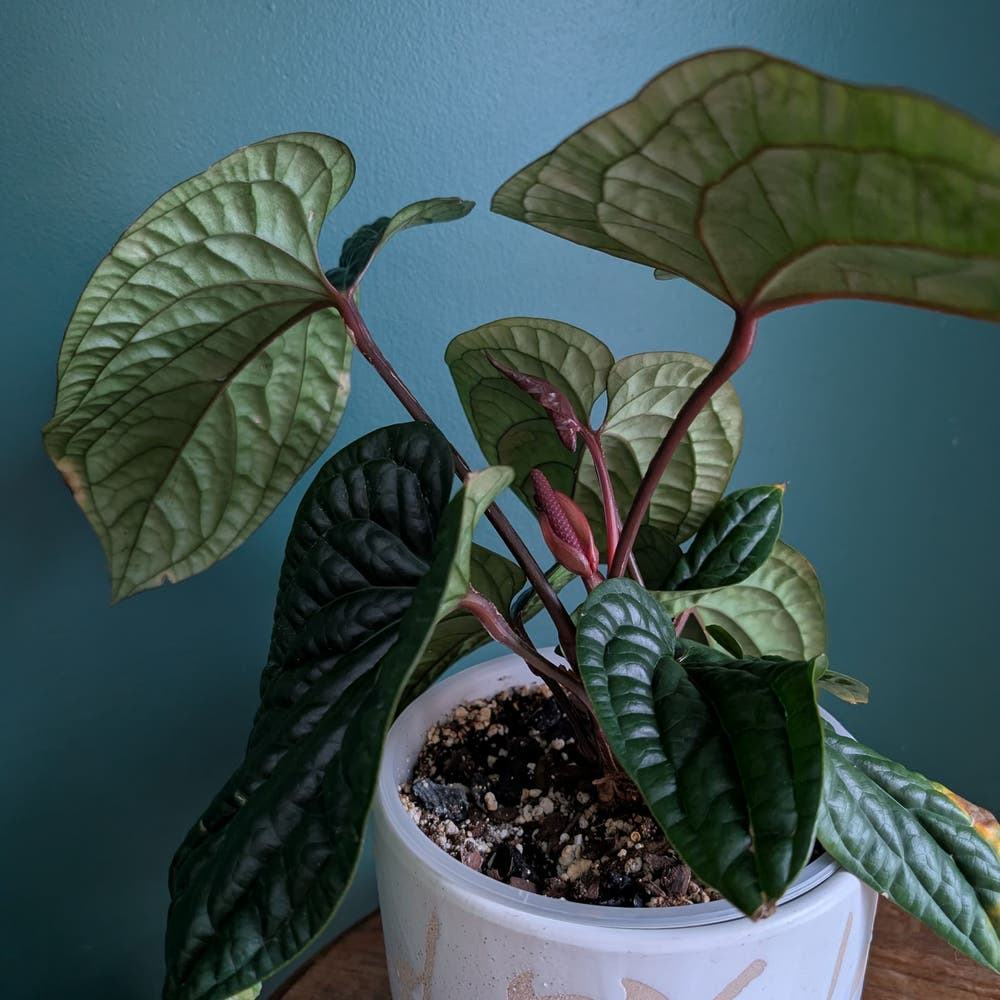
Black Spots on My Anthurium radicans x luxurians Leaves
Anthurium luxurians x radicans
By the Greg Editorial Team
Jun 18, 2024•4 min read
This article was created with the help of AI so we can cover more plants for you. May contain errors. See one? Report it here.
Banish black spots 🕵️♂️ on your Anthurium with this essential guide to diagnosis and prevention!
- Fungal and bacterial causes identified by spot appearance and characteristics.
- Environmental stressors like extreme temps and poor air circulation can cause spots.
- Prevent with good drainage, airflow, and regular plant inspections.
Spotting the Trouble: Identifying and Diagnosing Black Spots
🕵️♂️ What Do Black Spots Look Like?
Dark lesions on leaves are the telltale signs of black spots. You might notice concentric rings or feathery edges, and sometimes a yellow halo that screams "fungal issue" rather than a mere blemish. Tiny black dots? Those could be the fungal fruiting bodies throwing a party on your plant.
🕵️♂️ Playing Detective: Pinpointing the Culprit
To differentiate between fungal, bacterial, and environmental causes, think like a detective. Spots from too much sun or heat look different than those with a sticky residue, which might point to insect activity. If the spots feel slimy or have a foul smell, bacteria are likely the offenders. Flip those leaves and check the undersides; that's where the sneaky invaders start. Regular leaf check-ups are your plant's health screenings—catching the spots early is like catching a typo before it's too late.

The Usual Suspects: Common Causes of Black Spots
🍄 Fungal Foes
Fungi are the uninvited guests that thrive in the moist, humid conditions your Anthurium radicans x luxurians might be stewing in. Anthracnose is the party crasher here, starting its shenanigans with greasy yellow spots that soon turn your leafy friend's foliage into a blackened eyesore. Then there's Glomerella, another fun-loving fungus that loves to chow down on your plant's leaves, leaving a trail of destruction in its wake.
🦠 Bacterial Bullies
Bacteria are the sneaky intruders that slip through the smallest of wounds on your plant's leaves. They relish in a good, prolonged wet leaf scenario, creating spots that look water-soaked or slimy. And if your nose wrinkles at a foul smell, that's the calling card of a bacterial infection having a field day on your Anthurium's leaves.
🌿 Environmental Stressors
Environmental factors are like the third wheel, contributing to the black spot drama without being the direct cause. Too much sun can lead to the plant equivalent of a nasty sunburn, while too little light makes your Anthurium vulnerable and stressed. Add in extreme temperatures and poor air circulation, and you've got yourself a recipe for black spot disaster.

The Rescue Plan: Treating Black Spots
🍄 Fungus Among Us: Fighting Back
Fungal infections are the plant equivalent of a home invasion. Act swiftly with a fungicide, ensuring you coat every leaf, front and back. Think of it as a protective shield, repelling the fungal fiends.
💥 Bacteria Be Gone
For bacterial infections, copper-based bactericides are your surgical strike. Apply with precision to infected areas; it's like sending in the special forces to neutralize a threat. Remember, the rest of the plant is innocent bystanders.
🌿 Easing Environmental Stress
Environmental stress can turn your Anthurium's leaves into a black spot battlefield. Ensure proper drainage and airflow—like giving your plant a breath of fresh air. Balance watering and lighting to create a stress-free sanctuary for your green friend.

Keeping It Spotless: Prevention Tips
🔍 Regular Inspections: Your First Line of Defense
Regularly inspect your Anthurium radicans x luxurians. It's like checking your teeth for spinach; you'll be thankful when you catch those black spots early.
🌱 Soil and Potting: The Foundation of Health
Use a well-draining soil mix and ensure pots have drainage holes. It's the difference between a comfy mattress and a waterbed from the '80s.
💧 Water Wisely: Avoid Leaf Wetness
Water at the plant's base to keep leaves dry, thwarting pathogens looking for a wet playground.
🧼 Good Hygiene: Keep It Clean
Sanitize your tools like you're prepping for surgery. Infected leaves? Remove them faster than you'd skip a spoiler online.
💨 Air Circulation: Keep It Flowing
Improve air circulation around your plant. Stagnant air is a bacteria's best friend; keep the air moving to keep them out.
🌡️ Environmental Adjustments: Set the Scene
Reduce humidity and maintain good airflow. Think of it as setting the perfect mood for your plant's health spa.
🚫 Proactive Isolation: Quarantine with Care
Spot a problem? Isolate the affected plant like it's patient zero. It's about keeping the peace in your plant community.
🌿 Clean Pots and Fresh Soil: A Fresh Start
Use clean pots and fresh soil. A 10% bleach solution for pot cleaning isn't overkill—it's just being smart.
🐞 Integrated Pest Management: Be Strategic
Adopt integrated pest management. It's not just a fancy term; it's about making smart moves to prevent problems before they start.
🌿 Organic Measures: Embrace Nature
Embrace organic measures. Sometimes the best solutions are the simplest, like a soapy water solution for pests—it's special forces, not the entire army.
Remember, prevention isn't just a strategy; it's a mantra. Keep these tips in your gardening toolkit, and your Anthurium radicans x luxurians will stay as spotless as your record for keeping plants alive.
⚠️ Safety First
This content is for general information and may contain errors, omissions, or outdated details. It is not medical, veterinary advice, or an endorsement of therapeutic claims.
Always consult a qualified healthcare professional before using any plant as food, medicine, or supplement.
Never eat any plant (or feed one to pets) without confirming its identity with at least two trusted sources.
If you suspect poisoning, call Poison Control (800) 222-1222, the Pet Poison Helpline (800) 213-6680, or your local emergency service immediately.
Spotted an error? Please report it here.
Keep your Anthurium radicans x luxurians spot-free 🌿 with Greg's environmental monitoring and custom care reminders, tackling fungal foes and environmental woes with ease.