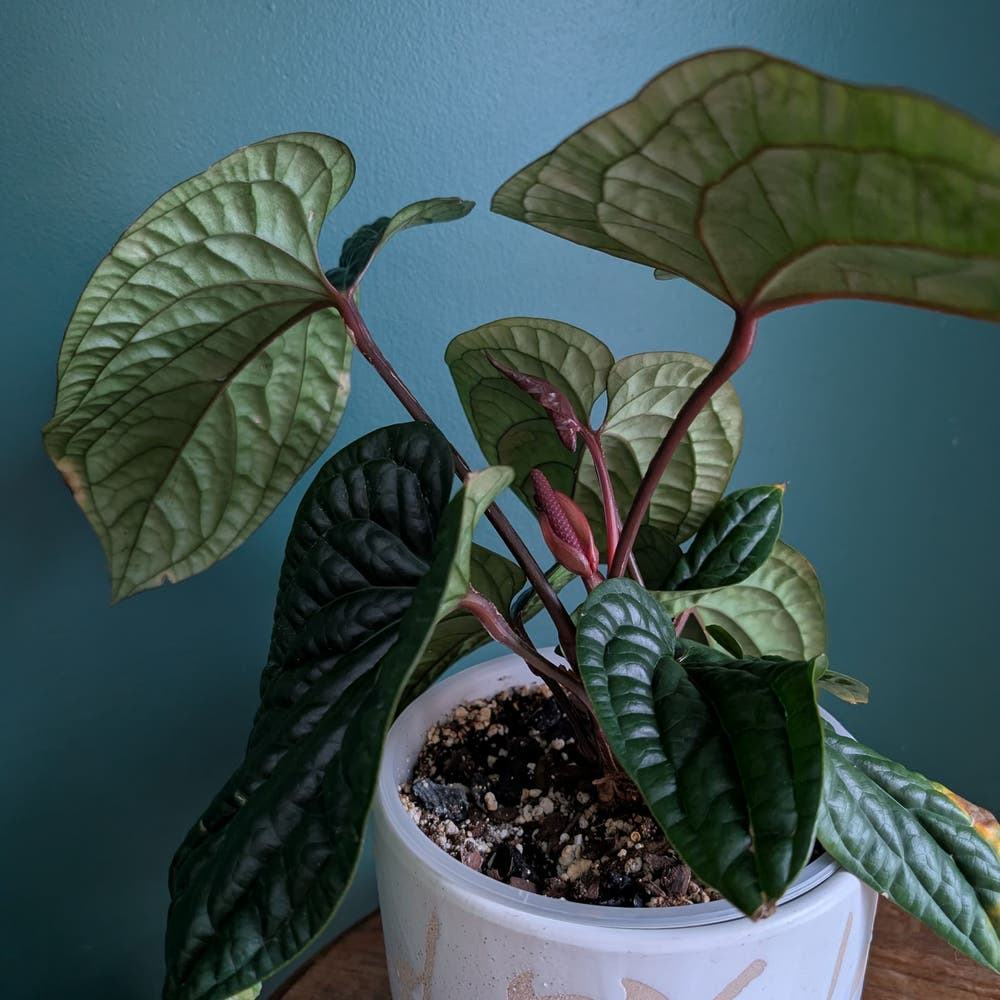
Why Is My Anthurium radicans x luxurians Dropping Leaves?
Anthurium luxurians x radicans
By the Greg Editorial Team
Jun 18, 2024•7 min read
This article was created with the help of AI so we can cover more plants for you. May contain errors. See one? Report it here.
Stop the leaf-drop 🍂 and keep your Anthurium radicans x luxurians thriving with these expert care tips.
- Yellow, wilted, or brown-spotted leaves signal your Anthurium is distressed.
- Balance water and light to prevent over/underwatering and sunburn.
- Consistent care and monitoring are key to a healthy, leafy Anthurium.
Spotting the Red Flags: Symptoms of Distress
🟡 Yellowing Leaves: More Than Just a Color Change
Yellowing leaves aren't trying out for a role in "Autumn: The Plant Edition." They're a distress signal, a visual SOS from your Anthurium radicans x luxurians. If the vibrant green is fading to a sickly yellow, it's time to investigate the cause.
🥀 Wilted or Curled Leaves: A Plant's Cry for Help
When leaves wilt or curl, they're not just being dramatic. They're telling you they're either drowning in water or parched for a drink. It's a cry for help that demands immediate attention.
🟤 Brown Spots or Edges: Decoding Distress Signals
Brown spots or edges on leaves are like the plant's version of a bruise. They're telling you something's wrong, and it's usually a sign of too much sun or a watering mishap. Don't just shrug it off—your Anthurium is counting on you.
🌀 The Curling Clue: Upward vs. Downward
The way a leaf curls can spill the tea on your plant's health. Upward curls often hint at underwatering, while downward spirals might indicate overwatering or even a pest problem. It's like your plant is gesturing wildly for your attention.
🔴 Spotted Leaves: Pests or Disease?
If you're seeing spots, don't immediately think it's a new trend. It could be pests throwing a party or a disease taking hold. Black dots or sticky residue? Uninvited guests are making themselves at home.
🎨 The Silent Informant: Leaf Patterns
Don't just glance at your Anthurium; get up close and personal. Patterns of leaf loss or discoloration are like a coded message, and you're the only one who can crack it. If the leaves are more spotted than a Dalmatian, it's time to act.

The Water Balancing Act
💦 Overwatering: The Root of the Problem
Overwatering can turn your Anthurium radicans x luxurians' life into a soggy mess. Look out for yellowing leaves, a classic sign of too much H2O. If the soil feels more like a swamp than a fertile bed, you've gone overboard.
🚱 Signs of Overwatering
Root rot doesn't send a postcard; it just shows up. Check for a mushy base or a pot heavier than your last cheat meal. If leaves are dropping like flies at a bug zapper, it's time to rethink your watering game.
How to Let the Soil Dry Out
First, ditch the watering can like last year's fashion. Let the soil's top inch crave your touch before giving it another drink. Consider a soil mix that drains faster than a bathtub with no stopper.
🏜️ Underwatering: When Thirst Leads to Loss
Underwatering is the silent drama queen, causing your Anthurium to wilt in quiet desperation. Curled leaves whisper tales of neglect, begging for a gulp of water.
Spotting an Underwatered Anthurium
If the leaves look more wrinkled than a linen shirt in a suitcase, it's time to hydrate. Dry soil should sound an alarm louder than your morning wake-up call.
Finding Your Watering Sweet Spot
The sweet spot is like that elusive perfect parking spot—hard to find but oh-so-satisfying when you do. Water when the soil feels dry an inch below the surface, but before your plant starts auditioning for a role in a desert scene.

Let There Be (The Right Amount of) Light
🌞 Too Much Sun: The Leaf Scorcher
Sunburn on your Anthurium radicans x luxurians isn't a badge of honor; it's a cry for help. Leaves turning thin, wilting, or sporting translucent spots? They're getting roasted. Move your plant to a shadier spot where the light is bright but indirect—think of it as a safe haven from the sun's harsh rays.
🏡 Shifting to Indirect Light
Direct sunlight is the nemesis of your Anthurium's leaves. If you catch your plant in a sunbathing contest, it's time to intervene. Use blinds or sheer curtains to filter the light, or relocate your plant to a spot that receives ambient light without the direct hit.
🌑 Not Enough Light: The Growth Stunt
When your Anthurium is more shadow-dweller than light-lover, expect a lackluster performance. Leggy stems and sparse leaves are signs it's stretching for more light. Without enough light, your plant might start dropping leaves faster than a tree in autumn.
💡 Best Lighting Conditions for Leaf Retention
Bright, indirect light is the sweet spot. It's like the perfect middle ground where your Anthurium can bask without the risk of turning into a crispy critter. Monitor your plant's response to its lighting conditions and adjust accordingly to keep those leaves firmly attached.

Creating a Comfort Zone: Temperature and Humidity
🌡️ Temperature Troubles: Finding the Ideal Range
Anthurium radicans x luxurians is not a fan of the temperature rollercoaster. Keep your thermostat steady, ideally between 65°F and 75°F. If the mercury dips too low or soars too high, your plant's leaves may start dropping like flies.
What Temperatures Cause Leaves to Drop
Too cold, and your Anthurium might think it's winter all year round. Too hot, and it could start shedding leaves faster than a dog sheds fur in summer.
Adjusting Your Plant's Location Seasonally
When seasons change, so should your plant's spot. Avoid drafty windows in winter and that tempting sunny ledge in the scorching summer.
💦 Humidity Needs: Mimicking the Tropical Vibe
Your Anthurium craves that jungle-like humidity—aim for around 60%. Too dry, and you'll see more leaves on the floor than on branches.
How Low Humidity Contributes to Leaf Drop
Low humidity is like a party pooper for your Anthurium. It can cause leaves to curl up, brown at the tips, and eventually fall off in a dramatic fashion.
Simple Ways to Increase Humidity Around Your Plant
- Group plants together to create a mini rainforest.
- A pebble tray with water beneath the pot can be a spa day, every day.
- Humidifiers are your plant's best friend in arid climates or heated homes.
- Misting? Sure, but it's more of a quick fix than a long-term solution.
Remember, your Anthurium doesn't need a sauna or an ice bath; it just wants to chill in consistent conditions. Keep the air comfortably moist, and your plant will thank you with a full head of leaves.
Proactive Plant Parenting: Prevention and Maintenance
📅 Establishing a Routine: Consistency is Key
Consistency in care prevents your Anthurium radicans x luxurians from becoming another sad statistic in the plant obituaries. Regular care keeps the leaves on the plant, not on the floor.
🌱 The Role of Regular Care
It's simple: a happy plant doesn't throw tantrums in the form of leaf drop. Regular care includes watering, feeding, and pruning, tailored to your plant's needs.
🗓 Creating a Care Calendar
Mark your calendar as if your Anthurium's life depends on it—because it does. A care calendar is your roadmap to a thriving plant, reminding you when to water, fertilize, and whisper sweet nothings to your green buddy.
👀 Vigilant Monitoring: Catching Issues Early
Being a plant parent means being on the lookout—think neighborhood watch but for your plant's well-being. Regular check-ups can save you from the heartbreak of a leafless Anthurium.
🔍 Regular Check-Ups and What to Look For
Keep an eye out for signs of distress like yellowing leaves or a sad, droopy demeanor. These are your plant's way of waving a white flag and begging for help.
🌿 When to Adjust Care Based on Observations
Your plant's not subtle—it'll tell you what it needs. If you notice dry soil or crispy leaves, it's time to tweak your care routine. Remember, your Anthurium's needs can change with the seasons, just like your wardrobe.
⚠️ Safety First
This content is for general information and may contain errors, omissions, or outdated details. It is not medical, veterinary advice, or an endorsement of therapeutic claims.
Always consult a qualified healthcare professional before using any plant as food, medicine, or supplement.
Never eat any plant (or feed one to pets) without confirming its identity with at least two trusted sources.
If you suspect poisoning, call Poison Control (800) 222-1222, the Pet Poison Helpline (800) 213-6680, or your local emergency service immediately.
Spotted an error? Please report it here.
Ensure your Anthurium radicans x luxurians stays leafy and robust 🌱 with Greg's custom care plan, tackling everything from watering to sunlight, for a plant that's as resilient as your green thumb.