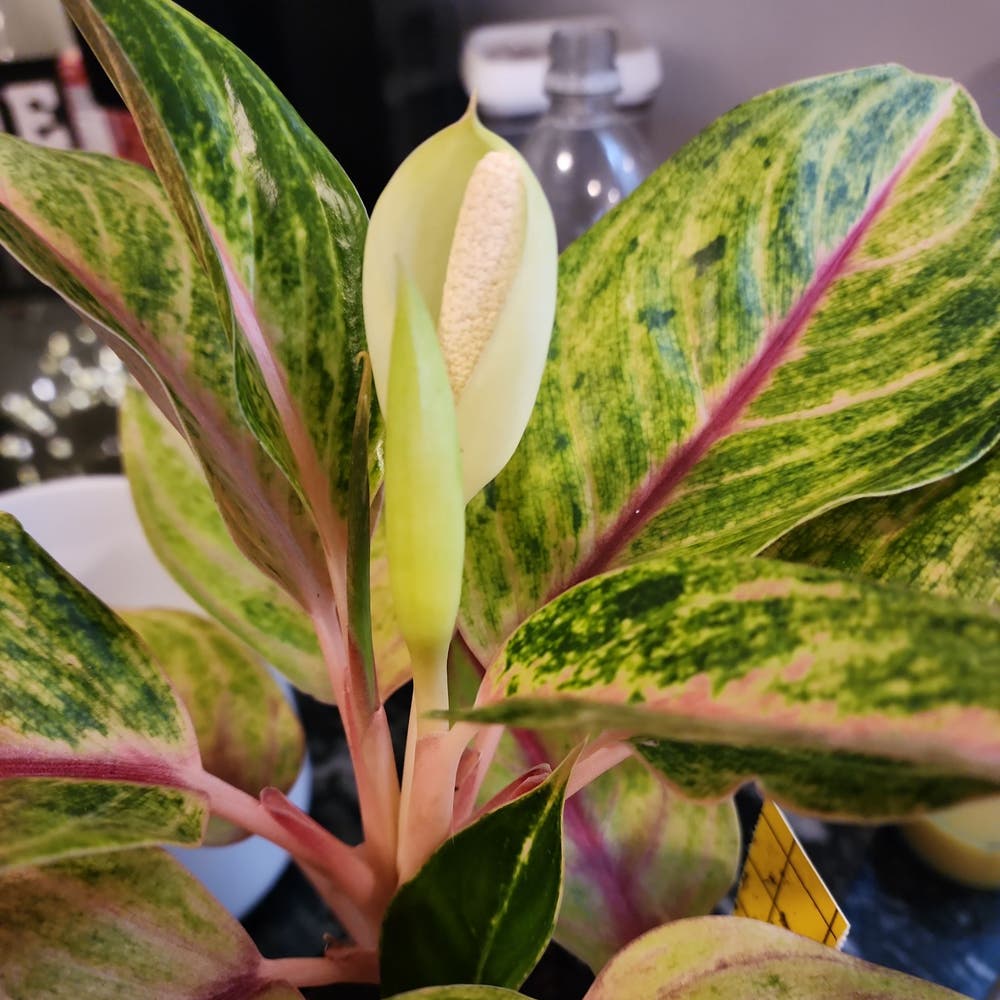
Common Aglaonema 'Golden Fluorite' Problems
Aglaonema 'Golden Fluorite'
By the Greg Editorial Team
Feb 11, 2024•4 min read
This article was created with the help of AI so we can cover more plants for you. May contain errors. See one? Report it here.
- Yellow leaves and wilting mean over-watering; let soil dry and trim roots.
- Crispy tips and droopiness signal under-watering; soak soil and wait to dry.
- Fading or stunted growth? Adjust light and temperature between 65°F-75°F.
When Water Works Against You
💧 Over-watering Woes
Yellowing lower leaves and a wilting appearance are telltale signs that your Aglaonema 'Golden Fluorite' might be drowning in excess water. To the touch, the soil feels more like a wet sponge than a nurturing environment for roots.
🚱 Drying out: Steps to rescue an over-watered plant
- Stop watering immediately and let the soil dry.
- If the pot lacks drainage, repot into one that allows water to escape.
- Trim any rotten roots and yellow leaves to prevent spread.
- Place the plant in a well-ventilated area to speed up drying.
- Resume watering with caution, checking the soil's moisture level first.
🏜️ The Thirsty Plant Problem
Crispy leaf tips and a droopy demeanor are your Aglaonema's way of saying it's time to hydrate. Under-watering leaves your plant as dry as yesterday's toast, and just as unappealing.
💦 Quenching the thirst: How to properly hydrate your plant
- Soak the soil thoroughly until excess water drains out—no sips, think gulps.
- Wait until the top inch of soil is dry before the next watering.
- Consider using a self-watering pot to maintain consistent moisture.
- Monitor your plant for signs of recovery, such as new growth and perkier leaves.
Light and Shade: Finding the Balance
🌞 Too Much Sun, Too Little Light
Fading leaves or stunted growth are tell-tale signs your Aglaonema 'Golden Fluorite' is begging for a lighting intervention. Direct sunlight is a no-go, as it can lead to a sunburned plant, sporting a crispy, yellow wardrobe. On the flip side, too little light can turn your vibrant friend into a lackluster, stretched-out shadow of its former self.
Perfect Placement
The sweet spot? Bright, indirect light. Think of a spot where the sun's rays are gently diffused, like through a sheer curtain. This is where your plant can thrive without the threat of turning into leaf jerky. Rotate your plant occasionally to prevent phototropism—the fancy term for your plant's tendency to lean towards the light like a sunflower on a sunny day. If your home's lighting is more 'dungeon' than 'sunroom', consider a grow light to keep your plant's photosynthesis game strong. Remember, consistency is key; your Aglaonema craves a stable light relationship, not a fling with the sun.
Temperature Tantrums
Dropping leaves on your Aglaonema 'Golden Fluorite' might be a temperature issue, not just a bad plant day. Aglaonemas are like Goldilocks; they want conditions that are just right—not too hot, not too cold.
🌡️ Keeping it Cozy: Ideal Temperature Ranges for Your Aglaonema
65°F to 75°F (18°C to 24°C) is the sweet spot for these tropical beauties. They're not fans of the cold, and anything below 65°F could trigger a leaf-dropping spree. Conversely, temperatures soaring above 80°F might cause wilting or a stunted growth spurt. Drafts? They're the nemesis of your plant's comfort. Keep your Aglaonema away from the unpredictable whims of open windows and doors.
🛡️ Preventing Temperature Stress
Keep your Aglaonema away from drafts and fluctuating temperatures. Consistency is key. If you're comfortable lounging in your space without reaching for a sweater or a fan, your plant is likely happy too. Remember, your comfort is a decent gauge for your plant's happiness.
🌡️ Temperature and Humidity Interplay
Aim for indoor relative humidity (RH) between 40-60%. This level supports your Aglaonema without inviting trouble, like a fungal free-for-all. It's about finding that balance where your plant feels like it's living in its own personal rainforest—without turning your living space into a sauna.
Attack of the Pests and Diseases
🐜 Unwanted Guests: Pests
Pests can turn a thriving Aglaonema 'Golden Fluorite' into a withering disappointment. Spider mites, aphids, and mealybugs are the usual suspects. They leave behind sticky residue, discolored leaves, and stunted growth.
🔍 Spotting the Invaders
Check the undersides of leaves and stems for tiny bugs or webbing. Early detection is crucial to prevent a full-scale invasion.
🚪 Eviction notice
To oust these pests, start with a gentle shower to knock them off. Follow up with insecticidal soap or horticultural oil, ensuring thorough leaf coverage. For persistent problems, a targeted miticide might be necessary.
🍄 Fungal Frustrations: Mold and Root Rot
Fungal issues often stem from too much moisture and not enough air circulation. Spots on leaves and a musty smell are red flags.
🕵️♂️ Spots and smells
Look for black or brown spots on leaves, often with a yellow halo. A foul odor or mushy roots indicate root rot.
🧹 Clean-up crew
Remove affected soil and leaves. Improve airflow and let the soil dry out. If mold persists, apply a fungicide, but always test a small area first. Prevention is better than cure, so adjust your watering habits to keep the soil from staying wet for too long.
⚠️ Safety First
This content is for general information and may contain errors, omissions, or outdated details. It is not medical, veterinary advice, or an endorsement of therapeutic claims.
Always consult a qualified healthcare professional before using any plant as food, medicine, or supplement.
Never eat any plant (or feed one to pets) without confirming its identity with at least two trusted sources.
If you suspect poisoning, call Poison Control (800) 222-1222, the Pet Poison Helpline (800) 213-6680, or your local emergency service immediately.
Spotted an error? Please report it here.
Overcome your Aglaonema 'Golden Fluorite' challenges with precision watering 💧 reminders from Greg, ensuring just the right moisture for a flourishing plant.