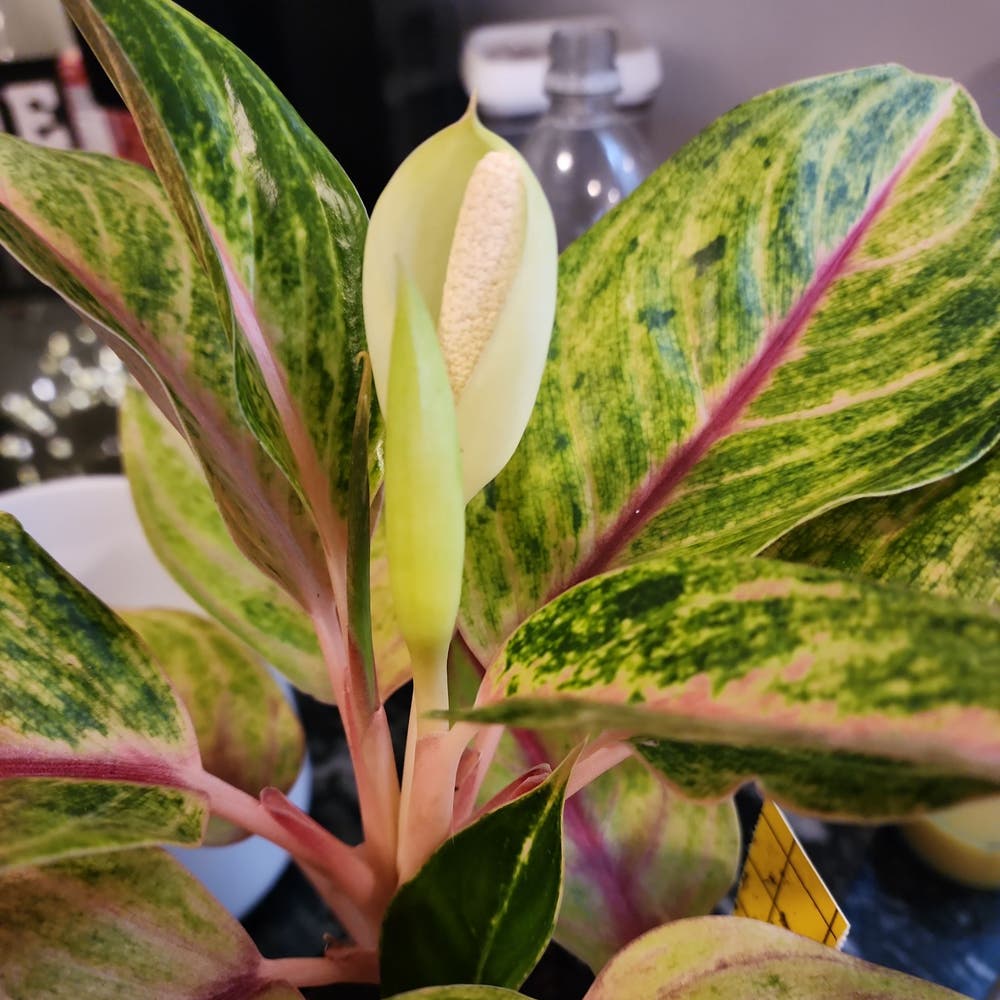
Why Are My Aglaonema 'Golden Fluorite' Leaves Curling?
Aglaonema 'Golden Fluorite'
By the Greg Editorial Team
Feb 11, 2024•4 min read
This article was created with the help of AI so we can cover more plants for you. May contain errors. See one? Report it here.
- 🌿 Leaf curling signals distress; early detection and action are key.
- 💧 Balance watering, watch temperature, to prevent curling.
- 🌡️🐛 Control climate and pests for healthy Aglaonema 'Golden Fluorite' leaves.
Spot the Signs: Identifying Leaf Curling
🍃 Visual Symptoms
Curling leaves on Aglaonema 'Golden Fluorite' are hard to miss. They might roll inward, twist, or resemble a cup, signaling distress. Discoloration often accompanies the curl, with leaves turning yellow or developing brown spots. This isn't a quirky plant feature; it's a cry for help.
🕵️ Early Detection
Act swiftly when you notice curling. Inspect the light conditions; too much sun can scorch, while too little can weaken your plant. Touch the soil; is it parched or soggy? Adjust your watering habits accordingly. Keep an eye out for pests—these uninvited guests can wreak havoc. Catching these signs early can save your Aglaonema 'Golden Fluorite' from a downward spiral.
The Usual Suspects: Common Causes of Leaf Curling
💦 Thirsty Roots or Drowning?
Overwatering your Aglaonema 'Golden Fluorite' turns roots into aquatic creatures that never wanted to swim. Leaves become yellow and squishy. Conversely, underwatering sends your plant on a trek across the Sahara, with leaves curling like tiny green canteens trying to conserve every drop. The soil should be your guide—moist like a squeezed-out sponge, not a drenched towel.
🌡️ It's Getting Hot in Here
Temperature stress can send your Aglaonema's leaves into a curling frenzy, like a reflex to extreme heat or cold. Leaves curl up to escape the heat, much like a person would retract their hand from a hot surface. Keep your plant in a spot where it won't feel like it's vacationing at the poles or the equator.
🌬️ A Breath of Fresh Air
Humidity is the silent player in the room, with low levels causing leaves to curl as if yearning for a drop of water. Airflow is equally important; stagnant air is a no-go. Aim for a humidity level that keeps the leaves looking as fresh as a morning dew, without turning your space into a steam room.
Nip it in the Bud: Addressing the Root Causes
💧 Watering Wisdom
Watering your Aglaonema 'Golden Fluorite' is less about sticking to a rigid schedule and more about understanding its needs. Overwatering is just as harmful as underwatering, so let the top inch of soil dry out before giving it a drink. If the soil feels like a dry desert, it's time to water; if it's soggy, hold off. For precision, a moisture meter can be your best friend, but your finger can also be a reliable tool. Remember, the goal is to mimic a natural environment, not a monsoon season or drought.
🌡️ Climate Control
Your plant doesn't need a spa, but it does crave stability. Keep it away from drafts, direct heat sources, and air conditioners. Think of maintaining a "comfy sweater weather" for your plant. If your home feels like a desert, consider a humidifier or a pebble tray to increase humidity. Rotate your plant regularly to ensure it gets even light exposure, avoiding the extremes of a lopsided tan or a pale, reaching-for-the-sun look.
Beyond the Basics: Advanced Tips for Leaf Care
🌿 Feed Your Fluorite
Balanced fertilization is crucial for preventing leaf curl in your Aglaonema 'Golden Fluorite'. Like a well-timed snack, it provides the necessary nutrients without overwhelming the plant. Use a water-soluble fertilizer with an even NPK ratio, but only during the growing season. Monthly applications are your best bet to avoid the nutrient equivalent of a food coma.
Too much fertilizer is like a party that's gone on too long—things start to get messy. If you suspect overfeeding, flush the soil to wash away excess nutrients. Remember, your plant also needs micronutrients, so choose a fertilizer that includes these unsung heroes.
🐜 Pest Patrol
Pests are like uninvited guests at your plant's dinner table—they can cause leaf curling as they feast. Inspect the leaves for any signs of these freeloaders, such as discoloration, spots, or webbing. If you find any, isolation is key to prevent a pest party from spreading.
Manual removal of bugs can be satisfying, but for a severe infestation, you might need to bring out the big guns—insecticides. Use them with precision, following the label instructions to the letter. Overuse can harm more than just the pests; it's a delicate balance between pest control and plant care.
Regular maintenance, like pruning, can help prevent future infestations. And keep those leaves dry; moisture is like an open invitation for fungal diseases. Improving air circulation around your plant can also help keep the pests and diseases at bay.
⚠️ Safety First
This content is for general information and may contain errors, omissions, or outdated details. It is not medical, veterinary advice, or an endorsement of therapeutic claims.
Always consult a qualified healthcare professional before using any plant as food, medicine, or supplement.
Never eat any plant (or feed one to pets) without confirming its identity with at least two trusted sources.
If you suspect poisoning, call Poison Control (800) 222-1222, the Pet Poison Helpline (800) 213-6680, or your local emergency service immediately.
Spotted an error? Please report it here.
Revive your Aglaonema 'Golden Fluorite' and keep those leaves unfurled 🌿 with the right balance of care, as Greg guides you through each step to success.