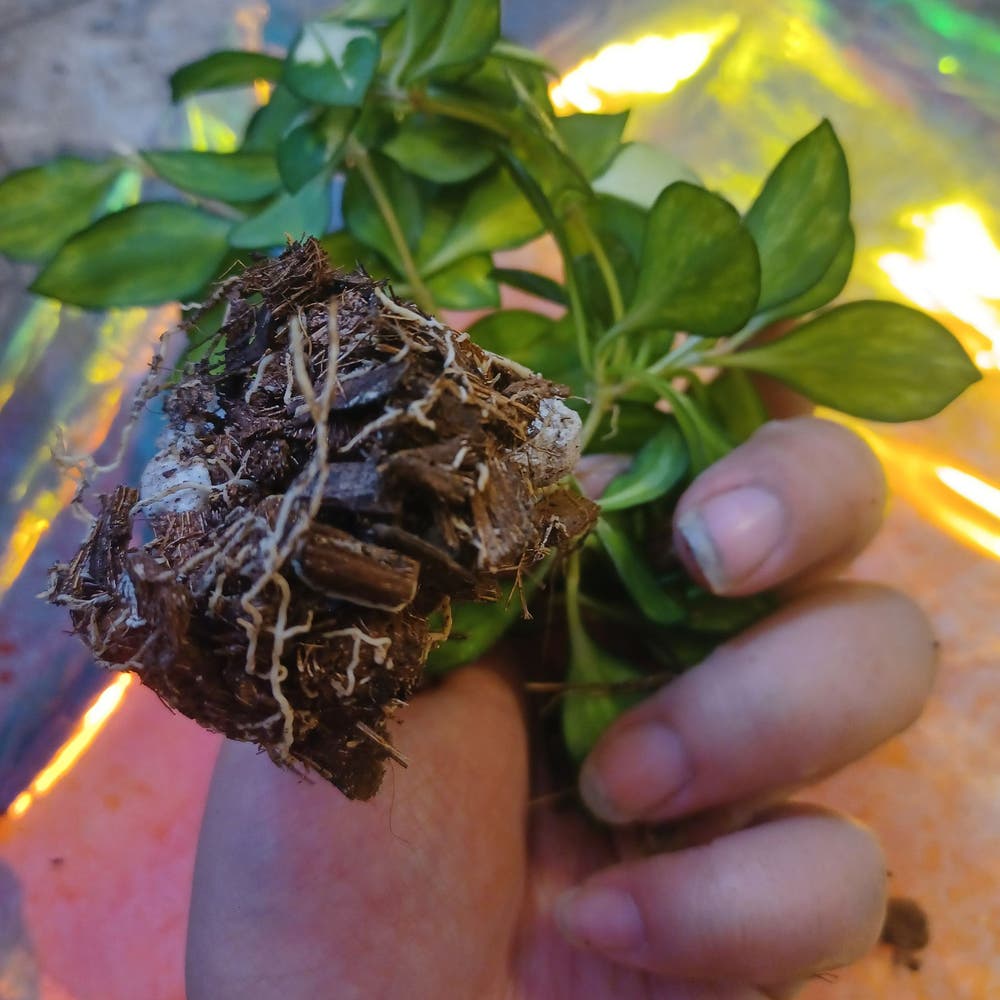
Variegated Hoya Heuschkeliana Leaves Falling Over
Hoya heuschkeliana 'Variegata'
By the Greg Editorial Team
Jun 18, 2024•4 min read
This article was created with the help of AI so we can cover more plants for you. May contain errors. See one? Report it here.
- Overwatering leads to droop, use the poke test to check soil moisture.
- Bright, indirect sunlight is key to prevent Hoya leaves from falling over.
- Proper drainage and soil mix are essential for a healthy, upright Hoya.
Spotting the Trouble: Why Are My Hoya Leaves Drooping?
🌊 Overwatering and Root Rot
Soggy soil is a no-go for Hoya heuschkeliana. Overwatering can leave your plant's roots gasping for air, leading to leaves that droop like they've given up on life. Check for a musty smell or a wet sponge texture in the soil, both are red flags for overwatering and potential root rot.
💧 Underwatering: Thirsty for Attention
On the flip side, leaves with crispy tips and a lifeless hang are crying out for water. Underwatered Hoya heuschkeliana can look as sad as a neglected houseplant in a horror movie. If the soil is as dry as a desert, it's time to quench your plant's thirst.
☀️ Light Struggles: Finding the Sweet Spot
Lighting is a balancing act. Too little light and your Hoya's stems will stretch out long and weak, while too much light will make leaves droop from exhaustion. Aim for bright, indirect light—think of it as the plant equivalent of a perfectly brewed morning coffee.

First Aid for Fallen Leaves
💧 Resuscitating Your Hoya: Watering Woes
Overwatering is the equivalent of a plant's overindulgence. To avoid this, fine-tune your watering technique. Use the poke test: insert your finger into the soil up to the second knuckle. If the soil feels like a wet sponge, skip the water. Remember, your Hoya's roots need to breathe, not swim.
For a more precise approach, consider the soak and dry method. Water thoroughly, allowing excess to drain, then wait for the top inches of soil to dry out before the next watering. This mimics natural rainfall patterns, giving roots the hydration they need without the risk of rot.
💡 Let There Be Light: Illuminating Solutions
Lighting is a balancing act for your Hoya. Too much, and you'll have a wilted mess; too little, and you'll witness a sad, stretched-out spectacle. Aim for bright, indirect sunlight. Think of it as a cozy spot by the window, shielded from the harsh midday sun by a sheer curtain.
If your Hoya is in a dimly lit area, consider using grow lights. They're like a personal sun for your plant, minus the risk of sunburn. Adjust the distance and duration to simulate the perfect day indoors. Remember, your Hoya doesn't need a tan, just a gentle glow to thrive.

Keeping Your Hoya on Its Feet: Preventative Care
🌱 The Right Foundation: Pot and Soil Selection
Drainage is key when it comes to keeping your Hoya heuschkeliana upright and vibrant. Choose a pot with adequate drainage holes; this isn't just a suggestion, it's a lifeline for your plant's roots. Terracotta pots get bonus points for their breathability, which helps prevent water from getting too cozy in the soil.
The soil should be as light and airy as a cloud, with a dash of acidity. Think cactus or succulent mix, perhaps jazzed up with perlite or pumice for that extra oomph in aeration. This isn't just dirt; it's the bed where your Hoya's roots will sleep, so make it comfy.
👀 Vigilant Care: Staying Ahead of Droop
Routine checks are the secret sauce to a perky Hoya. Moisture levels should be Goldilocks-approved—not too wet, not too dry. Stick your finger in the soil; if it's dry a couple of inches down, it's time for a drink. But don't go overboard—no one likes waterlogged feet, especially not your Hoya.
Keep an eye out for unwanted guests like pests or signs of disease. Catching them early means you're the hero, not the harbinger of doom. And remember, balance is the name of the game. Watering should be like a carefully choreographed dance—timed just right and never too heavy-footed.

⚠️ Safety First
This content is for general information and may contain errors, omissions, or outdated details. It is not medical, veterinary advice, or an endorsement of therapeutic claims.
Always consult a qualified healthcare professional before using any plant as food, medicine, or supplement.
Never eat any plant (or feed one to pets) without confirming its identity with at least two trusted sources.
If you suspect poisoning, call Poison Control (800) 222-1222, the Pet Poison Helpline (800) 213-6680, or your local emergency service immediately.
Spotted an error? Please report it here.
Ensure your variegated Hoya Heuschkeliana never droops again with Greg's custom watering plan 💧 and light monitoring, keeping your plant's leaves perky and healthy.