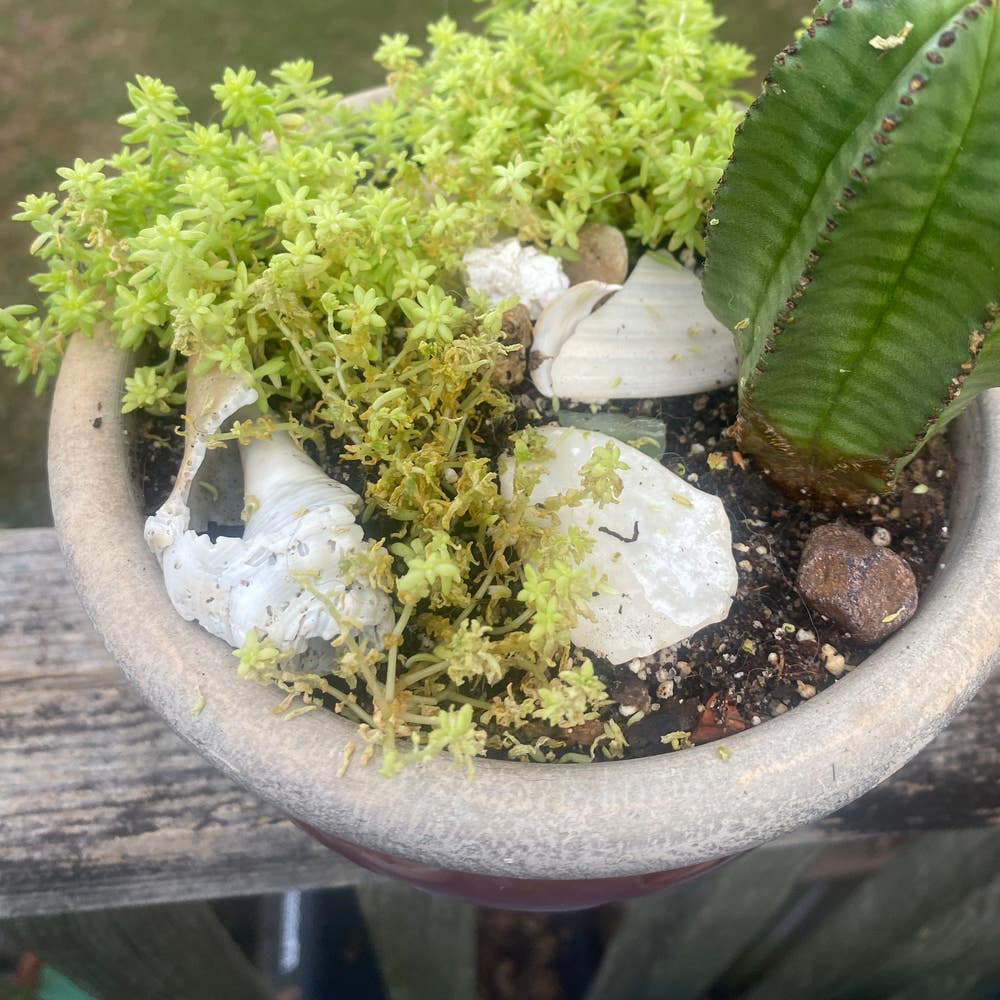
☀️ Top 3 Signs Your Tokyo Sun Stonecrop is Stressed in Winter
Sedum japonicum 'Tokyo Sun™'
By the Greg Editorial Team
Sep 30, 2024•5 min read
This article was created with the help of AI so we can cover more plants for you. May contain errors. See one? Report it here.
- ❄️🌱 Yellowing leaves indicate overwatering or cold stress; adjust care accordingly.
- 💧 Wilting leaves signal dehydration; ensure proper winter watering schedules.
- 🌞 Bright, indirect light prevents etiolation and keeps your Tokyo Sun Stonecrop healthy indoors.
Characteristics of Evergreen Behavior in Winter
Maintaining Appearance in Cold Temperatures 🌬️
The Tokyo Sun Stonecrop is a resilient little gem that holds its own against winter's chill. Even when temperatures drop, this succulent maintains its vibrant appearance, showcasing its adaptability.
Adaptations for Cold Hardiness ❄️
One of the key features that help the Tokyo Sun Stonecrop thrive in winter is its thick, succulent leaves. These leaves are not just for show; they store moisture, allowing the plant to survive when water is scarce.
Benefits of Thick Leaves 💧
These adaptations are crucial for enduring cold spells. The moisture retention helps the plant combat dehydration, ensuring it remains healthy even in harsh conditions.
Evergreen Traits 🌲
As an evergreen, the Tokyo Sun Stonecrop doesn't shed its leaves in winter. This characteristic allows it to continue photosynthesis, albeit at a slower rate, contributing to its overall vitality.
Conclusion
Understanding these characteristics can help you appreciate the resilience of the Tokyo Sun Stonecrop. With the right care, this plant can flourish even in the coldest months, setting the stage for a vibrant spring ahead.
Signs of Stress in Winter
Yellowing Leaves 🌼
Yellowing leaves on your Tokyo Sun Stonecrop can signal trouble. Common culprits include overwatering, insufficient light, or cold stress.
Monitoring leaf color is crucial. It serves as a reliable stress indicator, helping you catch issues early.
Wilting or Shriveling 💧
If your plant's leaves appear shriveled or limp, it's a sign of dehydration. This often stems from improper watering schedules during its dormancy.
Pay close attention to these signs. They can guide you in adjusting your care routine to better support your plant.
Leaf Drop 🍂
Leaf drop can occur due to environmental stress or extreme temperature fluctuations. Understanding the reasons behind this can help you take corrective action.
Differentiate between normal leaf drop and stress-related drop by observing the overall health of the plant. If other stress signs accompany the drop, it’s time to reassess your care methods.
Recognizing these signs of stress is essential for maintaining a healthy Tokyo Sun Stonecrop. With proper attention, you can ensure your plant thrives even in winter's chill.
Winter Care Requirements
Adjusting Watering Schedules 🌊
During winter dormancy, your Tokyo Sun Stonecrop needs significantly less water. Aim to water only when the soil is dry to the touch and the leaves feel firm.
Monitor the texture of the leaves; if they appear plump, your plant is likely hydrated. Well-draining soil is crucial to prevent root rot, so ensure your pot has adequate drainage holes.
Fertilizing During Dormancy ❄️
In winter, it's best to minimize or completely halt fertilization. Succulents like the Tokyo Sun Stonecrop thrive on low-nitrogen fertilizers, which are gentle on their dormant state.
Resume fertilizing in early spring when growth picks up again. This timing helps your plant transition smoothly into its active growth phase.
Frost Protection Methods 🧊
Frost protection is essential for maintaining the health of your Tokyo Sun Stonecrop. Cold temperatures can damage both leaves and roots, so taking precautions is key.
Consider these effective frost protection techniques:
- Cover your plants with frost cloth or burlap to shield them from harsh conditions.
- Use mulch to insulate the soil, helping to maintain a stable temperature.
- For potted plants, bring them indoors during extreme cold spells to keep them safe.
By following these winter care requirements, you can ensure your Tokyo Sun Stonecrop remains healthy and vibrant through the colder months. Next, let’s explore the best indoor conditions to keep your succulent thriving.
Indoor Winter Care
Best Indoor Conditions for Tokyo Sun Stonecrop 🌡️
To keep your Tokyo Sun Stonecrop thriving indoors during winter, aim for a temperature range of 60°F to 70°F (15°C to 21°C). This cozy environment helps the plant maintain its health and resilience against the cold.
Succulents like low humidity levels, so avoid overly damp areas. A dry atmosphere will keep your plant happy and prevent issues like mold or rot.
Light Requirements Indoors 💡
Bright, indirect light is crucial for your Tokyo Sun Stonecrop. This prevents etiolation, where the plant stretches out due to insufficient light, keeping it compact and healthy.
Position your plant near south or west-facing windows for optimal light exposure. If natural light falls short, consider using grow lights to supplement its needs. This will ensure your succulent remains vibrant and robust throughout the winter months.
With the right indoor conditions and light, your Tokyo Sun Stonecrop can thrive even in the coldest season. Next, let’s explore how to prepare for spring growth and recovery from winter stress.
Spring Preparation and Recovery
🌱 Signs of Recovery from Winter Damage
As winter fades, look for signs that your Tokyo Sun Stonecrop is bouncing back. New growth and vibrant leaf color are great indicators of health returning.
However, keep an eye out for lingering stress signs. Continued yellowing or wilting could suggest that your plant still needs some extra care.
🌞 Preparing for Spring Growth
With warmer temperatures on the horizon, it's crucial to adjust your watering routine. Gradually increase watering to match the rising temperatures, ensuring your plant gets the moisture it craves.
Additionally, consider adjusting light exposure. Transitioning to more direct sunlight will help your stonecrop thrive as it wakes from dormancy.
✂️ Pruning and Care After Winter
Early spring is the perfect time to prune your Tokyo Sun Stonecrop. This should be done before new growth begins to ensure a healthy start to the season.
When pruning, focus on removing dead or damaged leaves. This not only improves appearance but also promotes better airflow.
Don't forget to inspect the roots for health and potential rot before repotting. Healthy roots are essential for a thriving plant as it enters the growing season.
As you prepare for spring, remember that your Tokyo Sun Stonecrop will flourish with the right care. Transitioning into this new season is an exciting time, filled with potential for growth and beauty.
⚠️ Safety First
This content is for general information and may contain errors, omissions, or outdated details. It is not medical, veterinary advice, or an endorsement of therapeutic claims.
Always consult a qualified healthcare professional before using any plant as food, medicine, or supplement.
Never eat any plant (or feed one to pets) without confirming its identity with at least two trusted sources.
If you suspect poisoning, call Poison Control (800) 222-1222, the Pet Poison Helpline (800) 213-6680, or your local emergency service immediately.
Spotted an error? Please report it here.
Keep your Tokyo Sun Stonecrop thriving this winter ❄️ by using Greg's tailored watering reminders and light tips to ensure it bounces back beautifully in spring!