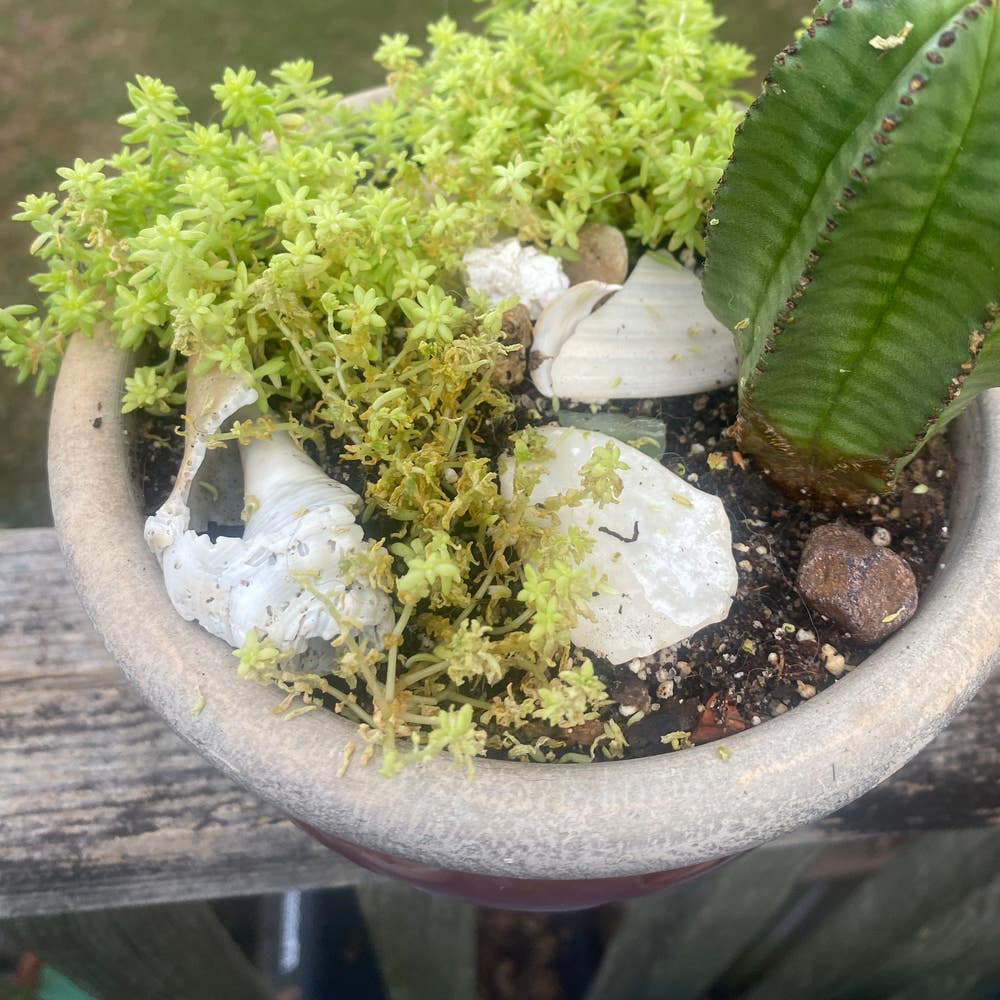
🌞 Why Are My Tokyo Sun Stonecrop Leaves Droopy?
Sedum japonicum 'Tokyo Sun™'
By the Greg Editorial Team
Jun 18, 2024•3 min read
This article was created with the help of AI so we can cover more plants for you. May contain errors. See one? Report it here.
- Droopy leaves signal distress; check soil moisture and avoid over/underwatering.
- Bright, indirect light and stable temps are crucial for Tokyo Sun Stonecrop health.
- Well-draining soil and consistent watering prevent droopiness and maintain perky leaves.
Spotting the Signs of Droopiness
🌱 Visual cues of droopy leaves
Healthy Tokyo Sun Stonecrop leaves are firm and upright, while droopy ones sag or wilt. Look for leaves that hang like limp handshakes—they're signaling distress.
🌱 Checking the soil
Moisture is key. Soil should feel like a wrung-out sponge. Too wet or too dry, and your plant will protest with droopy leaves. Use your fingers or a moisture meter to gauge the soil's condition.
🌱 Environmental checks
Evaluate light and temperature. These plants crave bright, indirect sunlight and consistent, moderate temperatures. A deviation from these conditions can leave leaves droopy, like an overcooked noodle.

Getting to the Root of the Problem
💧 Overwatering woes
Yellowing leaves and stems as soft as overcooked pasta are telltale signs of overwatering. Overly generous watering deprives roots of oxygen, making them more drowning victims than thriving plants. This excess moisture can lead to a plant's version of a hangover—droopy leaves that lack the firmness of their healthy counterparts.
💦 The thirst factor
Conversely, leaves that look more dehydrated than a raisin in the sun are crying out for water. Underwatering leads to a plant that's as parched as a desert, with leaves curling up in a desperate reach for moisture. The pot's weight will feel as light as your spirits on a Friday afternoon, signaling it's time to quench your plant's thirst.
😓 Stress factors
Environmental stress is like a bad office job for your plant—too much or too little of anything, and things start to droop. Temperature swings and inconsistent lighting can leave your Tokyo Sun Stonecrop as stressed as a commuter in rush hour traffic. Recognizing these factors is crucial to prevent your plant from looking sadder than a forgotten birthday.

Bouncing Back: Reviving Droopy Leaves
💧 Adjusting your watering habits
Tokyo Sun Stonecrop craves moderation in watering. To prevent droopiness, water only when the top inch of soil is dry. This could mean weekly in the growing season, less in winter. Remember, this plant's a tough cookie in droughts, so when in doubt, skip the spout.
🌱 Soil and drainage solutions
Well-draining soil is non-negotiable for Tokyo Sun Stonecrop. Mix in sand or perlite to improve drainage. If you're battling waterlogging, consider a gritty cactus mix. And don't forget, a pot with drainage holes is worth its weight in gold for preventing soggy soil syndrome.

Keeping Leaves Perky: Prevention Tips
💧 Crafting the perfect watering schedule
Consistency is your Tokyo Sun Stonecrop's best pal when it comes to watering. Avoid the extremes of drought and deluge. Water when the top inch of the soil feels dry, but don't let it go bone-dry. Think of it as a steady rhythm in your plant care playlist—skip a beat, and you'll notice.
🌞 Environmental harmony
Light and temperature are like the bass and treble in your plant's life soundtrack. Aim for bright, indirect sunlight to keep those leaves jamming. Too much direct sun, and you're at a burnout concert. Too little, and it's like a gig with no audience. Maintain a stable temperature, avoiding sudden drops or spikes. This isn't a plant that likes surprises. Keep it cool, not cold, and warm, not hot.
⚠️ Safety First
This content is for general information and may contain errors, omissions, or outdated details. It is not medical, veterinary advice, or an endorsement of therapeutic claims.
Always consult a qualified healthcare professional before using any plant as food, medicine, or supplement.
Never eat any plant (or feed one to pets) without confirming its identity with at least two trusted sources.
If you suspect poisoning, call Poison Control (800) 222-1222, the Pet Poison Helpline (800) 213-6680, or your local emergency service immediately.
Spotted an error? Please report it here.
Banish droopy leaves and ensure your Tokyo Sun Stonecrop thrives with Greg's custom watering plan and light tracking to keep your greens perky and joyful! 🌞