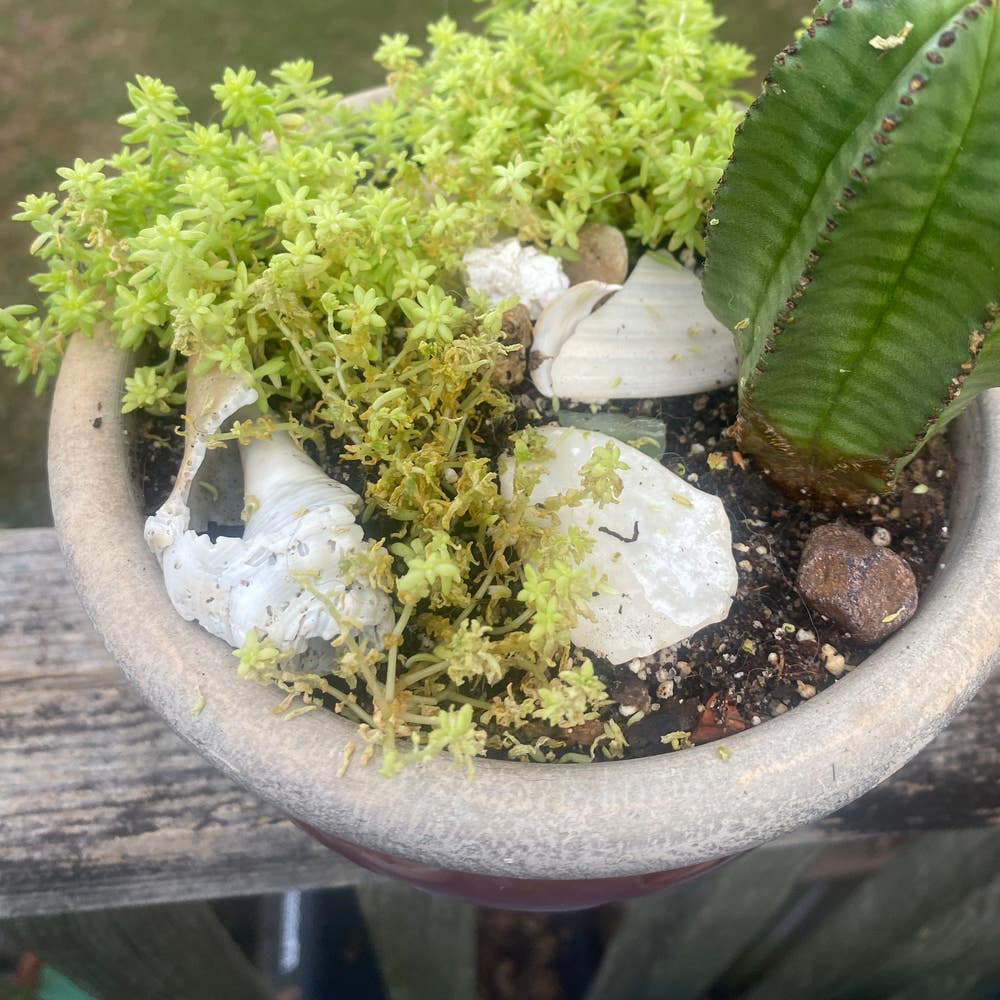
Why Are My Tokyo Sun Stonecrop Leaves Dropping?
Sedum japonicum 'Tokyo Sun™'
By the Greg Editorial Team
Jun 18, 2024•4 min read
This article was created with the help of AI so we can cover more plants for you. May contain errors. See one? Report it here.
- Overwatering and underwatering both lead to leaf drop; balance is key.
- Stable temperatures (65-75°F) and dappled sunlight prevent environmental stress.
- Combat pests with cleaning, neem oil, or introducing predators like ladybugs.
When Watering Goes Wrong: Finding the Balance
🌊 Overwatering Overkill
Yellow leaves and a persistently wet soil are the hallmarks of overwatering your Tokyo Sun Stonecrop. This succulent's roots can't swim; they'll drown in too much water.
To rescue your overwatered Stonecrop, reduce watering immediately. Let the soil dry out completely before the next watering session. If root rot has set in, you may need to repot the plant in fresh, dry soil.
💧 The Perils of Underwatering
On the flip side, a Stonecrop gasping for water will have droopy leaves. It's a silent cry for help.
To prevent underwatering, check the soil moisture before you water—stick your finger in it. If it's dry a couple of inches down, it's time for a drink. Water deeply, but infrequently, to encourage strong roots and prevent your Stonecrop from becoming a crispy critter.

Light and Temperature: The Goldilocks Zone for Stonecrop
🌞 Too Much Sun, Not Enough Fun
Your Tokyo Sun Stonecrop might be a sun worshipper, but too much of a good thing can lead to a bad time. Sunburn isn't just for humans; plants can get it too. If you notice bleached leaves or a blotchy burn, your Stonecrop is sending an SOS for less UV exposure.
To prevent a crispy critter situation, adjust your plant's location to somewhere with dappled sunlight. Morning light is gentler, so east-facing windows are your friend. If you can't move your plant, consider using a sheer curtain to filter the intensity.
🥶 Chilly Receptions and Leaf Loss
Stonecrops don't take kindly to the cold shoulder. Temperature swings can cause your plant to drop leaves faster than a hot potato. Keep it cozy, away from drafts, and in a stable environment between 65-75°F (18-24°C).
If you're transitioning your plant to a new spot, do it gradually. Think of it like acclimating to a swimming pool—no one likes the shock of a cold plunge. And remember, if Jack Frost is nipping, it's time to wrap your plant up like it's ready for a snowstorm.

Bug Off: Keeping Pests from Plucking Your Plant
🐛 Common Culprits in Leaf Drop
Pests are the sneak thieves of the plant world, often going unnoticed until the damage is done. Mealybugs and aphids are the usual suspects, sapping the life out of your Tokyo Sun Stonecrop and causing leaves to fall. Look out for sticky residue or the sight of the bugs themselves. Spider mites and thrips are smaller but just as harmful, capable of causing significant leaf loss.
🛡️ Natural and Chemical Defenses
When it comes to defense, you've got options. Insecticidal soaps and neem oil are your precision weapons, targeting pests without widespread collateral damage. For a more holistic approach, introduce natural predators like ladybugs into your garden—they're the bouncers that keep the riff-raff out. If the infestation is severe, chemical pesticides can be your last line of defense, but use them sparingly. Remember, a healthy plant is less inviting to pests, so keep your Stonecrop in top shape as a preventative measure. Regularly cleaning the leaves can also help prevent a pest build-up. If you spot an infestation, isolate the affected plant to stop the spread. Sometimes, removing and disposing of the affected areas is necessary—it's a tough call, but better safe than sorry.

The Recovery Room: Nursing Your Stonecrop Back to Health
🚑 Immediate Interventions
Emergency care is crucial when your Tokyo Sun Stonecrop is losing leaves. First, stop watering immediately and let the soil dry. If the soil is soggy, consider repotting with fresh, dry soil to prevent root rot. Snip off any damaged leaves to redirect energy to healthy parts of the plant.
Long-Term Wellness
For ongoing care, establish a routine that includes proper watering, lighting, and fertilization. Water only when the top inch of soil is dry, and provide bright but indirect light. Use a balanced fertilizer sparingly to avoid nutrient overload. Regularly inspect for pests and treat promptly. By maintaining this regimen, your Stonecrop will be less prone to leaf drop and more resilient overall.
⚠️ Safety First
This content is for general information and may contain errors, omissions, or outdated details. It is not medical, veterinary advice, or an endorsement of therapeutic claims.
Always consult a qualified healthcare professional before using any plant as food, medicine, or supplement.
Never eat any plant (or feed one to pets) without confirming its identity with at least two trusted sources.
If you suspect poisoning, call Poison Control (800) 222-1222, the Pet Poison Helpline (800) 213-6680, or your local emergency service immediately.
Spotted an error? Please report it here.
Ensure your Tokyo Sun Stonecrop stays lush and leafy 🍃 with Greg's tailored watering and care schedule, keeping those pesky problems at bay.