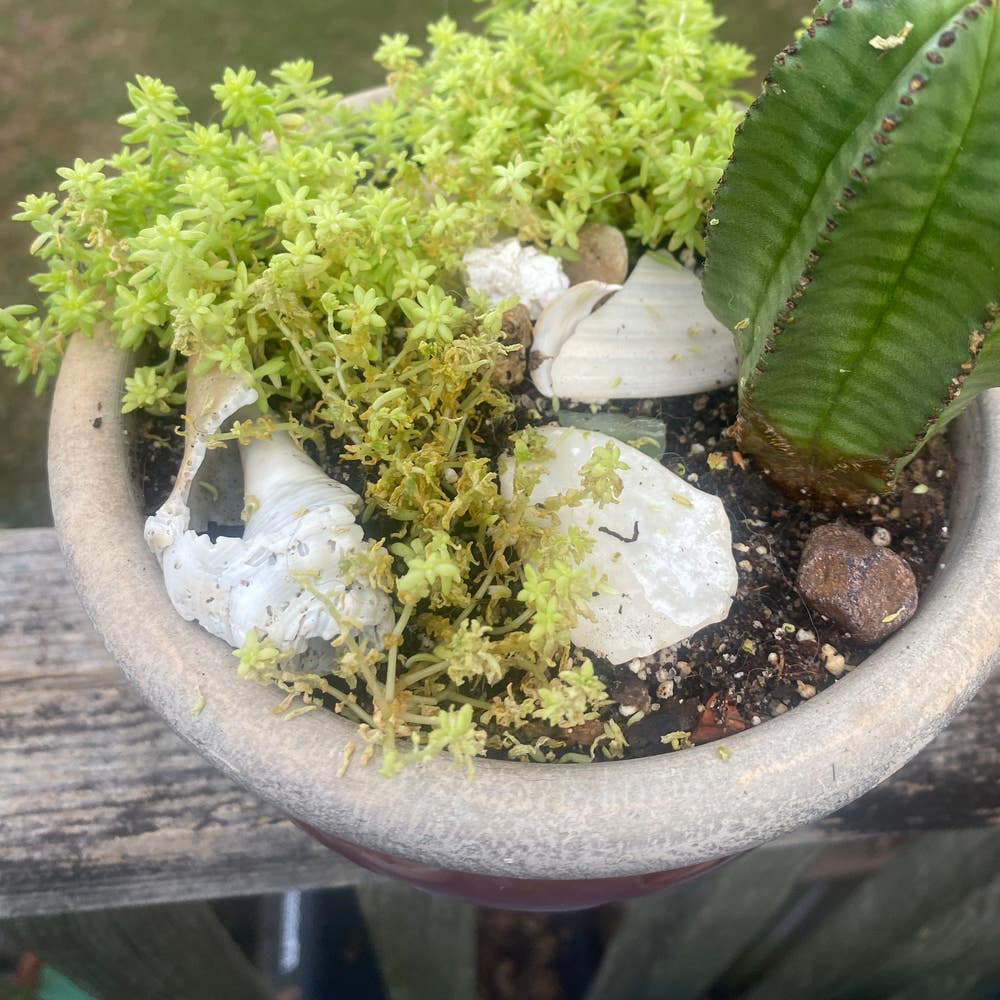
☀️ What to Do About Your Tokyo Sun Stonecrop Wilting
Sedum japonicum 'Tokyo Sun™'
By the Greg Editorial Team
Sep 30, 2024•5 min read
This article was created with the help of AI so we can cover more plants for you. May contain errors. See one? Report it here.
- 💧🌞 Wilting in Tokyo Sun Stonecrop often results from water stress or heat exposure.
- 🌱 Check soil moisture regularly to prevent underwatering or overwatering issues.
- 🌿✂️ Prune damaged leaves to help your plant recover and thrive.
Common Causes of Wilting Leaves
💧 Water Stress
Wilting leaves can often signal water stress in your Tokyo Sun Stonecrop. Symptoms include shriveled or limp leaves, which can arise from two main causes: underwatering and overwatering.
Underwatering occurs when the plant doesn't receive enough moisture, leading to dehydration. Conversely, overwatering can cause root rot, resulting in wilting even when the soil feels wet.
☀️ Heat Stress
Heat stress is another common culprit behind wilting. Symptoms include crispy or discolored leaves, often due to prolonged exposure to direct sunlight.
High ambient temperatures without adequate airflow can exacerbate the issue. If your plant is in a hot spot, it may struggle to thrive.
🦠 Disease-Related Wilting
While disease-related wilting is less common in healthy Tokyo Sun Stonecrops, it can still occur. Sudden wilting without an apparent environmental cause may indicate a problem.
Typically, this is linked to root rot or fungal infections. However, it's important to note that pathogenic wilt is unlikely in well-cared-for plants.
Understanding these causes is crucial for effective plant care. By identifying the issue early, you can take steps to revive your wilting stonecrop and keep it healthy.
Diagnosing Wilting
Step-by-Step Guide to Diagnose Wilting 🌱
Assess Soil Moisture: Start by checking the top inch of the soil. If it feels dry, your plant may be underwatered. Conversely, if the soil is soggy, overwatering could be the culprit.
Examine Environmental Conditions: Next, evaluate the light exposure and temperature around your plant. Look for signs of heat stress, like crispy leaves, or inadequate light, which can also lead to wilting.
Inspect the Plant: Finally, take a close look at the plant itself. Check for discoloration, spots, or any other signs of disease. Don’t forget to look for pests or indications of root rot.
Signs to Look For 👀
Color Changes: Watch for yellowing or browning edges on the leaves. These changes can signal various issues, from nutrient deficiencies to stress.
Texture Changes: Pay attention to the texture of the leaves. Soft, mushy leaves often indicate overwatering, while dry, crispy leaves suggest underwatering or heat stress.
By following these steps, you can effectively diagnose the cause of wilting in your Tokyo Sun Stonecrop. This proactive approach will help you take the necessary actions to revive your plant and keep it thriving.
Next, let’s explore effective solutions for addressing wilting leaves.
Solutions for Wilting Leaves
🌊 Addressing Water Stress
If your Tokyo Sun Stonecrop is wilting due to underwatering, the solution is straightforward. Water the plant thoroughly until excess moisture drains out of the bottom.
For a more effective approach, try the bottom watering technique. Place the pot in a shallow tray of water for about 30 minutes, allowing the soil to absorb moisture evenly.
If overwatering is the issue, let the soil dry out completely before watering again. If you suspect root rot, consider repotting the plant in fresh, well-draining soil to promote recovery.
☀️ Addressing Heat Stress
Heat stress can also lead to wilting. To combat this, relocate your plant to a shadier spot that receives bright, indirect sunlight.
Additionally, ensure there’s adequate airflow around the plant. This helps reduce heat buildup and keeps your stonecrop comfortable.
🦠 Addressing Disease-Related Wilting
In cases where disease is suspected, particularly root rot, immediate action is crucial. Remove the plant from its pot and inspect the roots for any signs of decay.
Trim away any black, mushy roots and repot the plant in fresh soil. This moderate difficulty task can significantly improve your plant's health.
🌱 Techniques for Reviving a Wilted Plant
Utilize the bottom watering technique mentioned earlier to help revive your wilting plant.
Another effective method is pruning damaged leaves. This redirects energy to healthier parts of the plant, promoting overall recovery.
By addressing these issues promptly, you can restore your Tokyo Sun Stonecrop to its vibrant self. Next, let’s explore preventive measures to minimize future wilting.
Preventive Measures
Best Practices to Minimize Future Wilting 🌱
To keep your Tokyo Sun Stonecrop thriving, regularly check soil moisture levels before watering. This simple habit can prevent both underwatering and overwatering, ensuring your plant gets just the right amount of hydration.
Implementing a consistent watering schedule based on seasonal changes is also crucial. As temperatures fluctuate, your plant's needs will change, so stay attentive to its requirements.
Environmental Considerations 🌞
Position your plant in a location that receives bright, indirect sunlight. This will help avoid the harsh effects of direct sunlight while still providing the energy your plant craves.
Additionally, monitor temperature fluctuations and protect your stonecrop from extreme heat. A little extra care in its environment can go a long way in preventing wilting.
By following these preventive measures, you can create a nurturing environment for your Tokyo Sun Stonecrop. This proactive approach not only enhances its health but also minimizes the chances of future wilting.
Next, let’s explore when it’s time to seek professional help for your plant.
When to Seek Help
🚨 Signs That Require Professional Assistance
If your Tokyo Sun Stonecrop continues to wilt despite your best efforts, it may be time to seek help. Persistent wilting can indicate underlying issues that need expert intervention.
Look for signs of severe disease or pest infestation. If you notice unusual discoloration, spots, or pests on your plant, don’t hesitate to consult a professional.
📚 Resources
Local nurseries can be invaluable for expert advice and plant care supplies. They often have knowledgeable staff who can diagnose issues and recommend solutions tailored to your plant's needs.
Consider reaching out to plant experts for more specialized diagnosis and treatment options. They can provide insights that may not be readily available in general gardening resources.
Online communities, like Greg, offer additional support and guidance. Engaging with fellow plant enthusiasts can provide practical tips and emotional support as you navigate your plant care journey.
In summary, don’t hesitate to seek help when your plant shows signs of distress. The right resources can make all the difference in reviving your Tokyo Sun Stonecrop and ensuring its long-term health.
⚠️ Safety First
This content is for general information and may contain errors, omissions, or outdated details. It is not medical, veterinary advice, or an endorsement of therapeutic claims.
Always consult a qualified healthcare professional before using any plant as food, medicine, or supplement.
Never eat any plant (or feed one to pets) without confirming its identity with at least two trusted sources.
If you suspect poisoning, call Poison Control (800) 222-1222, the Pet Poison Helpline (800) 213-6680, or your local emergency service immediately.
Spotted an error? Please report it here.
Revive your wilting Tokyo Sun Stonecrop with Greg's tailored watering reminders and community support, ensuring your plant thrives in its perfect environment! 🌱