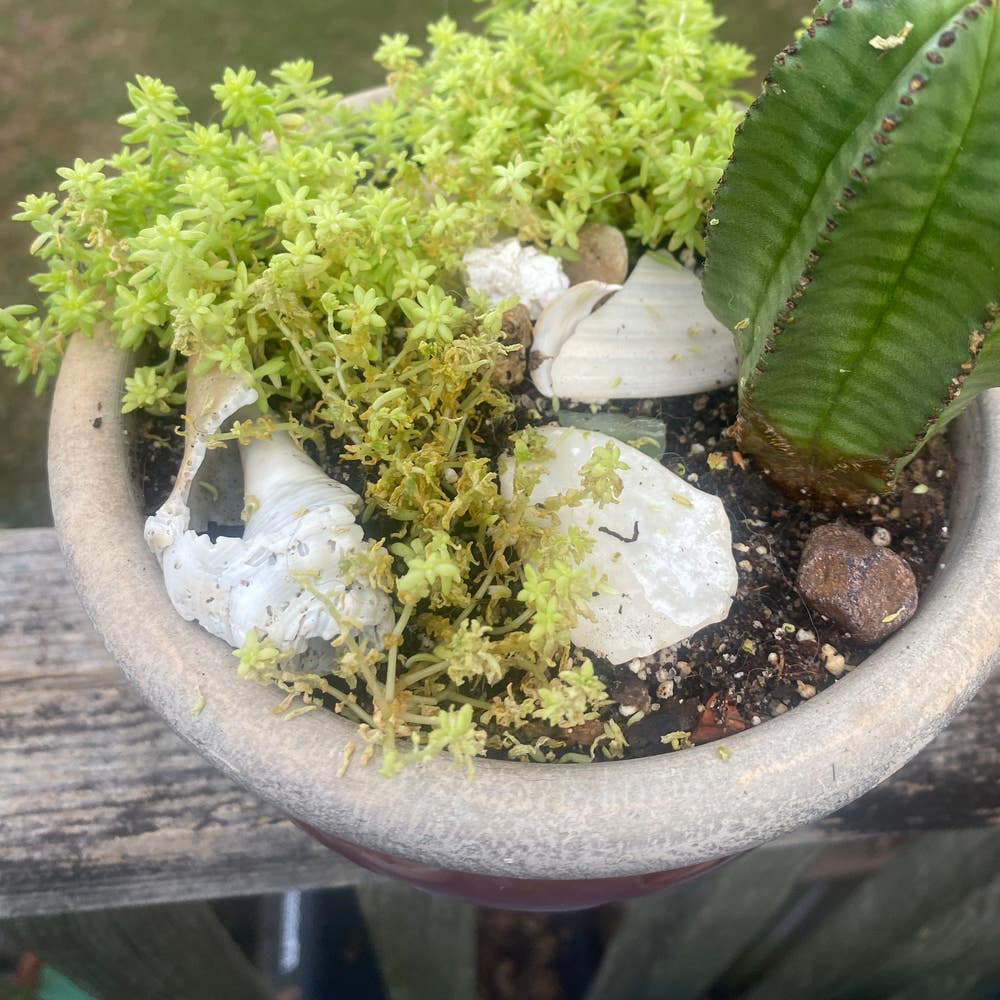
Best Potting Soil Mix for Tokyo Sun Stonecrop
Sedum japonicum 'Tokyo Sun™'
By the Greg Editorial Team
Jun 18, 2024•5 min read
This article was created with the help of AI so we can cover more plants for you. May contain errors. See one? Report it here.
- 🌱 Look for well-draining soil with perlite, pumice, or coarse sand.
- 🛒 Cactus or succulent mixes are ideal for Tokyo Sun Stonecrop.
- 🔄 Repot with fresh soil when roots show or soil smells.
Spotting and Fixing Unhappy Soil
🌱 Signs Your Soil is Bringing Your Plant Down
Too Clingy: Waterlogged Soil
If your Tokyo Sun Stonecrop is drooping or has yellow leaves, it's likely sitting in soil that's too wet. Overly moist soil can suffocate roots, leading to a plant that looks more defeated than a rained-out parade.
Moldy Companions
Mold on the soil surface is a clear sign of excess moisture and poor air circulation. It's not just an eyesore; it's a distress signal from your plant indicating that it's time to change things up.
Turning the Soil Ship Around
Quick Fixes for Waterlogged Soil
To rescue your plant from a watery grave, improve drainage. Check if your pot has drainage holes; if not, it's drill time. Consider a soil mix that's less of a sponge and more of a sieve.
Banishing Mold
Cut back on watering and let your plant soak up some sunlight—mold hates it. If the fuzzy foe persists, repot your Tokyo Sun Stonecrop into fresh, sterile soil, and keep it on the drier side to prevent a mold encore.

Soil Shopping: What to Look For
🌵 Commercial Mixes That Make Tokyo Sun Stonecrop Smile
When it comes to commercial soil mixes, Tokyo Sun Stonecrop isn't picky, but it does have standards. Look for bags that boast a well-draining blend. Key ingredients should include perlite, pumice, or coarse sand. These are non-negotiable for preventing root rot.
Cactus or succulent mixes are often the best bet. They're crafted to mimic the arid environments these plants thrive in. Check the pH level on the label; slightly acidic is the way to go. Brands like Bonsai Jack and Dr. Earth are often recommended for their superior drainage.
🛡️ The Perks of Perlite and Friends
Perlite is like the plant's personal bodyguard against waterlogging. It's lightweight, increases aeration, and is a staple in any good succulent mix. But it's not a solo act. Coarse sand adds grit, and pumice ups the ante on drainage.
These amendments can transform a mediocre mix into a Tokyo Sun Stonecrop's dream home. If a commercial mix seems too moisture-retentive, don't be afraid to tweak it. Add a handful of perlite or coarse sand to get the texture just right. Remember, the goal is to create an environment where water moves through quickly, but nutrients stay put.

Crafting the Perfect Home Brew for Your Tokyo Sun Stonecrop
🌱 The Recipe for Success
Creating the ideal potting mix for your Tokyo Sun Stonecrop isn't just about throwing together dirt and calling it a day. It's about understanding the plant's love for well-draining soil and giving it just that. Start with a base of peat moss for moisture retention and structure. Then, add perlite to ensure the roots can breathe easy, avoiding the dreaded root rot. Don't forget the gritty bits—coarse sand or fine gravel—to emulate the natural, rocky habitat these succulents adore.
Getting Your Hands Dirty
Ready to mix? Here's a simple, no-fuss guide to creating your Tokyo Sun Stonecrop's paradise:
- Gather your materials: You'll need peat moss, perlite, and coarse sand or fine gravel.
- Measure: Aim for a mix of 1 part peat moss, 1 part perlite, and 1 part coarse sand.
- Mix: In a large container, combine the ingredients thoroughly to ensure even distribution.
- Test: Feel the mix. It should be light, airy, and mimic a dry, rocky landscape. Adjust if necessary.
- Pot: Fill your container with the mix, leaving room for the plant and additional top dressing.
Remember, the key is balance—too much moisture retention and you'll have a soggy mess; too little and your Tokyo Sun Stonecrop might as well be living in a desert. Get this mix right, and you'll be the hero in your Tokyo Sun Stonecrop's story.

When Your Soil Needs a Fresh Start
🌱 Repotting: A New Beginning
Roots peeking out of drainage holes or surfacing like shy sea creatures are your cue: repotting time. If your Tokyo Sun Stonecrop's thirst seems unquenchable, it's likely root-bound, craving more space.
How to Tell When It's Time to Repot
- Roots on display: They should be underground, not making guest appearances.
- Thirsty plant: Constant watering is a red flag for cramped quarters.
- Soil quality: If it's breaking down faster than a cheap umbrella in a storm, change it.
- Odor: A stinky pot is a cry for help, not a new type of fertilizer.
Steps to Repotting and Giving Your Plant a Fresh Lease on Life
- Choose wisely: A new pot should be the next size up—Goldilocks style, not too big, not too small.
- Fresh soil: It's like a plant protein shake, full of nutrients.
- Drainage: Cover holes with coffee filters to keep soil from escaping.
- Tools at the ready: Trowel, gloves, and scissors or a sharp knife for any root-trimming shenanigans.
- Watering can: Not essential, but it's like having a good spatula when flipping pancakes.
- The gentle uproot: Coax the plant out, don't yank it like you're starting a lawnmower.
- Root TLC: Tease them apart and trim if necessary. Think of it as a root spa day.
- Replant: Nestle your plant into its new abode and water thoroughly to settle it in.
Spring is the prime time for repotting, so mark your calendar. It's the plant equivalent of stretching after a long nap, ready to grow. Remember, repotting is not a hobby—it's a necessity, so don't do it just because you're bored.
⚠️ Safety First
This content is for general information and may contain errors, omissions, or outdated details. It is not medical, veterinary advice, or an endorsement of therapeutic claims.
Always consult a qualified healthcare professional before using any plant as food, medicine, or supplement.
Never eat any plant (or feed one to pets) without confirming its identity with at least two trusted sources.
If you suspect poisoning, call Poison Control (800) 222-1222, the Pet Poison Helpline (800) 213-6680, or your local emergency service immediately.
Spotted an error? Please report it here.
With Greg, you can perfect your potting mix 🪴 for Tokyo Sun Stonecrop by getting custom advice on soil amendments and drainage, ensuring your succulent stays as vibrant as your green thumb.