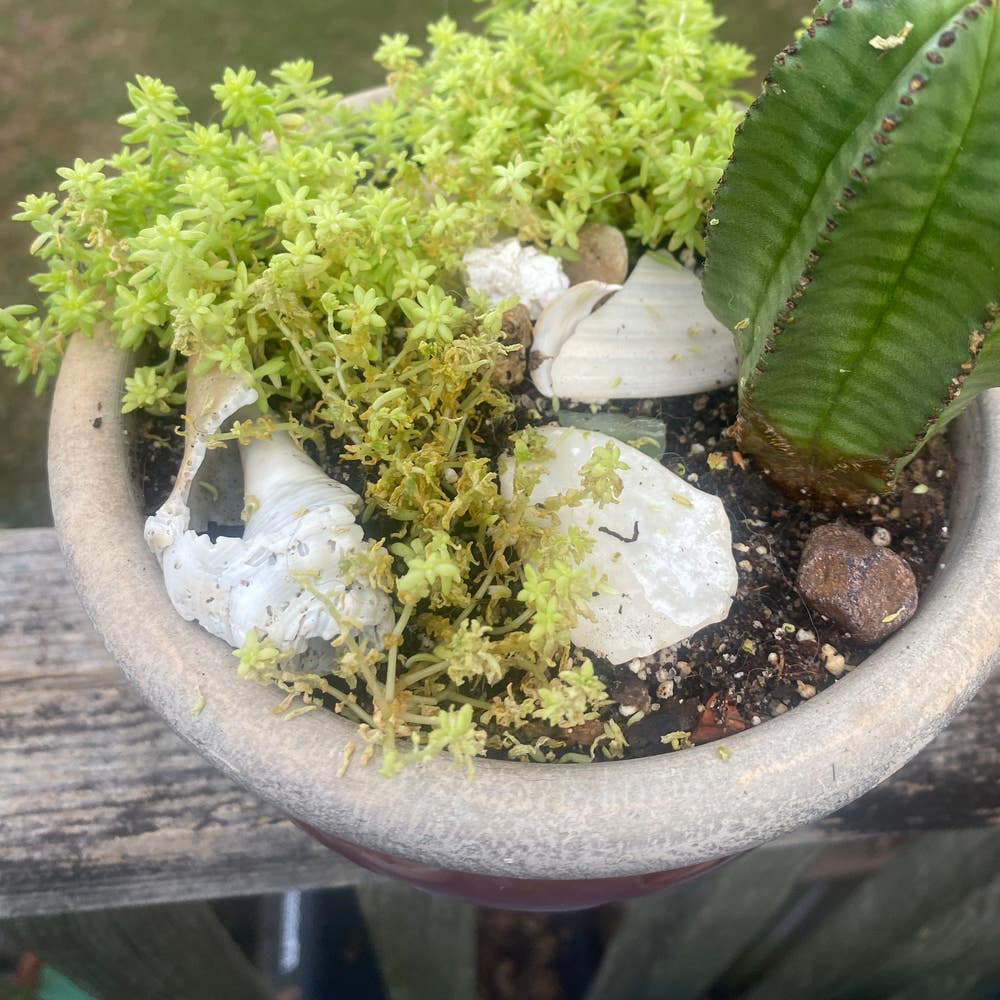
🌞 Does My Tokyo Sun Stonecrop Need Direct Sunlight?
Sedum japonicum 'Tokyo Sun™'
By the Greg Editorial Team
Jun 18, 2024•4 min read
This article was created with the help of AI so we can cover more plants for you. May contain errors. See one? Report it here.
- 🌞 Direct sunlight is ideal for Tokyo Sun Stonecrop's growth.
- Signs of too much sun: bleached leaves and red tips.
- Adjust position seasonally and use sheer curtains or artificial lights as needed.
Sunlight and Tokyo Sun Stonecrop: A Love Story?
🌞 What Does Direct Sunlight Mean for Your Tokyo Sun Stonecrop?
Direct sunlight is unfiltered; it's the sun's full performance hitting your Tokyo Sun Stonecrop. This plant craves that spotlight, thriving under a bright, direct light source. Indirect sunlight, on the other hand, is the softer, diffused light that fills a room without the harshness. While Tokyo Sun Stonecrop can handle some shade, it's the direct rays that really make it sing.
🌞 Can Tokyo Sun Stonecrop Soak Up the Sun?
Absolutely. Tokyo Sun Stonecrop is a sun worshipper, needing that close-up less than one foot from a sunny window to prosper. But watch out for signs of too much love: if your plant starts to look bleached or crispy, it's time to dial back the exposure. Optimal sun is evident when your Stonecrop maintains vibrant color and robust health, without the drama of sunburn.

When the Sun Hits Your Windowsill: The Direction Dilemma
🧭 North, South, East, West: Where Should Your Tokyo Sun Stonecrop Rest?
The direction your window faces can make or break your Tokyo Sun Stonecrop's mood. South-facing windows in the Northern Hemisphere are like the VIP lounge of sunlight—full exposure. But, if you're down under, it's the north-facing windows that are dishing out the main course of sunbeams.
East-facing windows serve up a gentle morning light parfait, while west-facing ones throw an intense afternoon sun party. North-facing (or south-facing in the Southern Hemisphere) are the chill zones, doling out soft, ambient light. Match your Tokyo Sun Stonecrop's sunbathing preferences with your window views to avoid a sunburnt fiasco.
🌍 Hemisphere Hints: Seasonal Sun Shifts
Your global address dictates how you play the sunlight shuffle. As the Earth tilts and turns, your Tokyo Sun Stonecrop's sun needs will shift with the seasons. In the Northern Hemisphere, that south window might be too much of a good thing come summer.
Conversely, in the Southern Hemisphere, the north-facing window could become a solar frying pan. Adjust your plant's position to keep it from turning into a crispy critter. Remember, it's not just about survival—it's about helping your Tokyo Sun Stonecrop thrive in its own slice of sunshine.

Sun-Kissed or Sunburnt: Recognizing the Signs
🌞 Happy Glow vs. Unhappy Woe
Leaf discoloration is a telltale sign your Tokyo Sun Stonecrop might be getting too much light. Instead of a vibrant green, leaves may appear dull with white or bleached spots. If the tips of the leaves are turning red, it's another signal that your plant is waving a tiny white flag at the sun.
Wrinkled or droopy leaves suggest your Stonecrop is dehydrated, likely from overexposure. In severe cases, you'll find brown, crispy patches on the leaves, and these areas won't revert to green. It's the plant version of a bad sunburn, and no amount of aloe will bring those leaves back to life.
What to Do When the Sun's Embrace Is Too Warm
First, relocate your Tokyo Sun Stonecrop to a spot with less intense sunlight. If it's been basking in the direct midday sun, try moving it to where it'll only catch the gentler morning or late afternoon rays.
Consider using a sheer curtain to filter the light; it's like sunglasses for your plant. If the damage is extensive, trim off the most affected leaves to help your Stonecrop focus its energy on recovery. And remember, a consistent watering schedule is crucial—too much or too little can both exacerbate sun stress.

Sunlight Strategy: Keeping Your Tokyo Sun Stonecrop Thriving
🌞 Seasonal Sunlight Shuffle
Tokyo Sun Stonecrop thrives in bright light, but as the earth tilts and twirls through the seasons, your plant's sun needs do the tango. In the winter, when the sun is as weak as a half-hearted handshake, scoot your Stonecrop closer to the window. Come summer, with sunlight that feels like it's trying to prove a point, pull it back to a safer distance. It's all about reading the room—or in this case, the solar patterns.
💡 Sunlight Supplements: When Natural Light Isn't Enough
When your window starts to feel like a cave entrance, it's time for artificial lights to step up. LEDs are the cool kids on the block, energy-efficient and less likely to cause your plant to break out in a sunburn. Place them about 6 inches from the foliage, and keep a consistent light schedule. It's like giving your Tokyo Sun Stonecrop its own personal sun, minus the risk of a nasty burn.
⚠️ Safety First
This content is for general information and may contain errors, omissions, or outdated details. It is not medical, veterinary advice, or an endorsement of therapeutic claims.
Always consult a qualified healthcare professional before using any plant as food, medicine, or supplement.
Never eat any plant (or feed one to pets) without confirming its identity with at least two trusted sources.
If you suspect poisoning, call Poison Control (800) 222-1222, the Pet Poison Helpline (800) 213-6680, or your local emergency service immediately.
Spotted an error? Please report it here.
Watch your Tokyo Sun Stonecrop thrive with perfect sun placement 🌞 as Greg's PlantVision measures the light in your home and suggests the ideal spot for every season.