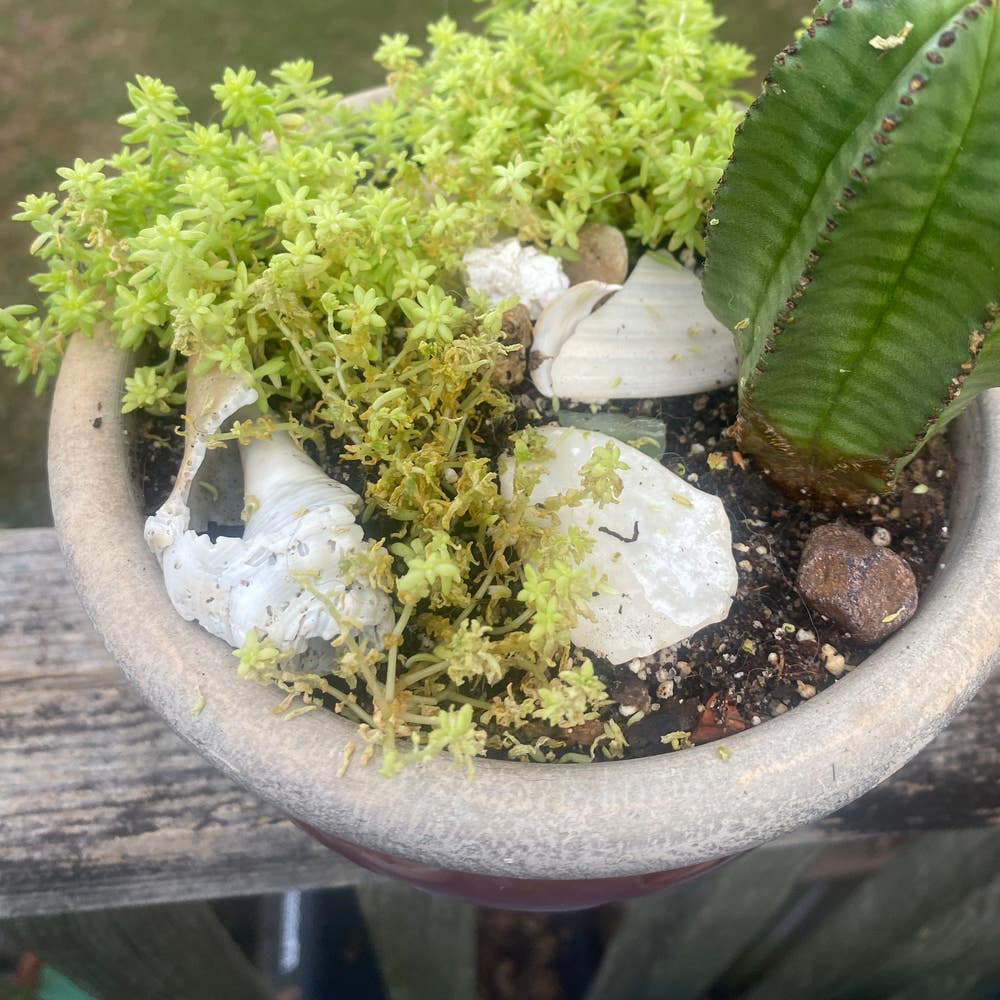
How to Know When to Repot a Tokyo Sun Stonecrop?
Sedum japonicum 'Tokyo Sun™'
By the Greg Editorial Team
Jun 18, 2024•3 min read
This article was created with the help of AI so we can cover more plants for you. May contain errors. See one? Report it here.
- Overcrowded roots? Time to repot your Tokyo Sun Stonecrop.
- Stunted growth and poor drainage signal the need for a new pot.
- 🌱 Terracotta pots are the breathable, preferred choice for repotting.
Spotting the Telltale Signs for a Repot
🌱 Roots Taking Over
Overcrowded roots are a surefire sign your Tokyo Sun Stonecrop is ready to move on up. If roots are peeking out of the drainage holes like nosy neighbors or the soil surface looks like a spaghetti junction, it's time to repot.
💧 Sluggish Water Drainage
Water should meander through the soil, not race through like it's on a slip 'n slide. Poor drainage is often a cry for help from a root-bound plant. If your watering routine feels more like a pointless ritual, your Stonecrop is signaling for a change.
🚧 When Growth Hits a Wall
Stunted growth is the plant equivalent of a teenager's sudden refusal to get out of bed. If your Tokyo Sun Stonecrop's growth has hit a snail's pace, it's not just being lazy; it's cramped and needs a new pot, stat.

The Repotting Rundown
🛠️ Prepping Your Workspace and Supplies
Before you dive into the repotting process, assemble your tools. You'll need a clean pot, preferably 1-2 inches larger than the current one, with essential drainage holes. A succulent soil mix, sterilized scissors, a trowel, and gloves are your best friends here. Think of it as gearing up for a delicate operation.
🌱 The Gentle Uproot
Hydrate your Tokyo Sun Stonecrop the day before to ease the transition. When it's time, be gentle—coax the plant out by squeezing or tapping the pot. You're not just pulling out a weed; this is a careful extraction of your verdant companion.
💎 Root TLC
Once out, inspect the roots like a jeweler assessing gems. Trim any dead or overgrown parts, but don't get carried away. You're aiming for a healthy root system, not a botched topiary.
🏡 Settling into a New Abode
Now, nestle your Stonecrop in the center of its new home. Backfill with fresh soil, but resist the urge to pack it down—you want to avoid compacting the soil. Water thoroughly to settle the roots, but remember, you're not making soup. Leave a little room at the top to prevent overflow during watering.

Picking the Perfect Pot
🏺 Terracotta: The Breathable Choice
Terracotta pots are the old reliable for Tokyo Sun Stonecrop. Their porous nature allows for excellent air flow and moisture management, reducing the risk of root rot. However, they can dry out quickly, so keep your watering can handy.
🥤 Plastic Pots: Pros and Cons
Plastic pots are a wallet-friendly option, offering a rainbow of colors and designs. They're lightweight and won't shatter if you're clumsy. But beware, they retain moisture like a sponge, which can spell disaster for the overwatered Stonecrop.
🏺 Ceramic and Glass: Think Twice
Ceramic pots can be stunning, but they're often heavier and pricier. If they lack drainage holes, it's a one-way ticket to Soggy Roots Ville. Glass is a no-go; it's like putting your Stonecrop in an underwater bubble with nowhere for excess water to escape.

⚠️ Safety First
This content is for general information and may contain errors, omissions, or outdated details. It is not medical, veterinary advice, or an endorsement of therapeutic claims.
Always consult a qualified healthcare professional before using any plant as food, medicine, or supplement.
Never eat any plant (or feed one to pets) without confirming its identity with at least two trusted sources.
If you suspect poisoning, call Poison Control (800) 222-1222, the Pet Poison Helpline (800) 213-6680, or your local emergency service immediately.
Spotted an error? Please report it here.
Ensure your Tokyo Sun Stonecrop thrives in its new pot by repotting at the perfect time 🕰 with Greg's personalized reminders and expert care advice.