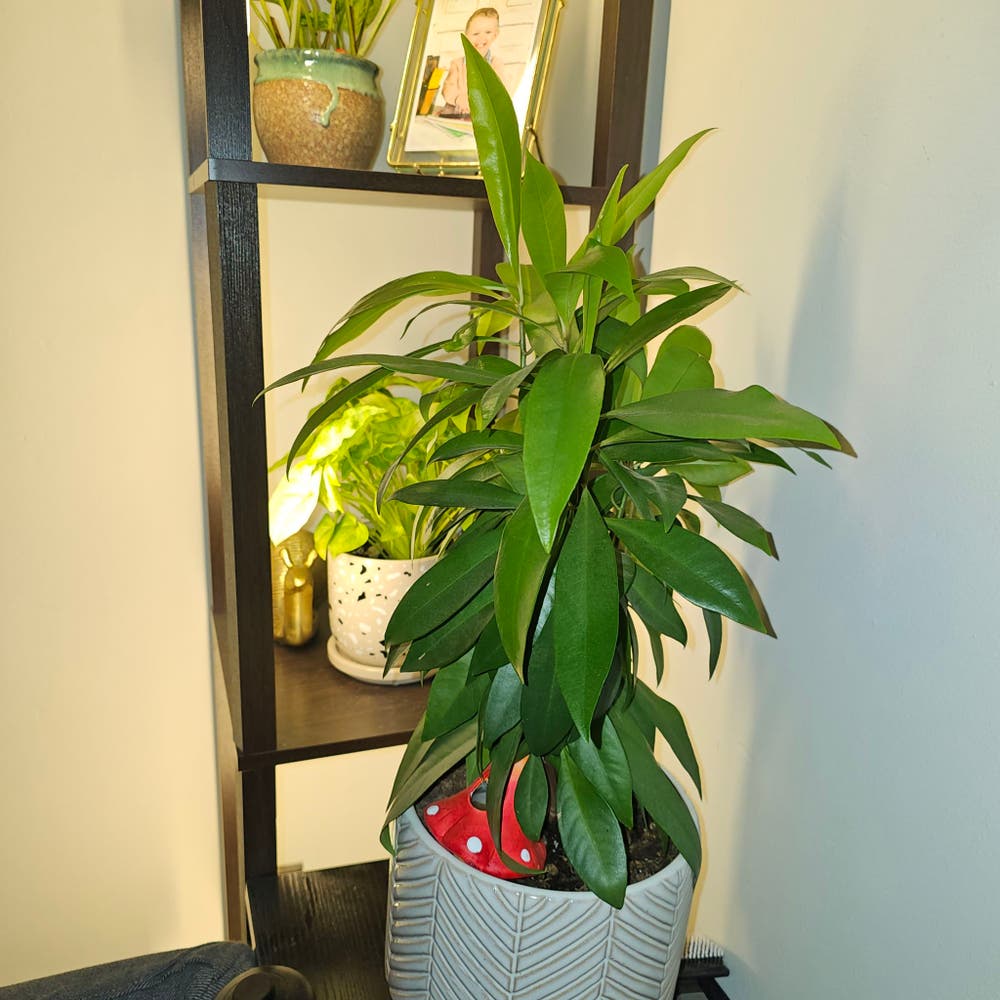
Why Is My Shoebutton Plant Not Doing Well?
Ardisia humilis
By the Greg Editorial Team
Feb 10, 2024•4 min read
This article was created with the help of AI so we can cover more plants for you. May contain errors. See one? Report it here.
- 🌧️ Over-watering causes yellow leaves; let soil dry before re-watering.
- 🌞 Too much or little light? Adjust for bright, indirect sunlight.
- 🌡️ Keep temperature steady at 70-85°F and monitor for pests.
When Water Works Against You
💧 Over-watering and Shoebutton Plant
Yellowing leaves on your Shoebutton Plant are like a check engine light; they mean it's time to reassess your watering habits. Root rot is the grim reaper of the plant world, and it's a sign you've been a little too generous with the H2O.
To correct course, let the soil dry out before you water again. Check the soil moisture by sticking your finger an inch deep—if it's damp, hold off on the watering can. Ensure your pot has drainage holes to avoid creating a mini swamp for your plant's roots.
💦 Under-watering: The Thirsty Shoebutton
Wilting and dry leaves are your Shoebutton's way of telling you it's parched. It's not just being dramatic; it needs a drink, stat.
To quench its thirst, establish a watering schedule based on the soil's dryness, not the day of the week. If the top inch of soil feels like a dry spell, it's time to water. Remember, your plant's watering needs change with the seasons, so stay observant and adjust as needed.
Light: Finding the Sweet Spot
🌞 Too Much Sun, Too Little Shade
Brown spots and crispy edges on your Shoebutton Plant's leaves are nature's equivalent of waving a white flag in surrender to the sun. It's leaf scorch, and it's a clear sign your green buddy has had too much of a good thing.
To strike a balance, consider the position of your plant. It's not just about shoving it into the shade; it's about finding a spot where the light is bright but indirect. Think of it as setting up a parasol for your plant. If you can't avoid direct sunlight, sheer curtains are your friend—they'll act like sunglasses for your leafy pal.
🌱 The Dim Side of Light
When your Shoebutton Plant starts resembling a lanky teenager, it's stretching out for more light. Leggy stems and faded leaves are a cry for help from the dim side of light.
Bright, indirect sunlight is the sweet spot. Adjust your plant's position to catch those rays without getting burned. Rotate it regularly to promote even growth and prevent it from reaching out like it's trying to snatch the sun from the sky. If your home is more dungeon than sunroom, consider a grow light—it's like giving your plant its own personal spotlight.
Temperature Tantrums
Dropping leaves and halted growth are distress flares from your Shoebutton Plant. It's signaling that the temperature isn't right.
🌡️ Spotting Discomfort
Too hot or too cold, and your plant's leaves might wilt or show brown spots. A steady 70-85°F (21-29°C) is what they crave, with a consistent tropical humidity to match.
🛋️ Keeping It Cozy
Avoid drafts like you'd avoid a spoiler to your favorite show. No radiators, air conditioners, or open windows that bring sudden temperature changes. Think of your plant's ideal spot as a cozy nook, away from the drama of temperature swings.
Regular monitoring is key. If your plant's leaves are looking as unhappy as a cat in a bathtub, it's time to reassess its position. Keep the temperature consistent, and you'll keep the peace.
Uninvited Guests: Pests and Diseases
🐜 Pests: The Sneaky Culprits
Spot visible bugs and leaf damage? Your Shoebutton Plant might be hosting a pest party. To send these freeloaders packing, start with a water spray or insecticidal soap for light infestations. For more stubborn guests, miticides or introducing natural predators like ladybugs could save the day. Regular inspections and cleanliness are your plant's best friends.
🍄 Fungus Among Us: Mold and Mildew
If you spot fuzzy growths or catch a musty whiff, mold or mildew has crashed the party. Boost airflow and control moisture to cut the celebration short. In severe cases, a fungicide might be necessary, but always apply as directed—think precision, not drench warfare. Remember, prevention is the VIP pass here; keep those leaves dry and the air moving.
Root of the Problem: Root Rot
👃 Sniffing it out: Odor and mushy roots
If your nose wrinkles at a funky stench from the pot, it's not just bad luck—it's a cry for help. Root rot turns roots into a mushy mess, akin to overcooked veggies. This isn't just a bad day for your plant; it's a full-blown crisis underground.
🏥 Surgery and recovery: Root care and soil revival
Time to play plant surgeon. Sterilize your tools and cut away the rotten parts with the precision of a ninja. Leave the healthy roots—they're your plant's lifeline. After the operation, give your Shoebutton a fresh start with well-draining soil and a pot that doesn't hold water like a sponge. Remember, overwatering is the enemy—treat your watering can like a scalpel, not a club.
⚠️ Safety First
This content is for general information and may contain errors, omissions, or outdated details. It is not medical, veterinary advice, or an endorsement of therapeutic claims.
Always consult a qualified healthcare professional before using any plant as food, medicine, or supplement.
Never eat any plant (or feed one to pets) without confirming its identity with at least two trusted sources.
If you suspect poisoning, call Poison Control (800) 222-1222, the Pet Poison Helpline (800) 213-6680, or your local emergency service immediately.
Spotted an error? Please report it here.
Revive your Shoebutton Plant from the roots up with Greg's custom care plan 🌿, ensuring the right water, light, and temperature for a lush, happy plant!