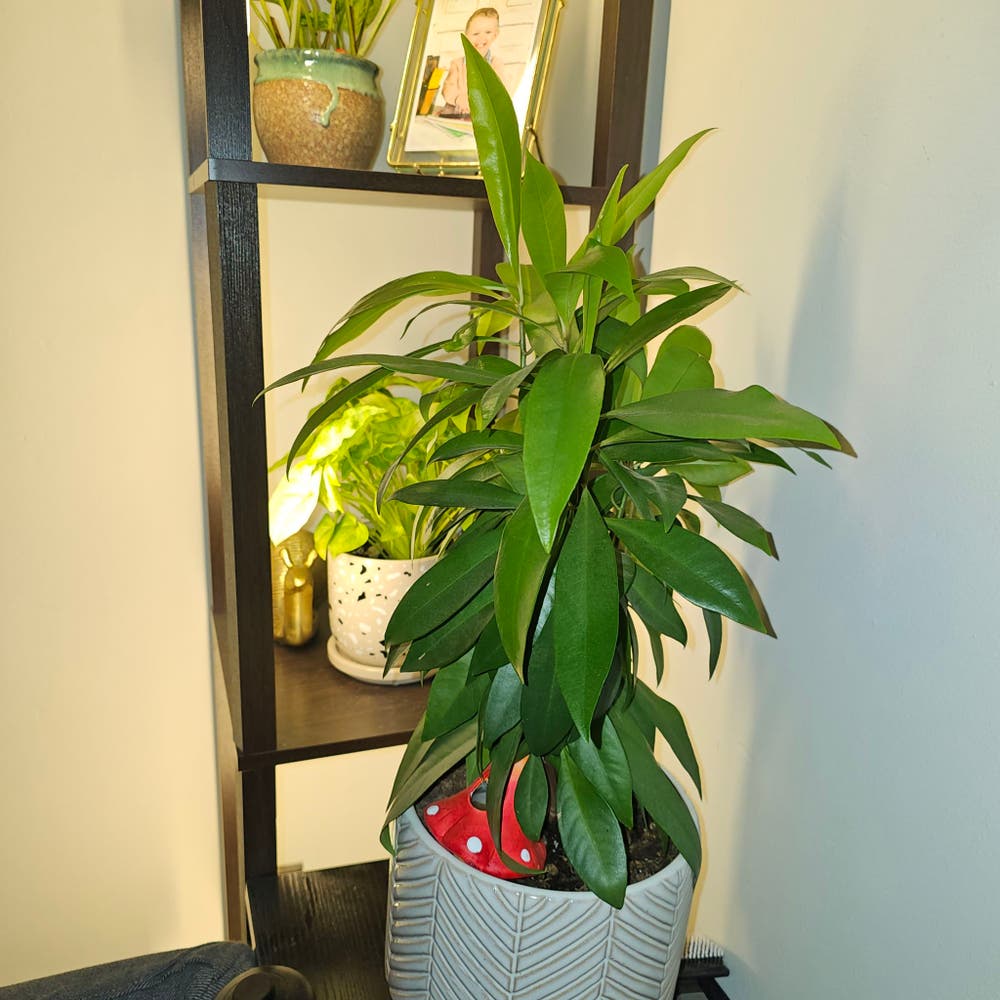
Why Are My Shoebutton Plant Leaves Mushy?
Ardisia humilis
By the Greg Editorial Team
Feb 10, 2024•3 min read
This article was created with the help of AI so we can cover more plants for you. May contain errors. See one? Report it here.
- 🚿 Overwatering leads to mushy leaves, root rot, and fungal diseases.
- 🌱 Check soil moisture before watering; let soil dry out between sessions.
- 🌟 Improve drainage with perlite/sand and use pots with drainage holes.
Spotting the Trouble: Signs Your Shoebutton Plant is Too Wet
💧 Telltale Symptoms of Overwatering
Waterlogged soil is a no-go for your Shoebutton Plant. If the soil clings to your fingers like wet clay, it's a sign you've been too generous with the watering can. Yellowing leaves are another red flag; they're the plant's way of waving a white flag and saying, "I'm drowning here!"
🕵️ Root Rot: The Hidden Culprit
When the leaves of your Shoebutton Plant feel mushier than a ripe avocado, it's time to play detective. Root rot could be the silent assassin lurking beneath the surface. If the roots are brown and crumble at a touch, it's an SOS signal from your plant.
🍄 Fungal Foes: Diseases That Turn Leaves Mushy
Fungal infections are like uninvited guests at a garden party. Powdery mildew can turn your Shoebutton's leaves into a mushy mess. Look for a dusty coating or spots that spell trouble, and act fast—fungal parties can spread quicker than a rumor in a small town.
Turning the Tide: How to Rescue Your Plant
💧 Fine-Tuning Your Watering Routine
Watering your Shoebutton Plant is not a set-it-and-forget-it deal. Check the soil before watering; if the top inch feels like a dry summer day, it's time to quench its thirst. Ditch the calendar; your plant doesn't care what day it is. Moisture meters are your best friends here, telling you exactly when to water without the guesswork.
The importance of letting the soil dry
Letting the soil dry out between waterings is like giving your plant a breather. It's crucial for preventing those mushy leaves from making an unwelcome appearance. Think of it as the plant's version of catching its breath after a sprint.
💦 Soil Matters: Creating the Perfect Home for Roots
Improving soil drainage
Soil that drains well is like a good insurance policy against overwatering disasters. Mix in some perlite or coarse sand to keep things airy and prevent water from throwing a pool party in your pot.
Choosing the right potting mix and containers
Select a potting mix that's the life of the party for roots, not a wet blanket. A blend of peat, perlite, and pine bark can be the trio that gets the job done. And remember, a pot without drainage holes is a rookie mistake; don't let your plant drown in a bathtub. Terracotta pots are the unsung heroes, wicking away excess moisture like a pro.
Keeping the Mush at Bay: Prevention Strategies
💧 Water Wisdom: Avoiding Overwatering Mishaps
Monitor moisture levels with a hygrometer to prevent your Shoebutton Plant from becoming a soggy mess. Overwatering is the express lane to root rot; ensure the soil dries out between waterings. Watering schedules are less about routine and more about soil condition—stick your finger in the dirt; if it's wet, hold off on the H2O.
🦠 Disease Defense: Protecting Against Fungal Invaders
Fungal parties love a humid, stagnant environment. Keep the air moving around your Shoebutton Plant with a fan on low or by placing it in a naturally breezy spot. Ventilation is key. If you're dealing with high humidity, a dehumidifier can be your plant's best friend. When it comes to watering, aim at the roots, not the leaves, to keep them dry and less appealing to fungi. And remember, a clean space is a healthy space—remove debris regularly to prevent mold's all-you-can-eat buffet.
⚠️ Safety First
This content is for general information and may contain errors, omissions, or outdated details. It is not medical, veterinary advice, or an endorsement of therapeutic claims.
Always consult a qualified healthcare professional before using any plant as food, medicine, or supplement.
Never eat any plant (or feed one to pets) without confirming its identity with at least two trusted sources.
If you suspect poisoning, call Poison Control (800) 222-1222, the Pet Poison Helpline (800) 213-6680, or your local emergency service immediately.
Spotted an error? Please report it here.
Prevent mushy leaves and root rot in your Shoebutton Plant by letting Greg's moisture alerts 🚿 guide you to perfect watering intervals.