


Cheeseweed Mallow
About Cheeseweed Mallow
Cheeseweed Mallow is a popular houseplant 🌿 that needs regular watering to thrive. They do best in long-lasting, direct light ☀️ and should be less than 1 foot from a window.
Cheeseweed Mallow likes soil that is well draining. Your plant shouldn't need added fertilizers if you repot each time it doubles in size.
Taxonomy

Malva parviflora
Malva
Malvaceae
Malvales
Also known as
Egyptian mallow, Least Mallow, Small-flowered mallow and cheeseweed

How to care for Cheeseweed Mallow
How often to water your Cheeseweed Mallow

every 9
Cheeseweed Mallow needs 0.5 cups of water every 9 when it doesn’t get direct sunlight and is potted in a 5" pot.
Use our water calculator to personalize watering recommendations to your environment or download Greg for more advanced recommendations for all of your plants.

Water 0.5 cups every
9
Finding light for Cheeseweed Mallow in your home

a window
Cheeseweed Mallow love being close to bright, sunny windows 😎.
Place it less than 1ft from a south-facing window to maximize the potential for growth.
Cheeseweed Mallow does not tolerate low-light 🚫.
Select your region to see how the current weather in your area affects the placement of Cheeseweed Mallow in your home 🏡.
How to fertilize Cheeseweed Mallow

Most potting soils come with ample nutrients which plants use to produce new growth.
By the time your plant has depleted the nutrients in its soil it’s likely grown enough to need a larger pot anyway.
To replenish this plant's nutrients, repot your Cheeseweed Mallow after it doubles in size or once a year—whichever comes first.
-
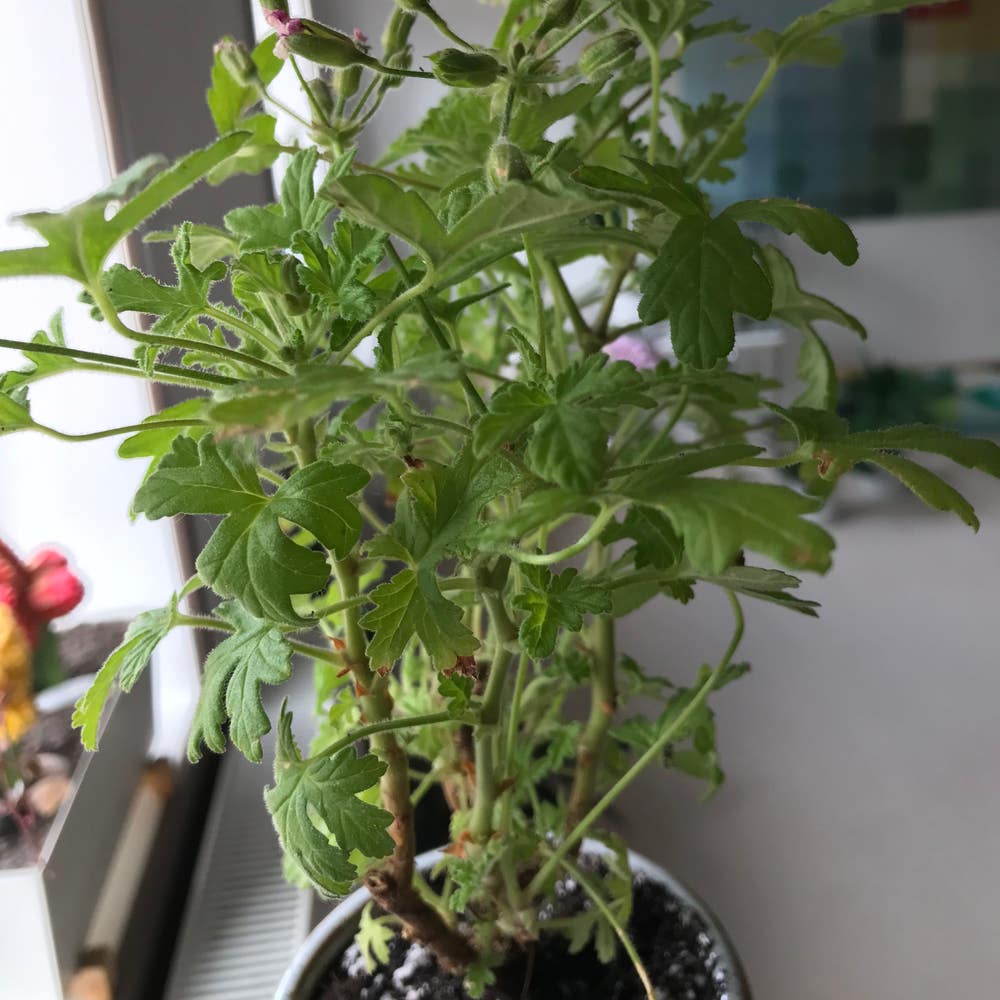
Got this lovely smelling Geranium a few days ago from a lady a few blocks from here. She is one of the participants of the Cuttings Route (Stekjes Route) in the Netherlands and Belgium. She told me it could help against mosquitoes. So I named her Mosy, gave here a little love, a new pot and now she stands on my nightstand (the Geranium I mean), because I'm the one who always gets stinged. F-ing 🦟
-
How cute...
-
Can this be planted outside #RoundleafMallow
Care Summary for Cheeseweed Mallow

Cheeseweed Mallow
 Greg recommends:
 Water
Water
0.5 cups every 9 days
 Placement
< 1ft from a window
 Nutrients
Repot after 2x growth
Based on the 4” pot your plant is in, and that it doesn’t get direct sunlight.
 Trending in your area















 Similar to Cheeseweed Mallow
✨ Discover rare plants

Hoya sipitangensis

Chandelier Plant

Starfish Snake Plant

Maroon Pitcher Plant

Peperomia 'Harmony's …

Eden Climbing Rose
Anthurium papillilami…

Large Leaf Elephant B…

Anastasia Weeping Fig
Skeleton Key Pothos

Philodendron 'Glorius'

Euphorbia

Kilimanjaro Plant

Parrot Pitcher Plant

Begonia hydrocotylifo…

Raphionacme flanaganii
