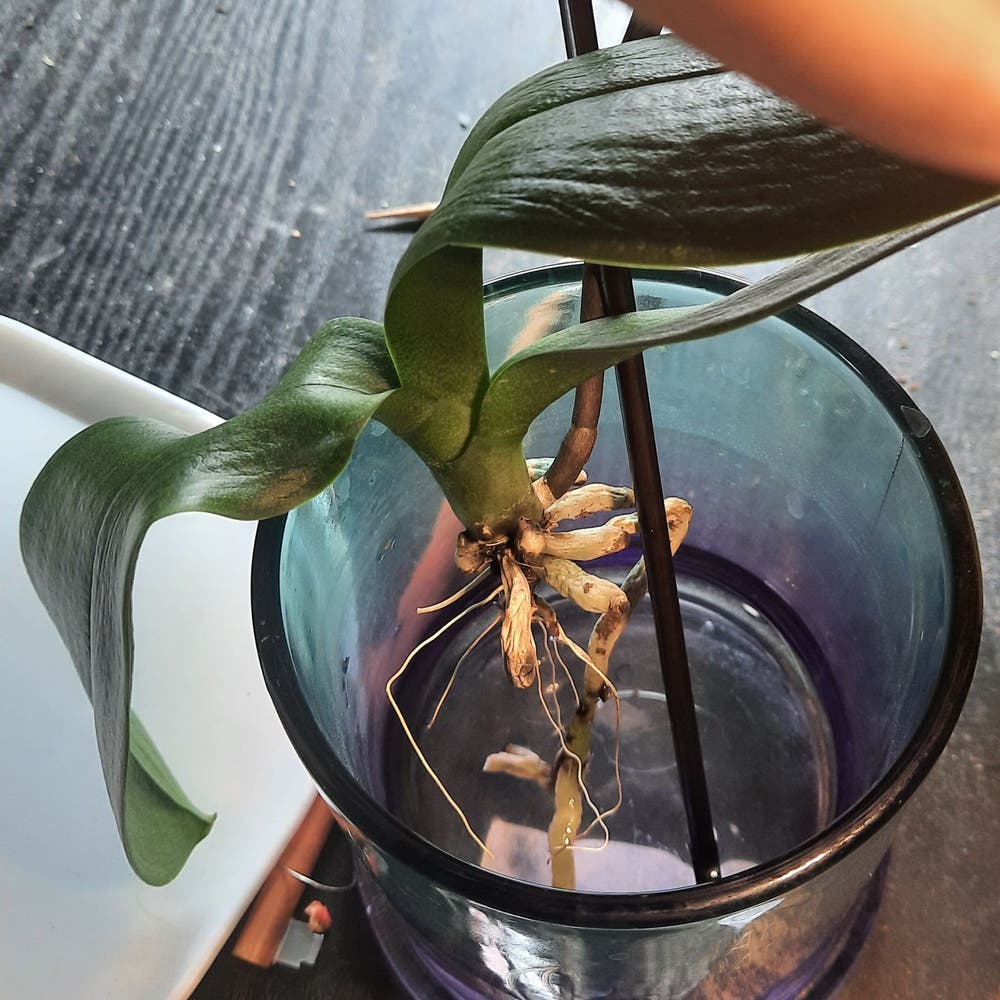
Why Are My Mini Phalaenopsis Orchid Leaves Mushy?
Phalaenopsis amabilis 'Miniature'
By the Greg Editorial Team
Jun 18, 2024•4 min read
This article was created with the help of AI so we can cover more plants for you. May contain errors. See one? Report it here.
- 🌧️ Overwatering leads to mushy leaves; check soil moisture before watering.
- 🌿 Good drainage and proper medium are crucial for orchid health.
- ✂️ Prune infected parts and adjust care to prevent future mushiness.
Spotting Trouble: Signs Your Orchid's Leaves Are Too Mushy
🚰 Recognizing Overwatering Symptoms
Yellowing leaves are the tell-tale sign of overwatering. If your Mini Phalaenopsis Orchid's roots have gone from a healthy white to a mushy brown, it's time to reassess your watering habits. Overwatered roots are not robust; they're soggy disasters waiting to happen.
🚰 Identifying Poor Drainage Issues
When your orchid's pot feels like a swamp, you've got a drainage drama on your hands. Roots drowning in water are a one-way ticket to mushy-leaf city. Make sure your pot isn't holding water like a dam. Good drainage is non-negotiable for healthy orchids.
🚰 Detecting Fungal and Bacterial Infections
Dark, sunken spots on leaves shout "fungal or bacterial infection" louder than a teenager's music. These aren't just aesthetic issues; they're the equivalent of orchid acne gone wild. If the base of your orchid feels like a wet sponge, it's an open invitation for these pathogens to party.

First Aid for Mushy Leaves
💧 Adjusting Your Watering Technique
Before you water, poke the soil. If the top inch feels like a desert, give it a drink. Otherwise, holster your watering can. Your orchid isn't a fish; it doesn't need constant submersion.
🚰 Enhancing Pot Drainage
Make sure your pot's drainage could make a colander jealous. If not, it's time to repot with something that has holes aplenty. Mix in some perlite or coarse sand to keep the soil from getting clingy and suffocating the roots.
🦠 Choosing the Right Treatment for Infections
Spotted a fungal rave on your leaves? Snip the mushy parts with sterilized shears and let the soil dry out. If it's a bacterial blowout, a bactericide is your new best friend. Use it pronto to stop the spread. Remember, the label is your roadmap—follow it to a T.

The Recovery Plan: Getting Your Orchid Back to Health
💧 Creating a Tailored Watering Schedule
Watering is crucial, yet often botched. Orchids are Goldilocks plants; they like conditions just right. Once a week is your mantra for indoor orchids. Let the potting medium dry out before you even think about watering again. Overzealous with the watering can? Your orchid will throw a fit in the form of mushy leaves.
🌱 Selecting and Changing the Potting Medium
The potting medium is your orchid's bed. Get it wrong, and it's like sleeping on nails. Bark, charcoal, and pumice are your go-to materials. They're the dream team for airy, well-draining beds. Repotting? Don't rush. Let the roots dry first, then tuck your orchid into its new crib with care.
🌿 Optimizing Environmental Conditions
Orchids are divas of the plant world; they demand the perfect stage. Bright, indirect light keeps them happy without the sunburn. Humidity? They lap it up. Consider a humidity tray if your air is drier than a stand-up comedian's wit. And remember, the ice cube watering method is a gimmick, not gospel.

Keeping Mushiness at Bay: Long-Term Care Strategies
💧 Monitoring and Adjusting Watering Habits
Watering is not a set-it-and-forget-it game. Check the soil's moisture level before you even think about reaching for that watering can. If the top inch feels dry, go ahead, give your orchid a drink. Remember, room temperature water is your orchid's best friend—no ice-cold shocks here.
🏺 Regular Pot and Medium Check-Ups
Repotting isn't just a chore, it's a chance to refresh your plant's living space. Inspect the potting medium and roots every time you repot. If the medium looks more like a swamp than a comfy bed, it's time for a change. And those pots? Make sure they have drainage holes that could make a colander jealous.
🦠 Preventative Measures Against Pathogens
Sanitize your tools before you prune—think surgeon-clean. Fallen leaves? They're not a carpet; get rid of them to stop diseases in their tracks. And if you spot a leaf turning to mush, snip it off faster than you'd unfriend a spoiler-happy acquaintance on social media.
⚠️ Safety First
This content is for general information and may contain errors, omissions, or outdated details. It is not medical, veterinary advice, or an endorsement of therapeutic claims.
Always consult a qualified healthcare professional before using any plant as food, medicine, or supplement.
Never eat any plant (or feed one to pets) without confirming its identity with at least two trusted sources.
If you suspect poisoning, call Poison Control (800) 222-1222, the Pet Poison Helpline (800) 213-6680, or your local emergency service immediately.
Spotted an error? Please report it here.
Banish mushy leaves and thrive with orchids 🌱 by letting Greg monitor your soil moisture for the perfect watering schedule.